
A graphite supply agreement with GM
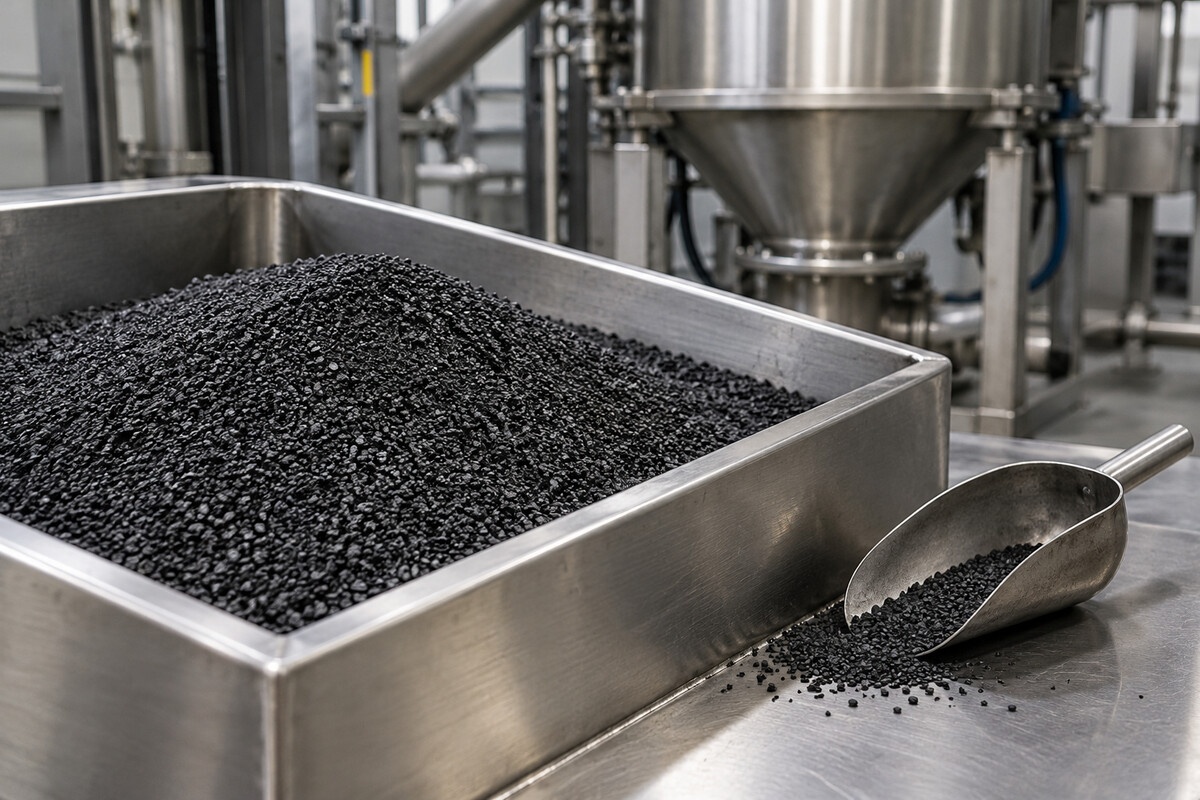
Vianode signed a multi-year, multibillion-dollar agreement to supply synthetic graphite anode materials for General Motors' electric-vehicle batteries in January 2025. The material was intended for Ultium Cells, GM's joint venture with LG Energy Solution. Vianode, based in Norway, originally planned deliveries from a new North American plant between 2027 and 2033. Its location was still under negotiation in either the United States or Canada. CEO Burkhard Straube expected a first phase producing around 80,000 tons annually by 2030, sufficient for roughly 1.5 million EVs. GM purchasing chief Jeff Morrison associated the project with battery development and customer value. The supply agreement included a minimum offtake commitment following qualification of material from Vianode's pilot plant. Straube was also negotiating with other automakers. He contrasted a two-to-three-year synthetic-graphite plant build with a decade or more to develop a mine.
Preparing an industrial qualification plant
Vianode prepared its Herøya operation for commissioning during 2024. In March, installation of full-size furnaces for graphitisation was nearing completion, alongside laboratory facilities needed for testing under operating conditions. Hot commissioning was scheduled to begin in the second quarter, with production startup planned for the second half of the year. The local organization then employed 70 people and expected to grow to around 100. Altor Fund V and Hydro supported the startup and further expansion, while Elkem announced its exit from the investment after four years of industrial development. Straube thanked Elkem for its contribution.

Innovation Norway awarded Vianode a €30 million grant under the IPCEI European Battery Innovation programme in March 2024. The funding was intended to support development of the Herøya plant within a European lower-carbon battery value chain. IPCEI brings together transnational industrial projects and public-private cooperation; Innovation Norway administered this support locally. The battery programmes cover a chain extending from raw materials and cells to battery systems and recycling. Straube emphasized that regulatory support was needed to bring new battery technologies into industrial production. Herøya's role was customer qualification before Vianode's proposed larger plants in North America and Europe.
A prospective production footprint
Vianode's April 2024 life-cycle assessment estimated a climate-change impact of 1.9 kilograms of carbon-dioxide equivalents per kilogram of synthetic graphite. The study concerned prospective production at a planned large-scale facility. Its cradle-to-gate boundary extended from resource extraction to graphite packed and loaded for transport at the factory gate, incorporating scope 1, 2 and 3 production impacts. Feedstock production and processing were the principal emissions contributors. Seven impact categories were examined, including climate change, water scarcity, land use, acidification, particulate matter, fossil resources and mineral resources. Vianode stated that the study was certified against ISO 14040 and ISO 14044. Minviro consultant and graphite specialist Lydia Bridges described the process as offering substantial emissions-reduction potential without compromising quality. The estimate supplied the basis for company comparisons with conventional fossil-based graphite production.

Vianode set product, circularity and workplace objectives in its first sustainability report, presented on 21 May 2024. The company aimed to supply anode materials for three million EVs annually by 2030 through expansion across Europe and North America. Its product-development programme included a further reduction in graphite's carbon footprint and the use of recovered materials. Chief commercial officer Stefan Bergold connected those objectives with the earlier life-cycle assessment. Sustainability executive Andreas Forfang emphasized transparency across the battery value chain. The commitments were targets for subsequent development and industrialization, with defined product milestones for 2030:
- Launch graphite with emissions of one kilogram of carbon-dioxide equivalents per kilogram of product.
- Offer an industrial-scale product containing at least 10% recycled material.
- Improve workplace safety, recruitment and battery value-chain transparency.
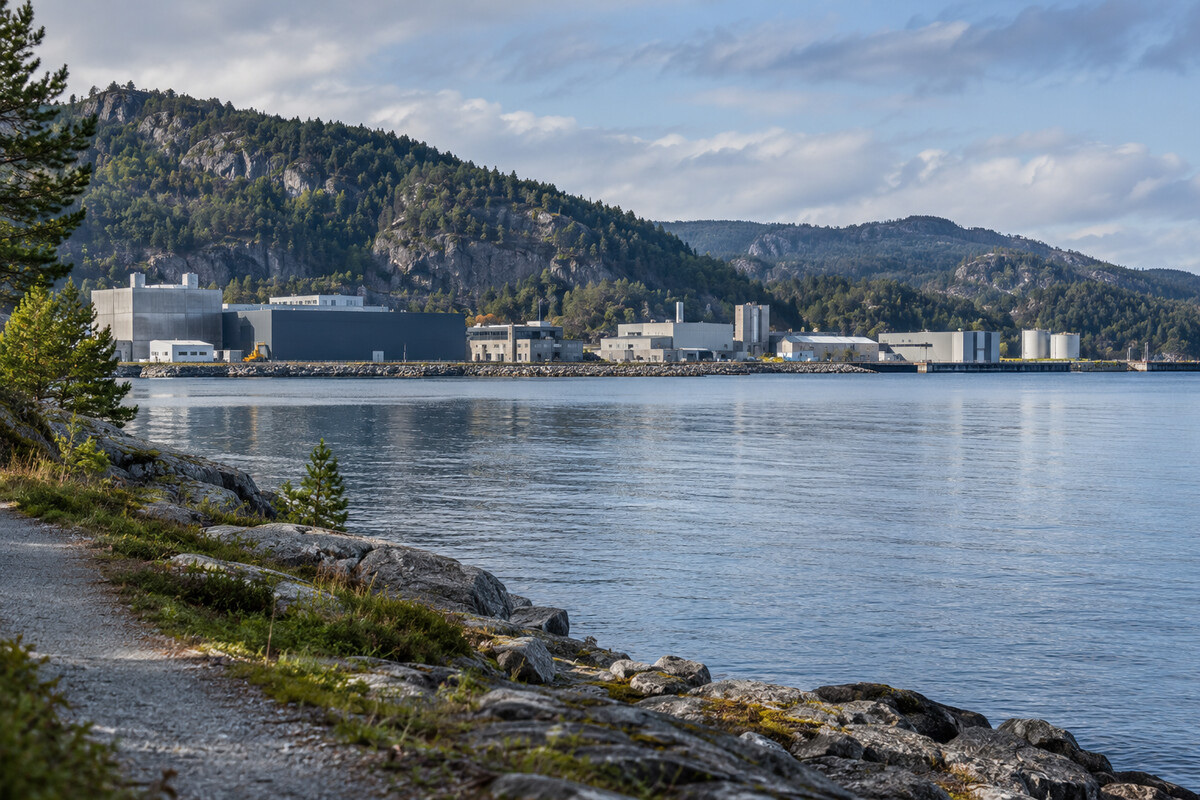
Via ONE officially opened at Herøya on 16 October 2024 with four full-size furnaces for synthetic anode graphite. At full ramp-up, the plant was designed to produce 2,000 tons annually and employ more than 100 people. Its production equipment supported technology verification and customer qualification ahead of the proposed larger manufacturing programme. Vianode had operated an industrial pilot in Kristiansand since 2021 and opened a technology centre there in 2022. Chief operating officer Hans Erik Vatne described Via ONE as a substantial expansion of the company's production capability. Synthetic graphite is made through high-temperature processing, whereas natural graphite is extracted from carbon-rich rock. Both supply routes provide material used in battery anodes.
Financing development and new products
Euler Hermes issued a letter of interest in February 2025 indicating that Vianode was eligible in principle for a loan guarantee of up to $300 million. The agency acted for the German government, and the proposed guarantee related to production-equipment procurement for the North American plant. The project then had an initial design of approximately 70,000 tons a year and a planned production start in the second half of 2027. Chief financial officer Howard Ormonroyd was also discussing financing with other export-credit agencies, commercial banks and battery-industry participants. Site selection near the US–Canadian automotive cluster was in its final stages, while Vianode assembled a local project organization.
Vianode introduced its first product based on recycled battery-grade graphite on 18 March 2025. Samples and technical data sheets were available for customer evaluation. The material formed part of a next-generation product series being developed at the Kristiansand Technology Center. Vianode's recycling process was intended to recover both synthetic and natural graphite commonly combined in lithium-ion battery anodes. Product-development vice-president Bridget Deveney said it retained the natural-graphite component while improving homogeneity and tailoring specifications to customer requirements. The work therefore involved recovering and conditioning an existing mixture of graphite materials. Bergold associated the product with reduced demand for virgin feedstocks and more localized battery supply chains. Further recycled products were under research, alongside the company's target of bringing its graphite footprint down to one kilogram of carbon-dioxide equivalents per kilogram by 2030.

Innovation Norway provided a separate NOK 400 million loan commitment announced in April 2025. It would partly finance Via ONE at Herøya, the Kristiansand Technology Center and Vianode's Oslo headquarters. Additional investment from owner Altor supported the arrangement. The loan came through the Green Industrial Financing programme on market terms; the company stated that it was not classified as state aid under EFTA Surveillance Authority rules. Vianode then had approximately 200 employees across its three Norwegian locations. Innovation Norway banking and finance director Leon Bakkebø associated the support with strengthening research capabilities and enabling international expansion. Straube described those domestic operations as the foundation for product qualification, technical expertise and the proposed larger manufacturing investment programme.
Recovering graphite and validating anodes
Fortum Battery Recycling and Vianode signed a memorandum of understanding on 13 May 2025 to develop a graphite recycling value chain. Their work covered securing concentrate from Fortum's hydrometallurgical facility in Harjavalta, Finland, optimizing recycled graphite for Vianode's commercial anode production and evaluating its performance in battery components. The agreement connected recovery from used batteries with material development and testing. Fortum battery-business head Tero Holländer supported returning recovered graphite to new lithium-ion batteries, alongside the metals already targeted by recycling operations. Bergold said access to concentrate with potential for increasing volumes would support Vianode's product-emissions objectives. Fortum also handled battery-production waste and operated pretreatment and mechanical-processing hubs. The memorandum established a development programme; the partners still needed to prepare and evaluate graphite for the intended manufacturing applications.

Materials made at Via ONE reached a qualification milestone with an unnamed leading automotive manufacturer in September 2025. Vianode stated that industrially produced graphite met the manufacturer's product requirements, extending the performance previously demonstrated using pilot material. Deveney identified both physical powder specifications and chemical anode requirements, including first-cycle efficiency, fast-charge behaviour and capacity. Bergold regarded the result as confirmation that the production process could scale from pilot equipment to full-size manufacturing equipment while maintaining consistency. Approval for commercial delivery from Via ONE was part of preparation for the larger Via TWO facility. The manufacturer was not named in the announcement.
Ontario selection and site preparation
Vianode selected Ontario for its first large-scale North American factory in October 2025. The initial investment was planned at more than C$2 billion, with successive expansion bringing capacity to as much as 150,000 tons annually. On 20 November, site preparation formally began at Yarmouth Yards Industrial Park in St. Thomas. Ontario proposed a loan of up to C$670 million, subject to a definitive agreement. The project was expected to create approximately 300 jobs initially and up to 1,000 at full scale. Vianode Canada managing director Emanuele Tricca identified proximity to automotive customers, available skills, infrastructure and the province's lower-carbon electricity grid as location advantages. A front-end engineering design study had been completed. Production was then targeted for 2028, following the earlier 2027 expectations. The Via TWO development plans remained a phased construction and financing programme.
Battery storage agreements
Vianode and battery technology company C4V signed a letter of intent in November 2025 concerning grid battery energy storage systems. They planned to explore supply through 2032, with initial deliveries expected in the second half of 2026. Via ONE would provide early volumes, followed by the proposed Via TWO plant. Bergold associated storage applications with diversification alongside the company's EV business. A separate announcement in March 2026 concerned a term sheet with an unnamed North American battery technology company. It specified 8,000 tonnes from Via ONE and a roadmap to more than 10,000 tonnes annually after Via TWO became operational. The initial 8,000-tonne quantity had no stated annual delivery period. The parties expected a final binding offtake agreement later in 2026.
Ateios Systems and Vianode announced a strategic pilot and letter of intent on 19 March 2026. Synthetic graphite would support Ateios' electrode production, initially using Via ONE material and later transitioning to Via TWO as capacity became available. The partners planned to build, test and deliver production-grade electrode samples. Ateios brought an electrode-manufacturing platform developed from technology pioneered at Oak Ridge National Laboratory, scaled at Eastman Kodak and benchmarked at the Battery Innovation Center. Its work spanned multiple battery chemistries and formats. CEO Rajan Kumar wanted to pair a graphite electrode with the company's existing cathode products. Vianode commercial executives Stefan Bergold and Glen Kozeli associated the collaboration with applications beyond vehicles, including robotics, drones and grid storage.

JR Energy Solution signed another letter of intent with Vianode in May 2026. The battery-component manufacturer in Eumseong, South Korea, would evaluate graphite for batteries serving EV and energy-storage applications. The companies planned to collaborate on product validation, qualification pathways and supply-chain integration before negotiating a future offtake agreement. Material would initially come from Via ONE, with a later transition envisaged to St. Thomas. JR chief executive Duke Oh emphasized the evaluation of materials against customer requirements for next-generation cells and electrode manufacturing. Kozeli regarded the collaboration as an opportunity to enter the Asian battery market with graphite sourced outside China.
Recycled feedstocks and production scrap
Vianode and battery recycler cylib signed a memorandum in June 2026 covering potential supplies of recovered graphite. The programme linked cylib's Optimized Lithium and Graphite Recovery technology, known as OLiC, with Vianode's formulation and validation work. cylib would recover concentrate and develop a supply chain meeting defined purity and quality requirements. Vianode would incorporate the material into anode formulations, undertake testing and use pilot projects to assess commercial-scale performance. The companies intended to negotiate a commercial agreement if evaluation produced successful results. cylib emerged from RWTH Aachen University research and was founded in 2022 by Lilian Schwich, Paul Sabarny and Gideon Schwich. Its water-based recovery process accepts battery packs, black mass and production scrap. Co-chief executive Lilian Schwich supported combining that recycling expertise with Vianode's anode-material development.
FAAM and Vianode announced a successful graphite-recycling demonstration on 29 September 2026. Vianode processed concentrate recovered from FAAM's anode-production scrap into anode-grade graphite. The companies reported electrochemical performance comparable with virgin graphite following their development and qualification programme. The announcement did not provide numerical test results. Their next stage was to scale the process toward industrial deployment and integrate recovered material into battery production. FAAM supplied battery-manufacturing expertise, while Vianode provided graphite processing and material development. FAAM chief executive Andrea Civitillo associated the results with reintegrating production scrap while retaining performance. Bergold supported returning that graphite to the battery-materials chain. The demonstration addressed scrap from anode manufacture, distinct from recovering graphite from complete end-of-life batteries.
A revised timetable and search for capital
Vianode was seeking an additional partner by September 2026, with possible outcomes ranging from industrial collaboration to a full takeover. Straube said the company had hired JPMorgan to assist the process and hoped to secure a partner by year-end. It needed capital and industrial expertise for its next expansion phase. Altor had been the sole financial backer since 2024, when Hydro decided to sell its stake and stop further funding. Altor spokesperson Andreas Hamrin described Vianode as an attractive case for a prospective partner, citing its technological and commercial viability. The Ontario factory required additional funding to be completed. Its production-start target had moved to 2029 by 30 September 2026, later than both the original 2027 expectation and the 2028 plan announced with the Ontario selection.

Leave a comment