

The April proposal for domestic processing
Russia’s Oil and Fat Union proposed an export duty on oilseed flax as new processing projects were being developed inside the country. On April 3, 2025, executive director Mikhail Maltsev said the union had submitted its proposal to the Agriculture Ministry and expected discussion by the tariff-regulation subcommittee. The requested rate was 30%, matching the percentage applied to rapeseed exports. Maltsev allowed that the final rate could be lower and advocated introducing protection in stages as domestic processing expanded.
Maltsev identified an Aston Group subsidiary’s project for processing 140,000 tonnes of flax and a similar project planned by Sodruzhestvo. He argued that competing markets protected their processors and that Russia should address that imbalance. The Institute for Agricultural Market Studies, or IKAR, presented a preliminary forecast of 1.37 million tonnes of flaxseed for the 2025–26 agricultural year, against 1.25 million in 2024–25 and 1.153 million in 2023–24.

The earlier market for unprocessed seed
Russian flaxseed exports were already expanding before the 2025 duty debate. OleoScope analyst Kirill Lozovoy put shipments in January–July 2023 at about 900,000 tonnes, almost 60% above the same period a year earlier. China accounted for approximately 66% of sales, compared with 50% previously. Shipments to that market reached 581,000 tonnes, up from 271,000 tonnes. These were seed exports: the figures did not measure the output or sales of a domestic oil mill.
The destinations were changing at different speeds. Lozovoy reported shipments of 125,000 tonnes to Belgium and 23,000 tonnes to Latvia, with purchases by both countries down 20%. Poland took more than 42,000 tonnes, approximately triple the nearly 14,000 tonnes recorded a year earlier. He described the prevailing flax-growing business model as selling raw material abroad and considered new specialised processing capacity a potential additional driver for the crop and its processed products. His assessment preceded both the EU’s tariff changes and the later Russian proposal.
The rapeseed policy used as a benchmark
Russia had changed its treatment of rapeseed in 2024. The government replaced a temporary export ban with a duty of 30%, subject to a minimum of €165 per tonne. The announced period ran from September 1, 2024, through August 31, 2026, for exports outside the Eurasian Economic Union. That earlier decision supplied the percentage benchmark used by the Oil and Fat Union in its flaxseed proposal.

The rapeseed arrangement contained both a percentage and a monetary floor. The April flax proposal referred to the 30% rate, while allowing for a lower final decision. The €165-per-tonne minimum belonged to the rapeseed measure; it was not a stated minimum for flaxseed in Maltsev’s proposal.
The EU’s separate import measures
The Council of the European Union adopted higher tariffs on Russian and Belarusian cereals, oilseeds and related products on May 30, 2024. The measure was scheduled to enter into force on July 1. It covered products originating in, or exported directly or indirectly from, either country and removed their access to the EU’s tariff-rate quotas. The Council described its objective as preventing disruption of the EU grain market and reducing Russian revenue from sales into that market.
The Council also linked the decision to Russia’s full-scale invasion of Ukraine and the appropriation of agricultural products from occupied Ukrainian territories. Those were the institution’s stated grounds for the measure. Transit through the EU to final destinations in other countries was left unaffected. The decision concerned access to the importing market, whereas the Russian industry proposal concerned charges on seed leaving Russia. The two measures therefore applied at different borders and arose from separate policy decisions.

The tariff schedule distinguishes seed from oil
Council Regulation (EU) 2024/1652 assigns different treatment to individual commodity codes. Non-sowing linseed under Combined Nomenclature code 1204 00 90 carries a special schedule for Russian or Belarusian origins and direct or indirect exports: 10% through December 31, 2024, 20% during 2025 and 50% from January 1, 2026. The regulation attaches that sequence to a specific footnote rather than to every product derived from flax.
Linseed for sowing, code 1204 00 10, appears under a different footnote setting a 50% rate for the affected origins. Linseed oil entries and solid residues from linseed-oil extraction also use that separate footnote. Goods of another origin do not acquire the higher tariff merely by transiting Russia or Belarus. The phased rate for ordinary linseed cannot be transferred to sowing seed, oil or cake as though they were one customs entry.
Kazakhstan’s position in the June 2025 market
Kazakhstan’s Grain Union analyst Yevgeny Karabanov expected the country to gain business as the EU raised tariffs on Russian flaxseed. On June 4, 2025, he put Kazakh exports for September 2024–April 2025 at 413,800 tonnes, compared with 192,300 tonnes a year earlier. April shipments were 35,400 tonnes, down 13,100 tonnes from March because stocks were low. His forecast for the full 2024–25 agricultural year remained 500,000 tonnes despite that monthly decline.

Karabanov expected flax acreage to expand to one million hectares in 2025. He cited strong EU demand and EXW prices of $588–598 per tonne. That price basis excluded shipping, customs clearance and additional costs. He also put Russian deliveries to the EU at 167,000 tonnes out of total EU imports of 378,000 tonnes in August 2024–March 2025. The periods differed from the Kazakh shipment series. His view that Kazakhstan could replace Russia in that market was a forecast, alongside the observed trade figures and prevailing price snapshot.
Asva’s planned factory and storage system
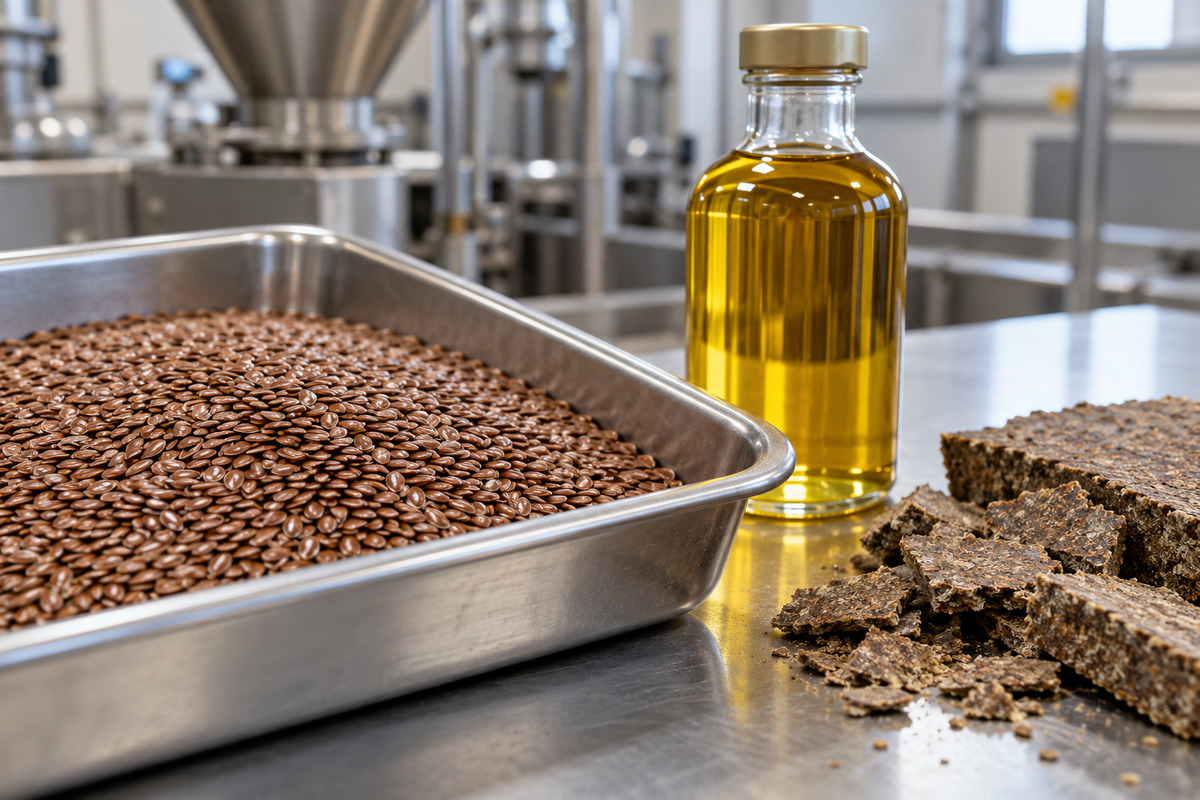
Asva planned its factory in Rostov Region’s Azov district. In April 2025, regional official Alexei Gospodarev scheduled integrated oil-pressing tests from April 22, a final construction-supervision commission in June and commissioning in August. Construction had begun in May 2023. The investment then exceeded 2.8 billion roubles. Planned annual processing was 148,500 tonnes of flaxseed, approximately 450 tonnes daily, with a programme of 53,500 tonnes of oil and 90,000 tonnes of cake. The 7.5-hectare site was designed around production and storage facilities:
- Up to 30,000 tonnes of flaxseed storage;
- Capacity for 7,000 tonnes of linseed oil;
- A floor-storage warehouse for 5,000 tonnes of cake;
- A planned refining workshop handling up to 100 tonnes daily.
The project envisaged 55 jobs. General director Vitaly Litovka described an export-oriented operation and said the cake warehouse would allow a vessel of 6,000 tonnes deadweight to be loaded in two days. He expected more than 20% of products to be sold domestically.
Reported support for a lower rate
By August 26, 2025, market participants were describing a different rate from the union’s original request. Sources told Interfax that the customs subcommittee had approved a 10% flaxseed export duty. Other industry representatives were aware of the decision, but they could not give a starting date because the documents were still being prepared. The information came from unnamed market sources and concerned approval within the policy process, before the subsequent government decree.
IKAR’s forecast at that stage placed production in the September–August 2025–26 agricultural year at 1.3–1.4 million tonnes. The comparison figures remained 1.25 million tonnes for 2024–25 and 1.153 million tonnes for 2023–24. The August forecast was a range, while the preliminary April outlook had used 1.37 million tonnes.
The October decree
The government adopted Decree No. 1535 on October 3, 2025, amending its export-duty schedule established by Decree No. 2068 of November 27, 2021. The amendment rewrote footnote 14C to apply a 10% charge based on the customs value of the goods. Its initial stated period continued through August 31, 2026, inclusive. This was the enacted percentage, rather than the 30% originally sought by the industry union.

The decree provided for entry into force seven days after official publication. The published legal record gives October 4 as the publication date and October 12 as the effective date. The change applied within the schedule for goods exported beyond the customs territory of the Eurasian Economic Union. Its calculation base was customs value, with the percentage and original end date specified in the amended footnote.
September production and the first export routes
The Rostov regional investment-development agency supplied operating figures on October 14, 2025. Asva had processed more than 8,000 tonnes of flaxseed during September, producing approximately 2,900 tonnes of oil and 4,900 tonnes of cake. Investment in the factory had exceeded 3.2 billion roubles by that account. The figure was later than the investment estimate used in April, while the September production quantities referred to a single operating month rather than annual design capacity.
Agency director Igor Burakov said Asva intended to export at least 70% of its finished products. Oil and cake shipments had reached China, Turkey and Chile. Bulk oil moved through the port of Rostov, with container shipments through Novorossiysk. The plant initially bought seed mainly from Rostov Region and Stavropol Territory and planned purchases in the Volga region and Southern Urals. Its site in the Novoaleksandrovsky industrial park combined grain-elevator and production facilities with oil-tank storage. The agency described both cold-pressed and hot-pressed oil in the plant’s range.

Processing plans in the Amur region
Sodruzhestvo’s expansion brought a second regional dimension to the processing programme. At an August 2025 meeting covered by Amurskaya Pravda, procurement director Irina Brovkina said the company’s oilseed purchases had exceeded 3.5 million tonnes in the preceding season and could double over two years with new plants in Kursk and Amur Region. Soybeans represented more than 40% of purchases. Flax remained a smaller part of processing, but the company expected its flax-processing capacity to nearly double to 400,000 tonnes during 2025.
A planned plant near Belogorsk was intended to handle up to one million tonnes of oilseeds, rather than that volume of flax alone. Local growers were considering flax alongside soybeans in crop rotations. Kazanskoye in Seryshevo district had trialled the crop. Researcher Viktor Zelentsov considered the regional temperature and moisture conditions suitable, while identifying August rainfall and harvesting arrangements as issues requiring local choices of sowing dates and technology. Further experimental sowing and variety assessment were being discussed with the Amur soybean research institute.
National exports and factory output in 2025
Agroexport’s February 19, 2026 estimates put Russian linseed-oil exports in calendar 2025 at about 10,000 tonnes worth $12 million. Physical shipments increased 1.9 times, while value rose 2.2 times compared with 2024. China remained the largest buyer, taking $5.4 million, up 33%. Chile bought $5.3 million after deliveries resumed for the first time since 2021.

Seed exports also grew: Agroexport estimated 1.2 million tonnes, up 9%, worth more than $590 million, up 15%. Asva director Vitaly Litovka dated his plant’s processing start to the third quarter of 2025. The factory processed more than 40,000 tonnes of seed during the year, producing around 15,200 tonnes of oil and 24,000 tonnes of cake. Those factory production figures had a different scope from national exports. Litovka identified bulk shipments through Rostov and container dispatches through Novorossiysk as routes used for the first export consignments.
Seed movements through Novorossiysk
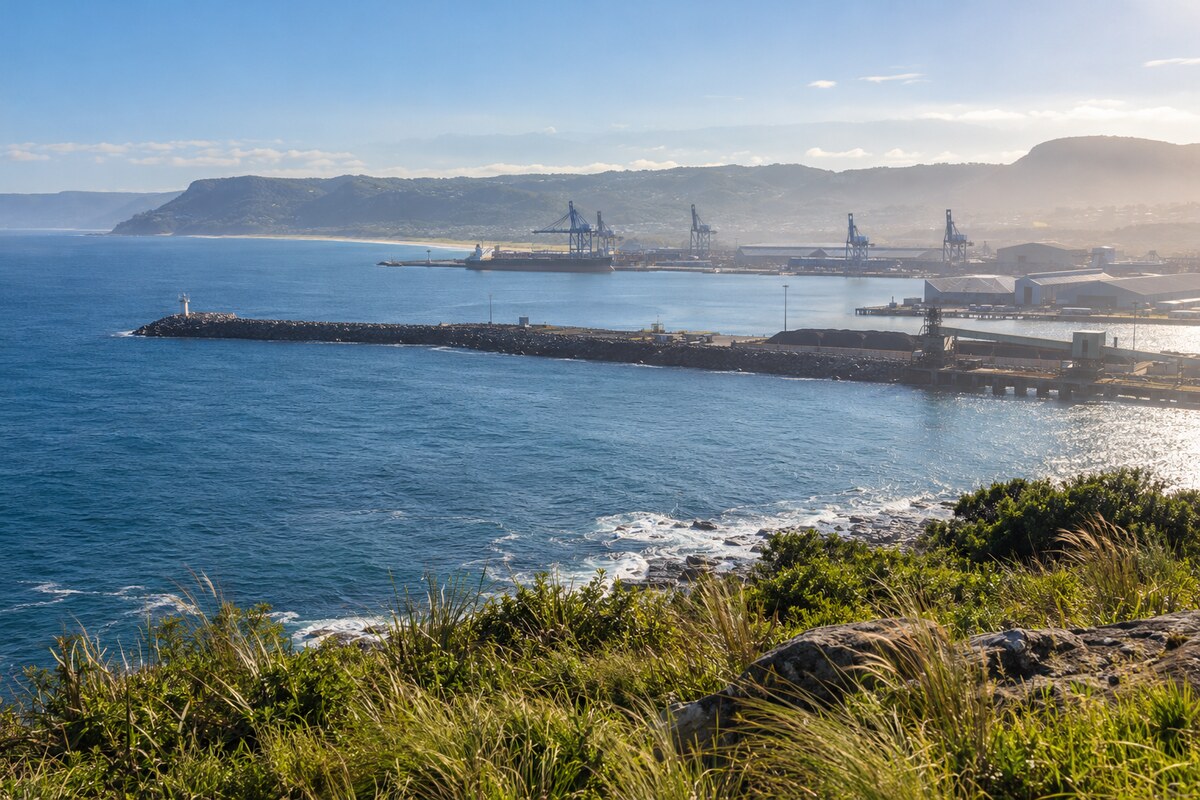
Novorossiysk was also an established outlet for unprocessed flaxseed. The Centre for Agroanalytics, citing the agricultural-product quality-assessment centre, put seed exports through the port in January–June 2025 at 110,000 tonnes, against 58,300 tonnes in the same months of 2024. Shipments to Bangladesh and Saudi Arabia resumed after no deliveries to those markets in 2023 or 2024. These were port shipment figures, separate from the country’s full-year export estimates.
China accounted for 92% of the seed-export volume in that account, Belgium for 5% and Turkey for 2%. A shipment of 996.2 tonnes of linseed oil went to China in July 2025. Seed cargoes and oil cargoes were recorded separately even when they used the same outlet. The cargo figures cover first-half seed shipments and a specifically dated July oil consignment.

Kazakh trade figures reported in May 2026
By May 4, 2026, Karabanov had raised Kazakhstan’s flaxseed export forecast for the agricultural year to 1.05 million tonnes, from 910,000 tonnes projected in April. He put shipments in September 2025–March 2026 at 890,700 tonnes, 136% above the corresponding period a year earlier and 70% above exports in the entire preceding agricultural year. March exports, excluding Eurasian Economic Union destinations, were 126,100 tonnes, down 3% from February.
China and Belgium together accounted for 66.5% of the seven-month exports. China took 365,800 tonnes and Belgium 227,300 tonnes. He expected Kazakh flaxseed to become the dominant supplier to the EU as the tariff on Russian seed reached 50% in 2026. Kazakhstan’s 2025 oilseed harvest was reported at a record 4.8 million tonnes, including 1.4 million tonnes of flaxseed. The forecast for future sales and the recorded harvest and shipment figures retained their separate dates and measurement periods.




Leave a comment