
The Swedish selection and its timetable
Vattenfall selected Rolls-Royce SMR for a new nuclear project in Sweden on 15th June 2026, ahead of GE Vernova. Final commercial terms were still to be settled, although the British government expected a multibillion-pound agreement. The project company, Videberg Kraft, was 80% owned by Vattenfall and 20% by a group of Swedish industrial companies. The government proposed taking a 60% majority interest, subject to parliamentary approval. Three reactors were planned near the existing Ringhals facility in southwest Sweden. Vattenfall forecast approximately 12 terawatt hours of annual electricity production; Rolls-Royce SMR put their contribution at around 6% of Swedish annual consumption. A first reactor could operate in the mid-2030s, depending on permits and regulatory processes. Vattenfall chief executive Anna Borg described the choice as participation in a wider European initiative. The June 2026 selection.
Rolls-Royce SMR had entered Vattenfall’s shortlist of two small modular reactor developers in June 2024. Its presentation covered an integrated power-station design and a modular construction approach, which the company associated with reducing project risk. Vattenfall was considering both small modular and large reactor options. Its focus was the Ringhals nuclear site, with the earliest operation then envisaged for the first half of the 2030s. The company’s announcement linked the competition to a projected need for another 100–250 terawatt hours of electricity production over the following 25 years and Sweden’s fossil-free economy goal for 2045. Chief executive Chris Cholerton welcomed further evaluation by the utility. At that stage the choice placed Rolls-Royce SMR in a smaller candidate group; it was still competing for potential deployment.

By August 2025, Vattenfall had advanced Rolls-Royce SMR to the final stage alongside one other technology provider. Further detailed assessment followed the 2024 shortlisting. The initial project could involve three Rolls-Royce units at Ringhals on the Värö Peninsula, an established nuclear location on the Swedish west coast. Each unit’s proposed electrical output was 470 megawatts. Rolls-Royce SMR described its design as a factory-built power plant intended to operate for more than 60 years and to supply electricity equivalent to the needs of a million homes. Cholerton said the company would work closely with Vattenfall during the final selection stage.
Generic assessment before individual sites
The British design assessment had completed its preparatory stage on 3rd April 2023. The Environment Agency, Office for Nuclear Regulation and Natural Resources Wales moved the Rolls-Royce SMR design from Step 1 into Step 2 of Generic Design Assessment, or GDA. Step 1 had begun in April 2022 and covered the assessment’s scope, the company’s submission schedule, management arrangements and readiness for technical scrutiny. The next stage was expected to take 16 months. Rolls-Royce SMR also opened a public comments process through its website. Questions, company responses and relevant issues could inform the regulators’ continuing work. Natural Resources Wales would lead engagement with people in Wales. The assessment concerned a generic power-station design before proposals for particular locations, with more detailed examination as the stages progressed.
The same three regulators announced completion of Step 2 in July 2024 and progression into detailed assessment under Step 3. Their teams had examined hundreds of submissions and documents and held technical meetings with the developer. The Environment Agency said it had not identified significant issues or concerns at that stage, while stressing that substantial work remained. Environmental protection and radioactive-waste management formed part of the assessment. The agency also planned consultation on its preliminary view during Step 3. Final design-acceptance or design-acceptability statements depended on meeting the regulators’ standards at the end of that stage. Even those generic judgements would not guarantee a site licence, construction permissions or environmental permits for an individual location. The July milestone therefore represented progress through design scrutiny, with site-specific decisions remaining separate. The regulators’ July 2024 announcement.
In September 2024, Great British Nuclear shortlisted Rolls-Royce SMR alongside three international suppliers in its technology competition. The company would be invited to negotiate over deployment in the United Kingdom. At that point, its development programme had received £210 million of government support through Phase 2 of the Low-Cost Nuclear Challenge, administered by UK Research and Innovation. Private capital provided another £280 million. That public support aimed to accelerate the design and its progress through at least Step 2 of GDA. Cholerton welcomed the opportunity for formal negotiations and linked a successful procurement outcome to future supply-chain investment and employment.

From preferred bidder to a Wylfa contract
The British procurement reached its preferred-bidder decision on 10th June 2025. Rolls-Royce SMR was selected to partner with the publicly owned Great British Energy – Nuclear, subject to final government approvals and a signed contract. The organisation adopted that name from Great British Nuclear on the same day. The government pledged more than £2.5 billion for the overall small modular reactor programme during the Spending Review period. GBE-N aimed to establish a development company, allocate a site and sign contracts later in 2025, with grid connections targeted for the mid-2030s. The competition had begun in July 2023 and involved a two-year procurement process. Ministers also stated an ambition for 70% of supply-chain products to be British-built.
Wylfa on Anglesey was chosen as the first British SMR site in November 2025. GBE-N announced the decision on 13th November, describing planned generating capacity of up to 1.5 gigawatts. The development could support up to 3,000 jobs during peak construction as well as longer-term careers. Its employment estimate concerned the future building programme. GBE-N intended to continue engaging with local communities and other stakeholders during development. Chair Simon Bowen presented Wylfa as the starting point for a fleet approach and a source of long-term investment for the local economy. The programme’s £2.5 billion government backing was intended to attract private investment and support domestic suppliers.

Rolls-Royce SMR and GBE-N signed their Wylfa contract on 13th April 2026. It covered three units and allowed the developer to begin site-specific design, order critical components and expand recruitment. The company expected 3,000 local jobs and another 5,000 nationally through its activities and supply chain. Separately within the same announcement, the National Wealth Fund made a loan facility of up to £599 million available on commercial terms to support finalisation of the generic design. This facility financed design development; it was not presented as the total price of the Wylfa station. GBE-N chief executive Simon Roddy emphasised long-term industrial investment, skills and capability.
Developing modules, data and simulation
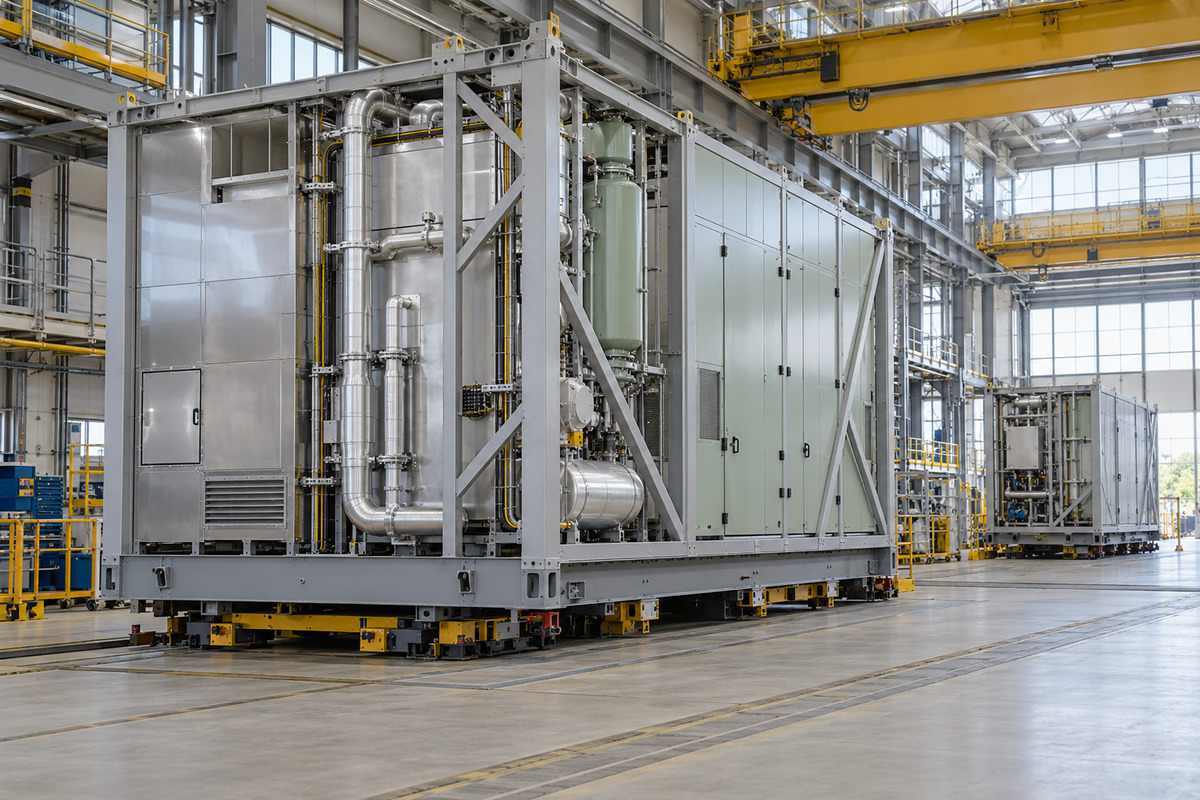
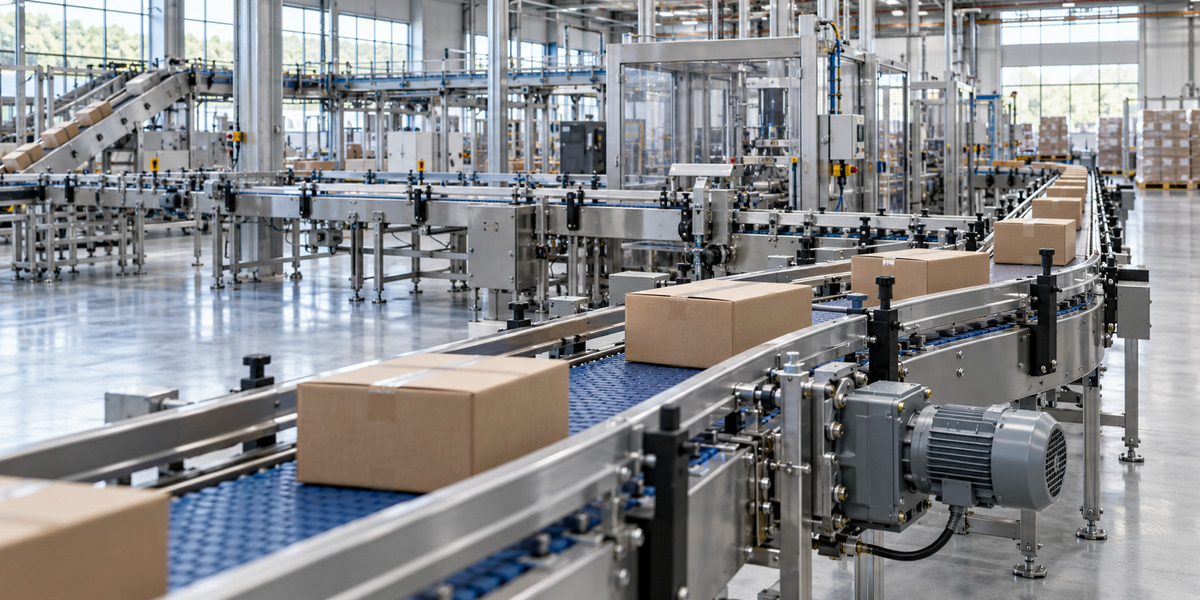
Manufacturing development included a Sheffield facility announced in May 2024. Rolls-Royce SMR planned to produce and test working prototype modules inside the University of Sheffield Advanced Manufacturing Research Centre’s Factory 2050. The initial phase was worth £2.7 million within a wider package exceeding £15 million. Chief manufacturing engineer Victoria Scott said prototype work would refine production, testing and the company’s digital manufacturing approach. The proposed factories would eventually produce prefabricated, pre-tested modules for assembly into power stations. AMRC brought expertise in automation, robotics, casting, digital manufacturing, prototyping and training. Its research network had around 120 industrial partners and was part of the High Value Manufacturing Catapult.

Module transport was the subject of a separate innovation challenge launched in May 2024. Rolls-Royce SMR sought ideas for tracking modules and collecting data during their journey from a factory to the assembly site. It offered a potential contract worth up to £100,000 for the winning proposal. The challenge ran with Innovate UK Business Connect through its Innovation Exchange programme. Research and technology manager Greg Wilkinson wanted specialists from within and beyond the nuclear industry to propose methods for monitoring changes in real time. The company associated that monitoring with maintaining the quality of prefabricated, pre-tested modules as they arrived for assembly.
GSE Solutions received a £1.2 million simulator contract in July 2024. The platform was intended to support development, verification and validation of the proposed power station’s performance and control systems. Engineering director David Dodd connected the work with Rolls-Royce SMR’s digital development methodology and modular approach. GSE supplied engineering and workforce solutions across power and clean-energy industries. Its simulation work formed part of the wider programme to mature the plant design ahead of deployment.

Building a component supply chain
Rolls-Royce SMR also invited suppliers to a conference planned for 19th June 2024 at Factory 2050 in Sheffield. The invitation went to existing and prospective suppliers, including small, medium-sized and large organisations with or without nuclear experience. Chief finance officer Peter Morton said the company wanted to understand the breadth of available capabilities and capacity. Suppliers could meet senior representatives and discuss participation in the programme. A supplier portal launched the previous year already had more than 700 registrations by the conference announcement on 4th June. The portal was intended to create relationships with firms offering products and services.
Siemens Energy became the global turbine-systems partner in February 2025. Its exclusive agreement covered the complete turbine package, from design and manufacture through installation and commissioning, for a prospective fleet of Rolls-Royce SMR power plants. The partners intended to use Siemens Energy’s existing British manufacturing base as well as its international operations. At announcement, Siemens Energy employed about 100,000 people across more than 90 countries and had generated €34.5 billion of revenue in its 2024 financial year. Its broader equipment business included gas and steam turbines, power generators and transformers. Rolls-Royce SMR expected the partnership to create manufacturing opportunities and support jobs.

Curtiss-Wright’s British nuclear business, formerly Ultra Energy, joined the supply programme through a multimillion-pound strategic partnership announced in August 2025. Its scope covered design, qualification, testing and supply of non-programmable diverse reactor-protection systems. The work was to be delivered from Wimborne in Dorset. Rolls-Royce SMR expected it to create more than 200 British jobs and expand nuclear skills and capabilities. Operations and supply-chain director Ruth Todd said the relationship secured expertise for a critical part of the design. Curtiss-Wright general manager Ognjen Starovic linked the partnership to career opportunities for the local team. The agreement covered systems development and supply for the prospective fleet.
BWX Technologies joined the programme in October 2025 through a multimillion-pound detailed-design contract for nuclear steam generators and a memorandum of understanding supporting early fleet units. Its Ontario subsidiary, BWXT Canada, had more than 60 years of experience and had supplied over 315 steam generators internationally. The partners also planned a localisation strategy for future manufacturing and related work in Britain, the Czech Republic and elsewhere in Europe. Rolls-Royce SMR scheduled supplier events for 13th November in Britain and 27th November in Prague. The prospective opportunities covered pumps, valves, heat exchangers, tanks, vessels, turbine-island work and civil engineering. Todd described specialist component sourcing as part of the company’s delivery approach. The contract concerned design work, while the memorandum and localisation activity addressed potential subsequent manufacturing arrangements.

Another supplier relationship began with a memorandum of understanding signed with ŠKODA JS in August 2025. The companies would explore production of components for a global Rolls-Royce SMR fleet. The Pilsen-based manufacturer was part of the ČEZ Group, employed more than 1,000 specialists and traced its present nuclear-engineering business to 1956. Chief executive František Krček said it was prepared to invest further in the industry and contribute engineering as well as production capacity. In a separate contract announced alongside that memorandum, ÚJV Řež would provide analysis, testing and evaluation of components. The scientific-services organisation had worked with European industry for more than 60 years. These were different commitments: exploratory manufacturing cooperation with ŠKODA JS and contracted assessment work with ÚJV Řež.
Programme delivery and European collaboration
Amentum became programme delivery partner in January 2026, with an immediate role supporting the first British and Czech projects. Turner & Townsend, Hochtief, Mace Consult and Unipart supported that role. Amentum had participated in the supply-chain consortium working with Rolls-Royce on modular power stations since 2016. Its British operations employed more than 6,000 people, with experience in programme and construction services at Hinkley Point C and Sizewell C and support for existing nuclear stations. Amentum and Rolls-Royce SMR expected the partnership to combine manufacturing and engineering knowledge with programme-management capability for future deployment. Its responsibilities under the collaborative agreement included:
- programme integration, oversight and governance;
- construction management and deployment execution;
- integrated planning across the project;
- coordination with a supporting delivery supply chain.
European collaboration provided another channel for developing the industrial network. In October 2024, Rolls-Royce SMR was selected among the first project working groups of the European Industrial Alliance on Small Modular Reactors. The alliance aimed to help development, demonstration and deployment of initial European SMR projects in the early 2030s. Its working groups addressed enabling conditions, including revitalisation of the nuclear supply chain. Rolls-Royce SMR customer-engagement head Sophie Macfarlane-Smith expected cooperation with customers, suppliers and other members to support advanced manufacturing and modular construction capabilities. The company was already participating in the alliance before its project group was selected. Its work there sat alongside individual national procurement programmes and commercial supplier agreements, with the alliance’s deployment timetable remaining an ambition for future projects. European project collaboration.


Leave a comment