
A proposed Central Asian production hub
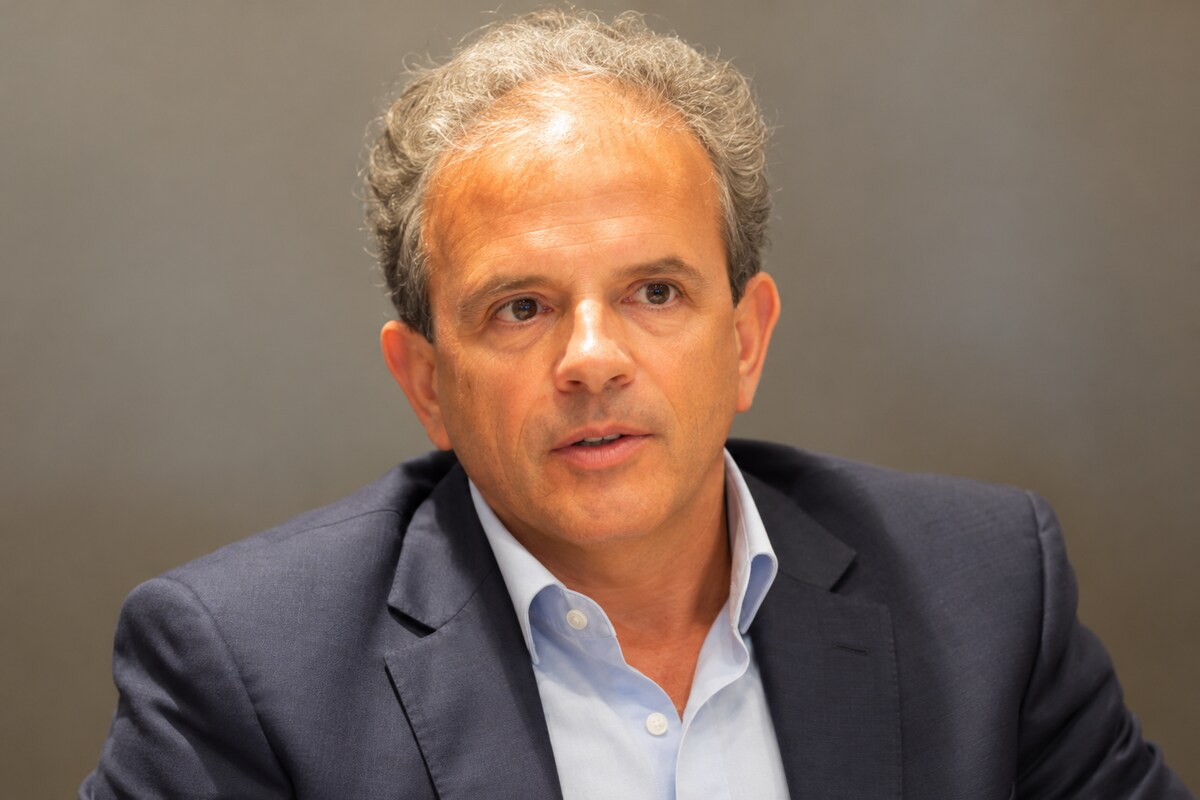
Roca Group planned a €70 million industrial park in Kyzylorda, Kazakhstan, with around 300 jobs. Chief executive Albert Magrans expected construction to take 18–24 months. Sanitaryware, furniture assembly and installation systems would form part of the production mix. The company, founded in Barcelona, Spain, in 1917, intended to serve Central Asia through the hub.
Magrans linked the location to raw materials, infrastructure and workers; engineers tested samples. Water recycling and rooftop solar were proposed features. In his Euronews interview, he separated the venture from Roca’s Russian exit and described its Chinese factories as mainly serving China. Kazakhstan already received Roca exports. These were investment plans; the interview did not establish that the Kyzylorda factory had opened.
Electric firing at Gmunden
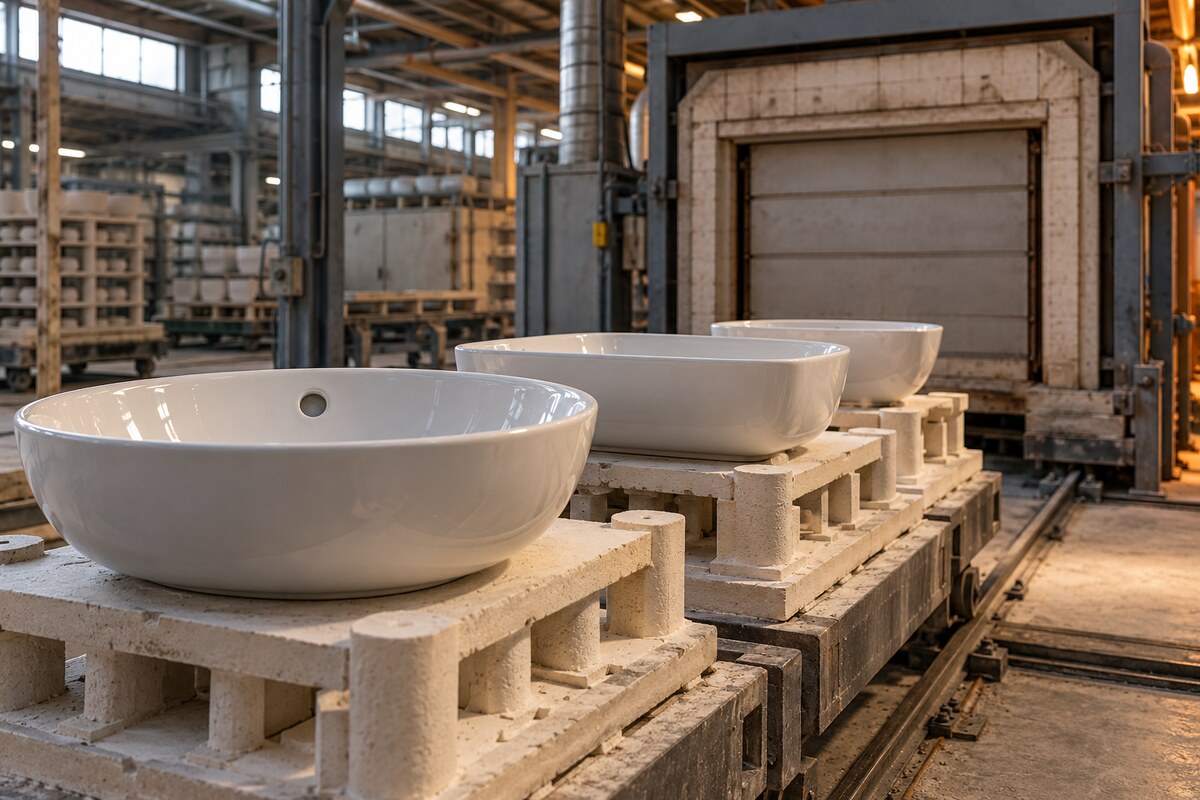
Laufen’s Gmunden factory in Austria started producing complex ceramic pieces with an electric tunnel kiln following four years of development. Roca announced the commissioning on 28 November 2023, describing the equipment as the first of its kind for sanitaryware. German kiln manufacturer Keramischer OFENBAU supplied the technology. The factory already used electricity from renewable sources when it became the first installation site. Roca identified the automated kiln as an alternative to firing systems dependent on fossil fuels, and set a goal of making Gmunden a net-zero sanitaryware production facility by 2024.
Roca Group Ventures also acquired a majority interest in Keramischer OFENBAU Holding GmbH, owner of the kiln manufacturer. The businesses were to remain independent, with Roca committing further funding for development, implementation and commercialisation. The equipment supplier’s activities extended beyond sanitaryware to tableware, technical ceramics and structural ceramics. Its services included new roller, tunnel and shuttle kilns as well as upgrades to existing equipment. The Gmunden project formed part of Roca’s longer programme targeting carbon neutrality by 2045.

Retaining enamelled-steel production in Goslar
Roca acquired Alape GmbH with effect from 16 October 2023. The German company made premium bathroom products from enamelled steel at Goslar, including its Hahndorf factory. The transaction took Alape out of preliminary insolvency proceedings and secured more than 90 jobs. Roca committed to retaining the factory as a production and innovation base while keeping Alape an independent brand with its own strategy and culture. Its principal markets included Germany, Switzerland, Austria and the Benelux region.
Three managers took responsibility for the business: Michael Gatzke as commercial director, Andrea Jürgens for marketing and design, and Dr Julia Rami for production. Alape had been founded by Adolf Lamprecht in Penig in 1896. At the acquisition announcement, it employed 94 people and manufactured washbasin products at two Goslar sites. Those employment figures described the company’s workforce and the jobs secured by the transaction respectively. Roca added enamelled-steel expertise to a washbasin portfolio that already included ceramics, mineral cast materials and Saphirkeramik, while Alape gained access to the group’s international distribution and project business.

Furniture distribution through Madeli
Roca announced its purchase of Madeli on 1 April 2023. The Florida business specialised in premium bathroom furniture and mirrors, with annual turnover of US$13 million and a network of 500 points of sale across the United States. The announcement did not assign that turnover to a particular financial year. Alantra advised Roca on the transaction. Madeli’s business added both a furniture brand and an established route to customers in the American market.
Roca presented the purchase as part of its growth programme in the United States. The company intended to continue developing Madeli through the additional distribution network and a product range complementary to its existing bathroom catalogue. Earlier manufacturing investment in the Americas included Mexican factories acquired in 2016. Roca described bathroom furniture as an important purchase decision within the overall bathroom package; this was the company’s commercial rationale for the deal, rather than a quantified forecast of additional sales.
Investment and financial results for 2023
Roca Group generated revenue of €2.057 billion in 2023. EBITDA reached €318 million, equivalent to approximately 15% of revenue, while net profit was €27 million. The group’s 21 June 2024 results announcement identified the hyperinflation adjustment at its Argentinian subsidiary as a substantial influence on net earnings. Roca attributed the difficult trading environment to slower new construction, high interest rates, inflation and a shift in household spending towards services and leisure after the pandemic.
Investment rose to €153 million from €135 million in 2022, an increase the company put at 13%. Factory capacity, competence centres, digitalisation, new products and upgraded facilities were among the uses of that expenditure. The programme also covered showrooms, including Roca Galleries and Laufen Spaces. Against a 2018 baseline, Roca reported a 50% reduction in Scope 1 and 2 carbon dioxide emissions and a halving of waste generated. Energy intensity, measuring energy required for a given output, had fallen by 57%.

Bathroom assistance devices from Switzerland and Poland
Roca acquired Nosag and IneoCare in April 2024, extending its range of bathroom and toilet assistance devices. Nosag was based in Dintikon, Switzerland, and IneoCare in Dobroszyce, Poland. Both had been owned by founder Armin Zeder. Nosag began operating in 1977; it established IneoCare in 2020 to manufacture and supply most of its products. The two companies therefore entered the group with connected commercial and production activities, rather than as unrelated suppliers of similar equipment.
Their products served people with reduced mobility and older users. At the time of the announcement, the businesses were present in the Swiss market, and Roca planned to offer their products more widely across its international markets. That proposed expansion had no specified sales total or completion deadline. Roca intended the acquired ranges to complement products sold through its Roca and Laufen brands, including its total-care offering. The acquisition concerned assistance and adaptability within the bathroom, adding a different product category from the group’s ceramic basins, taps and bathroom furniture.

Public-space taps from Idral
Idral joined Roca Group in July 2024. The company specialised in taps for public and semi-public bathrooms, including applications in schools, hospitals and hospitality buildings. Its range covered electronic, self-closing and pedal-operated products, together with sensor taps and self-closing thermostatic cartridges. Idral operated from Gargallo in Novara, within Italy’s Piedmont region, and had more than 50 years of experience. The founding partners’ families, Vasconi and Angiolini, owned the business before the acquisition.
Idral recorded turnover of €10.3 million in 2023. It belonged to the Cusio Valsesia manufacturing cluster, which Roca described as comprising 87 companies and representing 20% of Italian production of taps and fittings. Those cluster figures covered multiple manufacturers and were not Idral’s own output or market share. Roca saw the purchase as a way to extend its faucets division through a complementary range for communal facilities, with growth potential in Europe. KPMG and Baker McKenzie advised Roca, while Alisea Corporate Finance and Tonucci & Partners advised Idral.

Modular installation equipment from Innotec
Roca’s German subsidiary Sanitärtechnik Eisenberg GmbH acquired Innotec Systemelemente GmbH in a transaction announced on 2 September 2024. Innotec manufactured modular solutions for integrating structural elements into bathrooms. Its range also included fastening solutions produced through robotic welding. The business was located in Grossenhain, Germany, where it employed 68 people. Its turnover for 2023 was €24.7 million. The acquisition was completed through an existing group subsidiary specialising in bathroom installation systems.
Roca intended to develop its installation business by combining Innotec’s activities with the group’s wider operations and supply chain. It identified Europe and the broader Europe, Middle East and Africa region as areas of potential growth. That geographical ambition was a company assessment, rather than a newly disclosed order book or production target. The acquired equipment addressed the structural integration and fixing of bathroom products.

Reported and adjusted results in 2024
Revenue reached €1.948 billion in 2024, down 5% from the previous year. Roca put the adverse turnover effect of currency depreciation against the euro at 6.7%. Operating profit was €108 million, representing a 5.6% return on sales. Net earnings depended on the accounting scope used: excluding the Russian exit and Argentinian hyperinflation effects, profit was €86.4 million; including those factors, the group reported a €61 million loss.
Roca invested €155 million during the year. Spending covered production needs, safety, digitalisation, cost reduction, product development and facility improvements. By its June 2025 announcement, the group reported reductions of more than 53% in emissions from its own operations and 55% in energy intensity against 2018. It also described electrification work at its Brazilian faucet factory and Portuguese bath and shower-tray plant, alongside a shower-enclosure factory designed for renewable electricity. Roca received an EcoVadis Platinum Medal in January 2025, a sustainability assessment covering environmental, employment, ethics and procurement criteria.

Phoenix adds Australian assembly and logistics
Roca announced its acquisition of Phoenix on 10 July 2025. The Australian company designed, assembled and marketed bathroom and shower fittings in the middle-to-upper part of the market. Founded in 1989, Phoenix had its headquarters in Melbourne and generated turnover of €35.4 million in 2024. It operated two facilities in Melbourne and another in Balcatta, Perth. The principal warehouse in Bayswater, Melbourne, had been designed specifically around the company’s logistics operations.
The Balcatta premises combined a showroom with a smaller warehouse, supporting customers in western Australia. Phoenix also maintained an internal design team, with collections recognised by Red Dot and Good Design awards. Roca described the transaction as strengthening its Australian business alongside the existing Roca and Laufen brands. The July announcement included a plan to open a Roca Gallery in Sydney before the end of 2025, together with a Laufen Space. That was the timetable stated at acquisition, rather than confirmation of an opening. Alantra, Allens and KPMG advised Roca; Gilbert & Tobin, Deloitte and CBW Partners advised Phoenix.
A majority-stake agreement for Antonio Lupi
On 22 July 2025, Roca announced an agreement to acquire a majority interest in Antonio Lupi Design through its Laufen subsidiary. The Italian company, founded in 1950, was headquartered in Stabbia, Tuscany. It distributed products in more than 80 countries, employed 100 people and recorded turnover of €42 million in 2024. Its Stabbia base included production facilities, a research and development centre and the principal showroom. The agreement concerned a majority stake rather than the purchase of every share.
The founding family would continue leading the business from Stabbia, with the company retaining its operational independence and identity. Andrea Lupi, the Italian group’s chief executive, regarded the alliance as an opportunity to expand in Italy and internationally. Albert Magrans described it as strengthening Laufen’s position in the upper end of the bathroom market. These assessments accompanied Roca’s stated intention to support the brand’s international commercial expansion. Alantra, Baker McKenzie and KPMG advised Roca on the transaction, while Ethica Group advised Antonio Lupi.
Venture funding for water technology
Roca Group Ventures led a US$5 million pre-Series A funding round for Boon, announced on 17 July 2024. The financing combined equity and debt and included other participants; the total was not disclosed as Roca’s individual contribution. Boon planned to use the funding to scale its WaterIoT platform. Its technology focused on water purification, dispensing and remote monitoring, with app-based adjustments and predictive maintenance for filters. Those functions were described by the companies alongside the financing, without an independently established performance figure.
Dr Vibha Tripathi, an Indian Institute of Technology Kanpur alumna, and Advait Kumar, a Penn State alumnus, founded the business in 2015. Boon had previously been known as Swajal. The transaction was Roca’s first investment in an Indian startup, a narrower description than its first investment in India: Roca had acquired Parryware in 2008. This was venture financing of a water-technology company, distinct from the acquisitions of manufacturers supplying the group’s bathroom product ranges.
Later results and completed showroom openings
Roca’s results published on 19 June 2026 added the full-year 2025 outcome. Net profit returned to €43 million, compared with the reported €61 million loss in 2024. Revenue was €1.96 billion. Growth measured at constant exchange rates was 3.8%, while the reported sales increase was 0.6% after currency movements. EBITDA reached €273 million. These were later financial results, rather than figures available when the Kazakhstan interview was first published.
Investment totalled €126 million in 2025. The programme included the following areas:
- Production capacity and new robotic factories.
- Competence centres, digitalisation and new products.
- Sustainability work and additional Gallery spaces.
The group’s international showroom timetable also became clearer. Delhi Gallery opened in November 2025, followed by Sydney Gallery in March 2026. The completed Sydney opening therefore differed from the earlier plan for 2025. Roca described its Galleries as meeting spaces for architects, designers and other professionals, hosting presentations and discussions as well as showcasing the brands. A Zagreb Gallery remained scheduled for September 2026 in the June results announcement.




Leave a comment