
Customer-ready vehicles reach the line
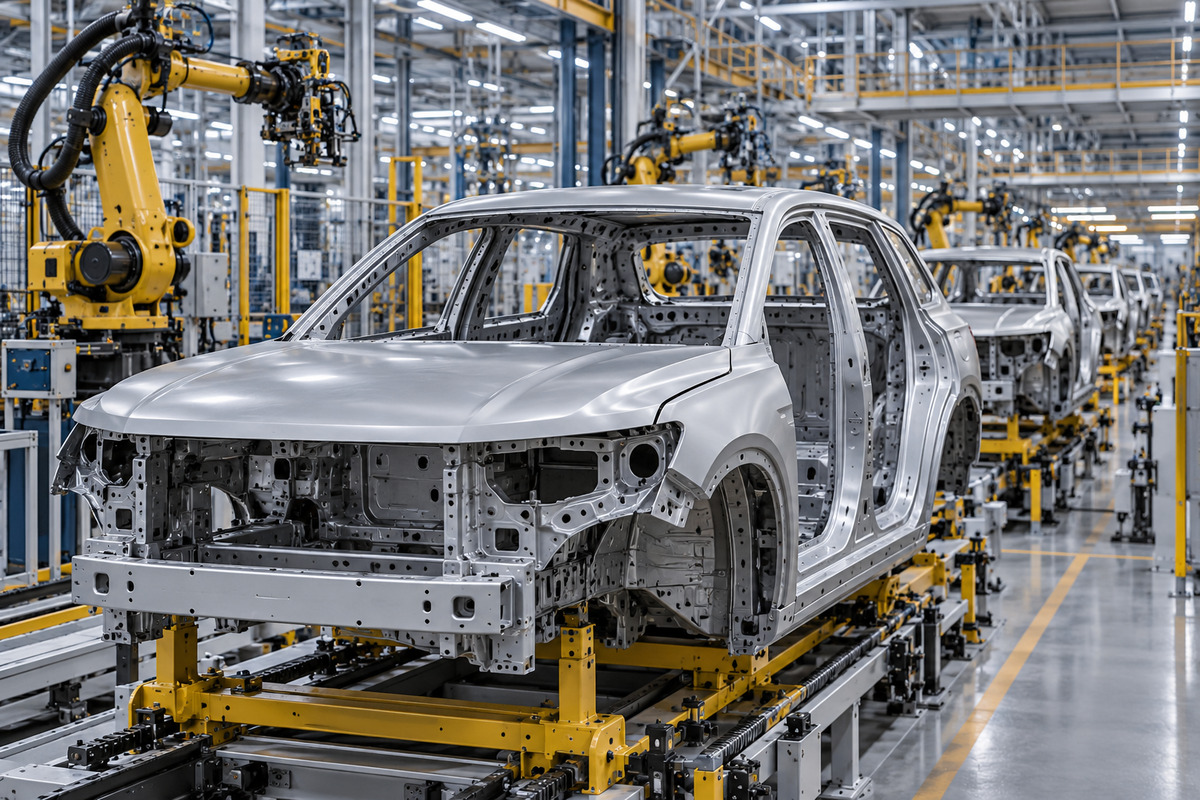
Rivian started producing customer-ready R2 SUVs on 22nd April 2026, with public deliveries expected later that spring. Chief Financial Officer Claire McDonough expected invitations to configure vehicles around June. She said that, at a higher production rate in 2027, R2 would cost less than half as much to build as R1. Rivian attributed savings of 32% to die castings, 25% to the new drive unit and 72% to simplified suspension. Those figures concerned specific manufacturing costs. McDonough expected initial R2 production to pressure margins, followed by positive automotive gross margins at the end of 2026. Chief Operating Officer Javier Varela identified suppliers as the biggest external risk and described staff monitoring key suppliers. The company's outlook implied roughly 22,000–23,000 R2 deliveries during 2026, conditional on demand and a smooth ramp.
R2 had been unveiled in Laguna Beach on 7th March 2024 alongside the smaller R3 and its R3X performance variant. The new midsize platform was intended to extend Rivian's range below its flagship vehicles. R2 was presented as a five-seat SUV with a starting-price target around $45,000 and refundable $100 reservations. Deliveries were then scheduled for the first half of 2026. Rivian chose its existing Normal factory for the initial launch, estimating savings exceeding $2.25 billion against starting the first production line in Georgia. The company expected savings across capital expenditure, product development and supplier sourcing. Georgia remained part of the longer-term production strategy, while construction there was deferred so teams could concentrate on the Illinois launch.

Buildings and production flow in Normal
By March 2025, the Normal project included a new 1.1 million-square-foot building for R2 body production, general assembly and end-of-line operations. Other additions covered paint, batteries and material flow. Rivian's existing plant measured 4.3 million square feet; planned capacity after expansion was 215,000 vehicles annually across its products. Vice President of Production Facilities Tony Sanger described the new assembly building as complete for walls, 70% complete for structural steel and 60% complete for roof decking. Prefabrication reduced the number of connections needed on site. The project also required replacing the old test track with a new high-speed track. Sanger expected the parts pretreatment and electrocoat building to receive equipment the following month, after becoming almost weather-tight.
The Rivian Production System provided the operating framework for the expanded factory. In June 2025, Varela described layouts designed for material flow, just-in-time delivery and lower inventory and lead times. Equipment was arriving ahead of a planned shutdown later that year, with some integration into the existing R1 line. He paired robotics and artificial intelligence with employees' continuous-improvement work. Changes could include technology or adjustments to how a component was presented within reach of an assembler. Standardized work and direct observation formed part of that approach. Varela also described the difference between adapting an existing manufacturing footprint in Normal and designing the future Georgia facility around the intended production system from the beginning. These were the company's operating methods and development plans.
A nearby component supply base
Rivian and Illinois announced a separate supplier park in May 2025. The 1.2 million-square-foot development across Highway 150 would accommodate component suppliers near the main factory. The announced investment was nearly $120 million, with nearly 100 direct jobs and additional employment expected at suppliers. The incentive agreement specified a $119.6 million investment and at least 93 full-time jobs. Illinois offered a $16 million package, including a REV Illinois tax incentive valued at $5 million over 20 years; the remainder principally comprised capital grants. Construction was underway, with completion then expected in 2026. Co-located suppliers would make parts for R1 and R2 assembly. Rivian founder and Chief Executive RJ Scaringe linked the park to the planned increase in factory production.
OPmobility became the first announced company to locate in the supplier park in September 2025. Its planned Normal facility would assemble bumpers for R2. Illinois tied the project to a minimum commitment of 81 full-time jobs and support through its REV incentive programme. The state's announcement distinguished the supplier's new operation from Rivian's own investment in the park. OPmobility's North American Exterior & Lighting President Thibaut Stern described the United States as a key market for the company's strategy. Its wider business covered exterior and lighting systems, modules and energy storage, with 150 industrial sites and 40 research-and-development centres globally. The Illinois operation was presented as a future bumper-assembly facility, with job creation commitments rather than a statement that the entire workforce was already employed.

Battery procurement and in-house engineering
LG Energy Solution announced a supply agreement with Rivian in November 2024 covering 67 gigawatt-hours of cylindrical batteries over more than five years. Its Arizona subsidiary signed the agreement. The selected 4695 cell format measures 46 millimetres in diameter and 95 millimetres in height. LG planned eventual production at its standalone Arizona plant within the first year of battery production, with cells delivered to Normal for North American R2 vehicles. The agreement specified an energy quantity over a multi-year supply period, rather than an annual vehicle production target. LG Chief Executive David Kim described the order as an expansion of the company's cylindrical-battery customer base. Manufacturing location and delivery arrangements were announced as plans; the agreement did not itself establish that Arizona deliveries had begun.
Rivian's engineering work included its own Maximus motor, developed specifically for the R2 platform. In June 2025, the company described testing in its powertrain laboratory before vehicle-level validation. Engineers correlated their models with test data to assess performance across demanding conditions. Rivian designed Maximus in-house, as it had motors for its existing vehicles, with smaller size, cost efficiency and simpler manufacturing among its objectives. Designers and engineers worked together as the exterior and underlying systems were refined. At the electrical laboratory in Silicon Valley, the team developed the zonal architecture and integrated computer modules controlling functions from propulsion to infotainment. The same technology stack supported over-the-air feature updates. These activities covered component and electronics development before testing complete vehicles.

From pilot assembly to manufacturing validation
The California pilot line was validating parts and assembly processes by June 2025. Rivian used early builds to check individual components, their fit and the steps needed to put a complete vehicle together. Employees from Normal rotated through the pilot operation to learn the processes and provide feedback to engineers. That work preceded the planned start of factory production the following year. Validation vehicles then went to proving grounds and test facilities around the country. Their programmes covered durability, vehicle dynamics and controls, software and advanced driver assistance. The resulting information went back to the engineering teams for further refinement. Pilot manufacturing and proving-ground work therefore involved different locations and tasks: one examined how to assemble the vehicle, while the other assessed its behaviour under test conditions.
The first Manufacturing Validation Build vehicles came off the Normal line in January 2026. One immediately joined a cross-country trip on Route 66, during the highway's centenary year. These were early factory builds used to evaluate the repeatability and quality of the production process ahead of the spring launch. Feedback from the vehicles went to engineering, software and manufacturing teams. Senior engineer and driver Emmanuel Ibarra described comparisons between the team's plans and real-world results, with findings feeding software fixes, process changes and better diagnostics. The road trip was one part of a wider fleet of early builds undergoing validation. It marked a factory-development stage before the subsequent customer-ready production announcement, rather than the beginning of public customer deliveries.

Vehicle tests and the production line
R2 entered final validation in February 2026 after a programme spanning extreme temperatures, durability runs and accumulated mileage. Rivian specified testing from minus 45 degrees Fahrenheit to 122 degrees Fahrenheit, equivalent to minus 43 to 50 degrees Celsius. Locations ranged from Death Valley to Fairbanks. Engineers evaluated the vehicle on sand, ice and rocks, as well as under towing and water-exposure conditions. Thermal systems were assessed for cabin comfort and vehicle-system operation. Wind-tunnel work examined aerodynamics, with results checked through real-world driving. Senior Director of Global Test and Development Peter Jacobsen described testing for everyday driving and off-road use. Chief Engineer Max Koff expressed a positive assessment of the development fleet. These were manufacturer descriptions and evaluations of its validation programme.
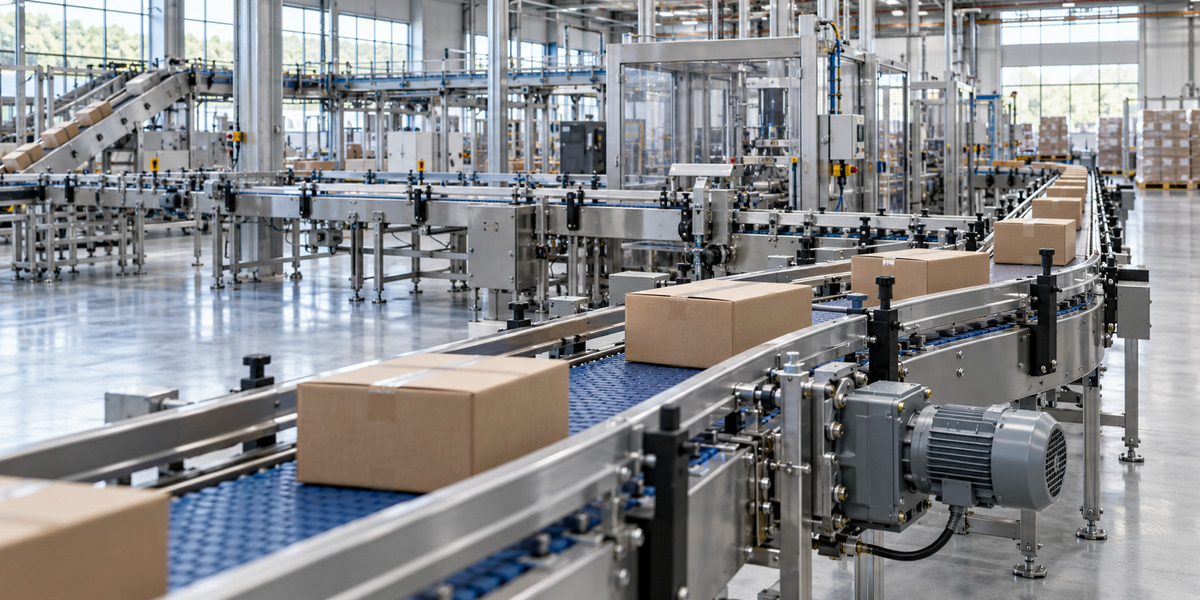
Rivian developed the R2 line alongside the vehicle, using a digital twin to test manufacturing arrangements virtually. By February 2026, the company described automated body-panel installation for gap and flush alignment, robotic parts scanning and placement, wireless diagnostics and vision-based quality checks. Its simplified electronics removed 2.3 miles of wiring, while large die castings eliminated thousands of welds and fasteners. Rivian stated that the vehicle weighed about 2,000 pounds less than R1. The R2 production line was designed for 155,000 vehicles annually. That model-specific capacity differed from the wider factory's total capacity across product lines. The company associated simpler construction with easier servicing and access to important systems, while production-line algorithms supported equipment use, floor-space planning and workstation ergonomics.

Skills and software partnerships
The Normal workforce also drew on Rivian's Technical Trades Program with Heartland Community College. Employees combined classroom education with work-based training, with Rivian covering tuition and including classes within the working week. The two-and-a-half-year programme offered industrial maintenance and tool-and-die pathways. Graduates received an associate degree and industry credentials before joining teams in the plant. Six industrial-maintenance apprentices graduated in May 2025, including Jo Hammond, the programme's first female graduate in that pathway. Another 24 apprentices joined during 2025. Maintenance skills supported areas including batteries, paint, body production, stamping and assembly. Graduates Nick Mock and Matthew Marciniak subsequently placed second in the national SkillsUSA mechatronics competition, after qualifying through the Illinois event. The training served the factory's wider operations, beyond a single vehicle line.
Rivian and Volkswagen agreed in November 2024 to launch an independently operated technology joint venture. Wassym Bensaid and Carsten Helbing would lead it, initially from Palo Alto. The transaction involved a potential total investment of up to $5.8 billion in Rivian and the venture by 2027. Volkswagen had already provided a $1 billion convertible note. About $1.3 billion was due at closing for intellectual-property licences and a 50% venture stake; further investments depended on operational, technical and financial milestones. Engineers had developed a drivable demonstrator in 12 weeks using a Volkswagen vehicle with Rivian's zonal hardware and technology platform. The venture's architecture was intended to support R2 and future vehicles from both partners, including software updates throughout vehicle ownership.

Architecture testing and the commercial range
The technology venture completed winter testing of its production-intent zonal architecture in March 2026. Reference vehicles from Volkswagen, Audi and Scout took part, including an ID.EVERY1 prototype. Teams first prepared software functions and vehicles in Phoenix, Arizona, before testing in Arjeplog, Sweden. The cold-weather programme examined hardware and software working together for all-wheel drive, traction control and driving performance. Over-the-air update functions were also validated. The partners conducted hundreds of tests and validation cycles, followed by approval drives involving development leaders in Germany and Sweden. Volkswagen planned a further qualification programme from May, sending software specialists to venture locations to learn the architecture and code. The completed tests concerned those reference vehicles and the shared architecture, rather than a separate certification of the R2 consumer vehicle.
The announced R2 range had a staged commercial rollout. Performance with Launch Package was scheduled for spring 2026 from $57,990. Premium was due late in 2026 from $53,990. A rear-wheel-drive Standard Long Range version would follow in the first half of 2027 from $48,490, with another Standard variant around $45,000 expected later that year. These were United States prices excluding applicable taxes and fees. Performance was specified with two motors and all-wheel drive; Standard Long Range used a single rear motor. Rivian described a native North American Charging Standard port and support for other networks through a CCS adapter. Its Autonomy+ service was driver assistance requiring an attentive driver in control, with features and availability dependent on the vehicle's hardware.

Company-wide output and a future fleet project
Before the R2 production start, Rivian produced 10,236 vehicles at Normal in the quarter ended 31st March 2026. Deliveries during the same period totalled 10,365 vehicles. The company announced those figures on 2nd April and reaffirmed full-year delivery guidance of 62,000–67,000 vehicles. Production and deliveries were separate measures, and neither quarterly figure represented R2 output. Rivian said the quarter was in line with its outlook. It scheduled its first-quarter financial-results release for 30th April, with an accompanying webcast to discuss the business's performance and outlook.
Rivian's March 2026 agreement with Uber set out a longer-term use for the R2 platform. Uber committed to an initial $300 million investment subject to regulatory approval, within potential investment of up to $1.25 billion through 2031 tied to autonomy milestones. Uber or its fleet partners expected to purchase 10,000 autonomous R2 robotaxis. The agreement also allowed negotiation of up to 40,000 more beginning in 2030. Initial commercial deployments were planned for San Francisco and Miami in 2028, with expansion to 25 cities by 2031. The future autonomous fleet would operate through Uber's platform. These were conditional investment and deployment plans, separate from the driver-assistance features of consumer R2 vehicles entering production. The partners distinguished several stages in their proposed programme:
- Initial investment subject to regulatory approval.
- Autonomy milestones governing further investment.
- Commercial fleet deployment planned from 2028.
Leave a comment