
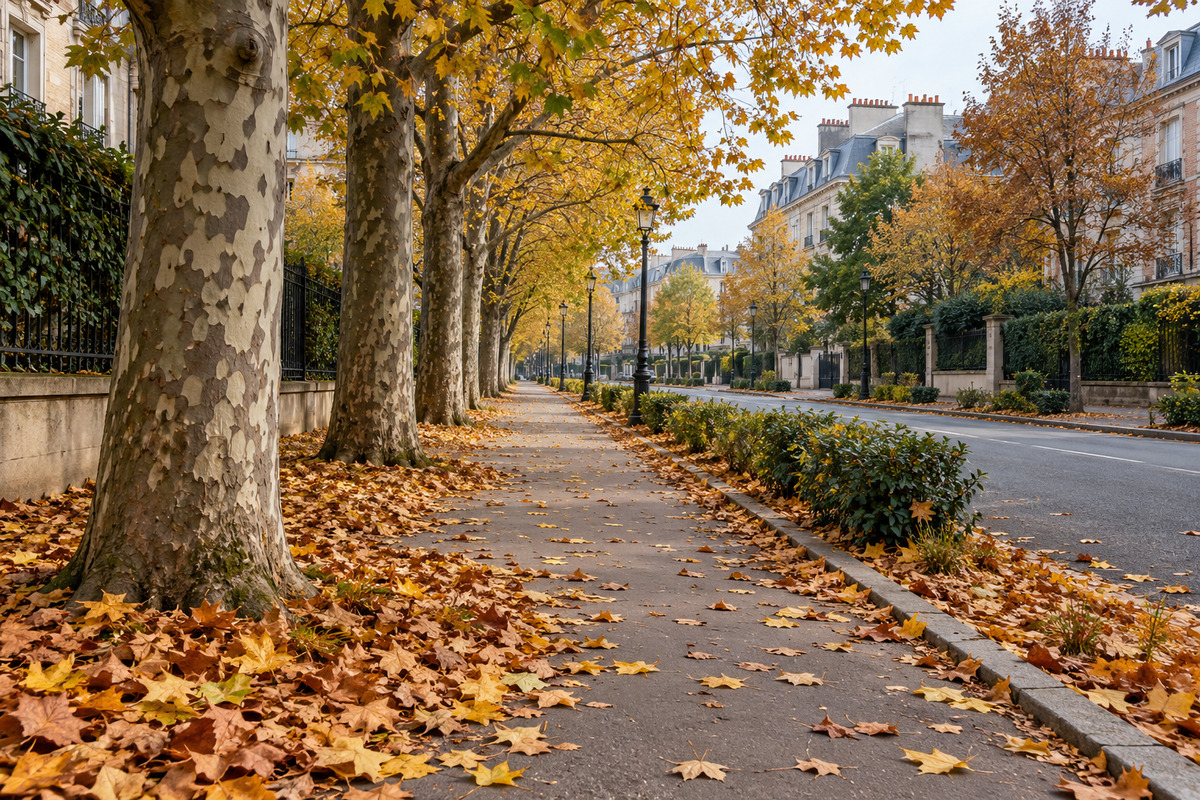
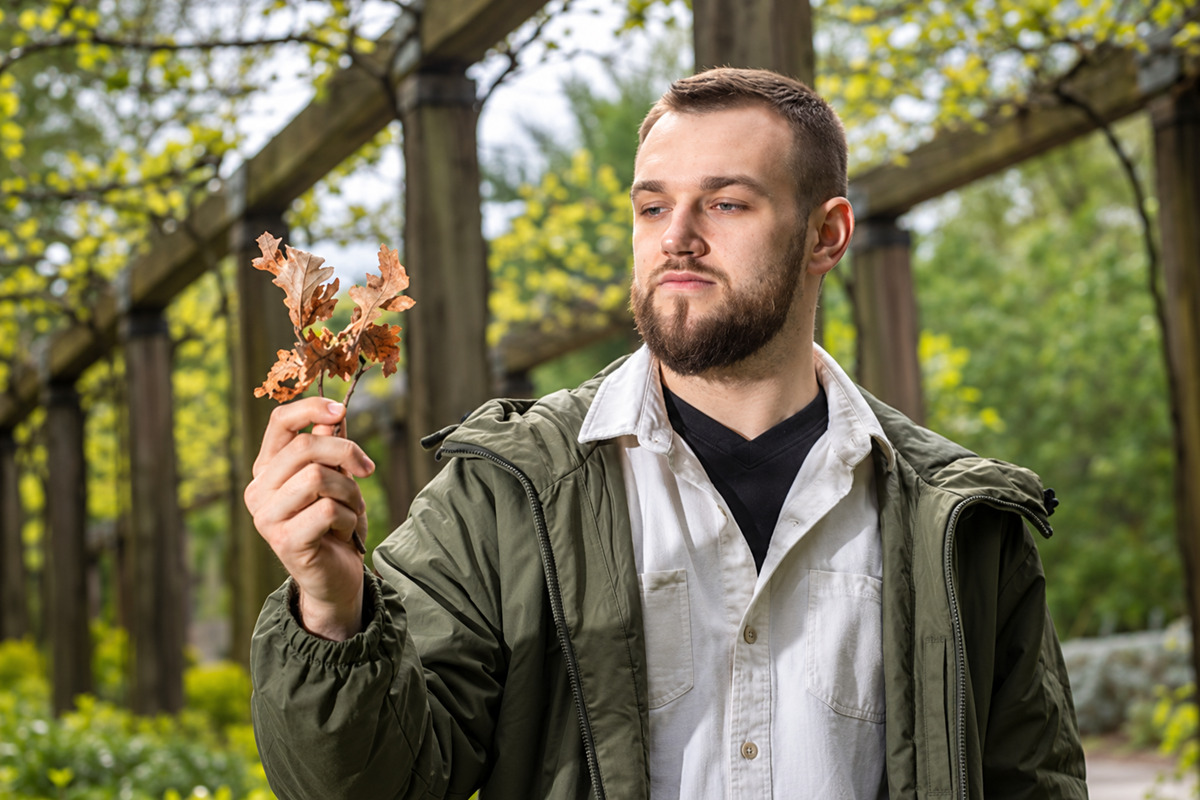
Leaves collected from city streets are the raw material behind Releaf Paper’s packaging business. Founder Valentyn Frechka began exploring alternatives to wood-derived cellulose at school, after experiments with grass and straw. He later relocated from Ukraine to France, where he developed the business with partner Alexander Sobolenko. By June 2024, it was based at Paris’s Station F start-up campus and sold packaging internationally. Frechka limits this feedstock to urban collections, leaving forest leaf litter in place within its existing ecosystem.
Releaf offered paper weighing 70–300 grams per square metre for applications including shopping bags, e-commerce envelopes, corrugated boxes and egg cartons. The company’s reported output of around three million shopping bags a month belonged to that existing business. A separate French production facility was still prospective: its opening was then expected in July 2024. Subsequent announcements would describe a pilot line in Les Mureaux, rather than establish that the July timetable had been achieved.
Preparing an urban feedstock
Releaf’s early technical process combines cleaning with chemical and mechanical treatment. Leaf preparation includes grinding and softening under pressure with steam, followed by fibre separation. The resulting pulp is combined with bio-fillers and converted into rolls suitable for products such as bags, cardboard and corrugated boxes. The European Patent Office’s June 2024 technical description specified a process without sulphates, sulphites or chlorine. Chemical treatment nevertheless remains part of the process; those exclusions concern particular reagents.

The company had offices in Paris and Kyiv and sourced leaves through city councils. Some process waste was converted into fertiliser and returned to municipalities. Frechka also envisaged working with agricultural waste and other leaf types, including pineapple, banana and yucca. These were potential extensions of the feedstock base. His earlier development work had grown through school research and the Junior Academy of Sciences of Ukraine, following an idea associated with hiking in the Carpathians at age 16. WWF and Canopy Planet provided support in 2021, according to the EPO’s dated profile.
A proposed line for separating fibres
A leaf-pulping method in US patent application US20240309586A1, published on September 19, 2024, sets out a more detailed sequence. Initial preparation separates leaves from inclusions without useful plant fibres, then shreds and presses the material. Mechanical rubbing and heated, pressurised vapour soften it before an alkaline treatment removes part of the lignin. A subsequent grinding stage uses acetic acid. The application identifies Valentyn Frechka as inventor and Releaf Paper France SAS as applicant.
The accompanying automated-line design links preparation equipment, a thermomechanical disperser, a treatment chamber, a hydropulper and refiners. Further options include washing, drying, pressing leaves into granules or bales, vibration sorting and thickening the pulp. The claimed method also distinguishes more delicate and more resistant groups of plant material. These are features of the published application, rather than a verified inventory of every machine installed at Les Mureaux. The proposed pulp can be used on its own or combined with recovered paper fibres.
Storage connects seasonal collection with papermaking
Releaf’s 2025 Paris Packaging Week operating model separates leaf processing from the paper mill. Partner cities deliver collected street leaves for processing; most of the company’s 2024 leaves came from Greater Paris, according to the presentation. Compression and baling provide storage between collection and production. Releaf presents this storage method as its way of maintaining a usable supply throughout the year, despite the seasonal pattern of leaf fall.
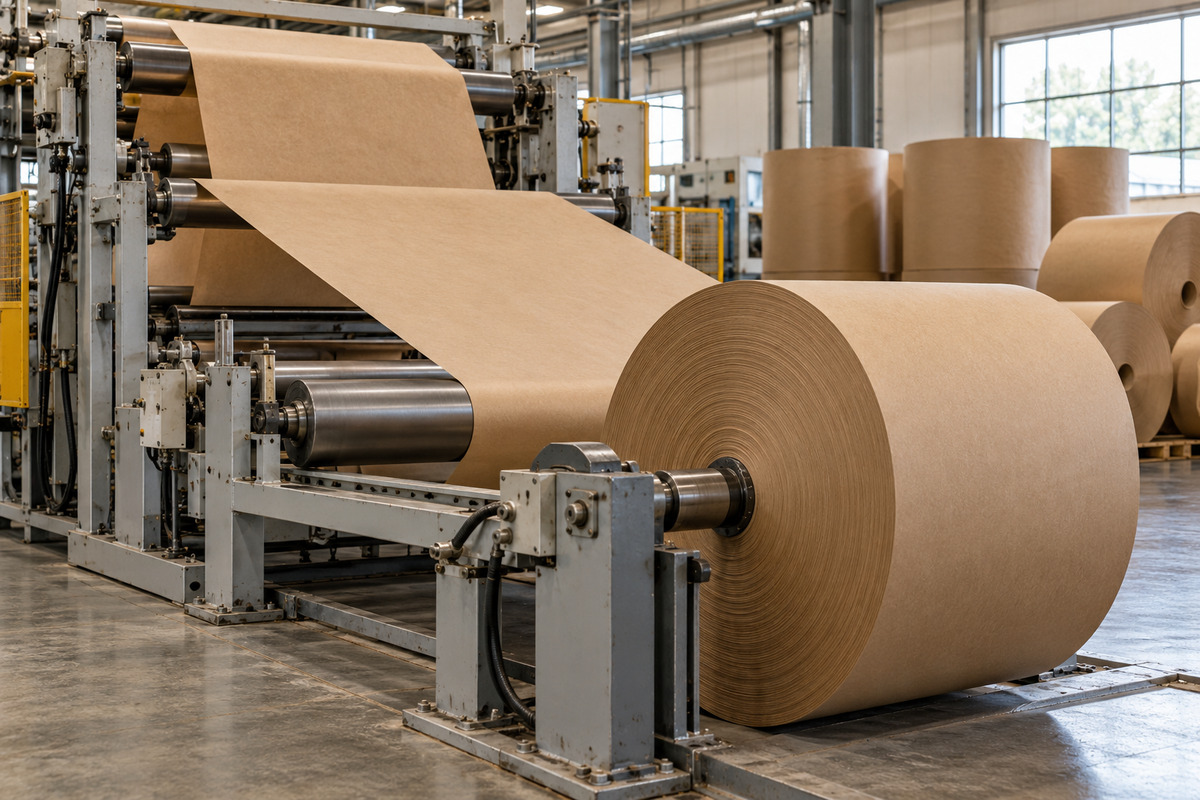
An industrial sorting stage removes stones, sand and plastics before processing. Cleaned material passes through mechanical stages that break it down into fibres. Those fibres are pelletised and packaged for storage and transport to a partner paper mill. There, a hydropulper receives the pelletised feedstock for conversion into paper, which leaves the mill in reels. Releaf describes its leaf-processing line as adapted to dry leaves, while the downstream papermaking stage uses a standardised process. Releaf’s commercial pitch pairs claimed lower production costs with a premium selling price for a distinctive leaf-based paper.
European project funding
The EU-funded Releaf project ran from May 1, 2023 to April 30, 2025, following signature of the grant agreement on April 10, 2023. The CORDIS record gives a total project cost of €3,568,025 and an EU contribution of €2,497,617.50. Releaf Paper France SAS coordinated the project under the European Innovation Council’s Accelerator programme. The funding scheme is listed as EIC Accelerator Blended Finance. The coordinator is classified as a private for-profit small or medium-sized enterprise in Lyon, with materials engineering and woodworking among the project’s registered fields.
The grant contribution and total cost describe different amounts: total cost includes expenditure beyond the EU subsidy. The project objective centres on producing durable cellulose fibres through mechanical, chemical and thermal treatment, with standard equipment and a particular drying procedure. Its registered technical keywords include leaf microfibrillation, thermo-mechanical dispersion and non-wood packaging. The project record was marked closed in its November 26, 2025 update; its environmental performance figures remain statements within the coordinator’s project objective.
The French pilot takes shape
Releaf announced the launch of its pilot production line and Innovation Center in Les Mureaux, Île-de-France, in November 2024. The company put total investment at approximately €3.5 million and identified EIC support. Its announcement named INP Grenoble Pagora and Business France among the organisations contributing to the project’s establishment. Visitors saw a demonstration of leaf-to-pulp technology and packaging products. More than fifty representatives from French media, banks, public bodies and businesses attended the opening event. Regional vice-president Alexandra Dublanche and Uber Eats representative Antoine Veron spoke at the event.
The launch also brought a restaurant packaging pilot with Uber Eats in France. Quentin Queyrel, Uber Eats’ general manager for France, described deployment of almost 100,000 Releaf bags at participating restaurants. Releaf’s wider plans included additional European facilities and later expansion into North America and Asia, alongside possible applications in hygiene products and bioplastics. A proposed €8 million Series A fundraising round in 2025 was part of that forward programme. Queyrel linked the packaging trial with Uber’s goal of shifting to sustainable packaging by 2030.

Engineering and customer trials
The EU project’s reporting period from May 2024 to April 2025 covers the work of assembling the pilot. Releaf’s team identified, tested and purchased off-the-shelf components, then modified and adapted them to its processing requirements. The coordinator reported assembling the equipment and testing the functionality of the line so that leaf biomass could be processed into pulp for paper products. This account places equipment integration within the development work, alongside the underlying fibre-extraction method.
Commercial development ran in parallel. Releaf’s team worked with packaging-sector participants to understand product requirements and adjust its offer. The coordinator reported collaborations with a global food manufacturer, a fast-food company and a fashion brand, without naming those partners in the summary. These interactions involved business development and testing as well as commercial opportunities. Feedback concerned different customers’ needs, timing and preferred forms of cooperation, informing the company’s business models and market strategy during the project. The coordinator also reported additional patent activity, product certification and environmental-impact measurement among the project’s results.
Market access through a restaurant platform
Uber had announced its Paris packaging innovation pilot on October 8, 2024. The platform committed nearly US$1 million to help restaurants try alternative packaging through discounts on its marketplace. Releaf’s leaf-based bags were one option, alongside Notpla’s seaweed-based packaging and straws made from agricultural sugar residues by iamplasticfree. The funding concerned the shared Paris initiative, rather than a grant assigned in full to Releaf.
The marketplace gives participating restaurants access to packaging assessed against recyclability or compostability criteria. Uber linked the Paris trial with a broader effort to make these options easier for its restaurant partners to buy. Its announcement also introduced a US$50,000 programme for selected restaurant partners’ own sustainability projects and an ambassador role through which restaurants would share experiences.
Leaves already have other destinations
Paris’s urban leaf stream also supports established composting operations. The city’s August 2025 account puts annual collection at about 4,500 tonnes and says more than 1,900 tonnes were composted in 2024. Street-cleaning crews use blowers, leaf vacuums, road-cleaning equipment and brooms. Some collected leaves are stored in designated areas before transfer into the metropolitan waste-treatment system. These municipal collection and composting figures describe the city’s operations, rather than deliveries to Releaf or output from its pilot.
Part of the material travels by river. A 200-cubic-metre barge operated by Cemex carries approximately 100 tonnes of leaves per load from Bercy to a Syctom transfer site at Gennevilliers. Paris recorded 625 tonnes moved by barge along that route in 2024. The leaves then continue to a composting platform at Ermenonville in the Oise department, with the resulting material available for green spaces and market gardening. Composting has formed part of Paris’s leaf-management operations since 2020.

Separate laboratory research examines leaf fibres
A 2024 study in Food Science & Nutrition examined another application for fallen-leaf cellulose. Sudenur Celik, Gozde Kutlu and Fatih Tornuk recovered microfibres from cherry plum, white mulberry and oriental plane leaves and used them as reinforcement in sodium alginate films. Their material came from Yildiz Technical University’s Davutpaşa campus in Istanbul, collected during September and October 2021. The work concerns laboratory composite films, rather than a performance test of Releaf’s commercial paper. Cellulose forms part of lignocellulosic plant material alongside hemicellulose and lignin; their proportions and chemical reactivity vary with the plant species.
The researchers washed, dried and ground the leaves before extraction and characterised the resulting fibres and films. They found differences among the leaf sources: plane-leaf fibres showed greater thermal and colloidal stability than the other two types. Incorporating the fibres increased film thickness, while colour and moisture content remained relatively unchanged. The authors reported improved mechanical and barrier properties and a uniform film morphology. Fourier-transform infrared spectroscopy and scanning electron microscopy were among the methods used to characterise fibre purity and distribution within the films.
Inventor and packaging milestones
Frechka received second place in the European Patent Office’s Young Inventors Prize on July 9, 2024, with a €10,000 award at the ceremony in Malta. He was 23. At that point, production of leaf-derived paper was outsourced in Ukraine, while the company pursued opportunities from France. Frechka thanked the scientific and technology community for supporting the work. He described nominations and awards as encouragement for young innovators and a source of motivation for the Releaf team to continue development.

The Young Inventors Prize recognises technological work linked to the United Nations Sustainable Development Goals. Its remit includes young innovators, while the company’s activity spans research, product development and sales. Frechka’s prize money was an individual award, separate from the European Innovation Council project contribution and the company’s proposed fundraising. In its July announcement, the EPO identified potential future agricultural feedstocks, including pineapple stems, as part of Releaf’s longer-term plans beyond the urban leaves already central to its business.
Releaf’s leaf-fibre delivery box later shared the Innovative Materials category at the ALL4PACK Innovations Awards 2024 with Novatec Industry. The organiser’s October 17 release named seven winners from 20 finalists, following Pack Expert Committee deliberations on October 15. An initial jury of French and international journalists had selected the finalists before the industry committee chose the winners. The Releaf product, “Boîte de feuilles mortes”, was presented for e-commerce and retail deliveries, with standard paper-stream recycling described in its product submission. The release scheduled display of the winning products at the November 4–7 exhibition and an awards ceremony on November 6. Its recognition concerned a packaging product, complementing Frechka’s inventor award. Urban leaf fibres replace part of the virgin and recycled fibres in the material, according to Releaf’s product submission.
Releaf Fiber received another second-place recognition at the Cellulose Fibres Conference in Cologne, Germany, on March 12–13, 2025. The organiser, nova-Institute, reported the result on March 20. The event attracted approximately 200 participants from 22 countries and covered cellulose technologies for textiles, hygiene products and packaging. Releaf’s entry concerned low-temperature extraction of fibres from urban leaves as an alternative to hardwood pulp. SA-Dynamics and Uluu took the other two leading positions with different material technologies. SA-Dynamics’ entry was a cellulose aerogel textile; Uluu’s used seaweed-derived PHA polymers, with the company working with Deakin University on textile fibres. Conference sessions covered fibre-to-fibre recycling, alternative feedstocks, and distinctions between marine biodegradability and microplastic formation. The programme placed new cellulose sources from agricultural waste, paper-grade pulp and recycled textiles alongside conventional wood-based chemical pulp.
- Leaf preparation separates unwanted material before fibre processing.
- Storage and pellet handling connect collection with partner mills.
- Restaurant trials provide a route for testing packaging in use.











Leave a comment