
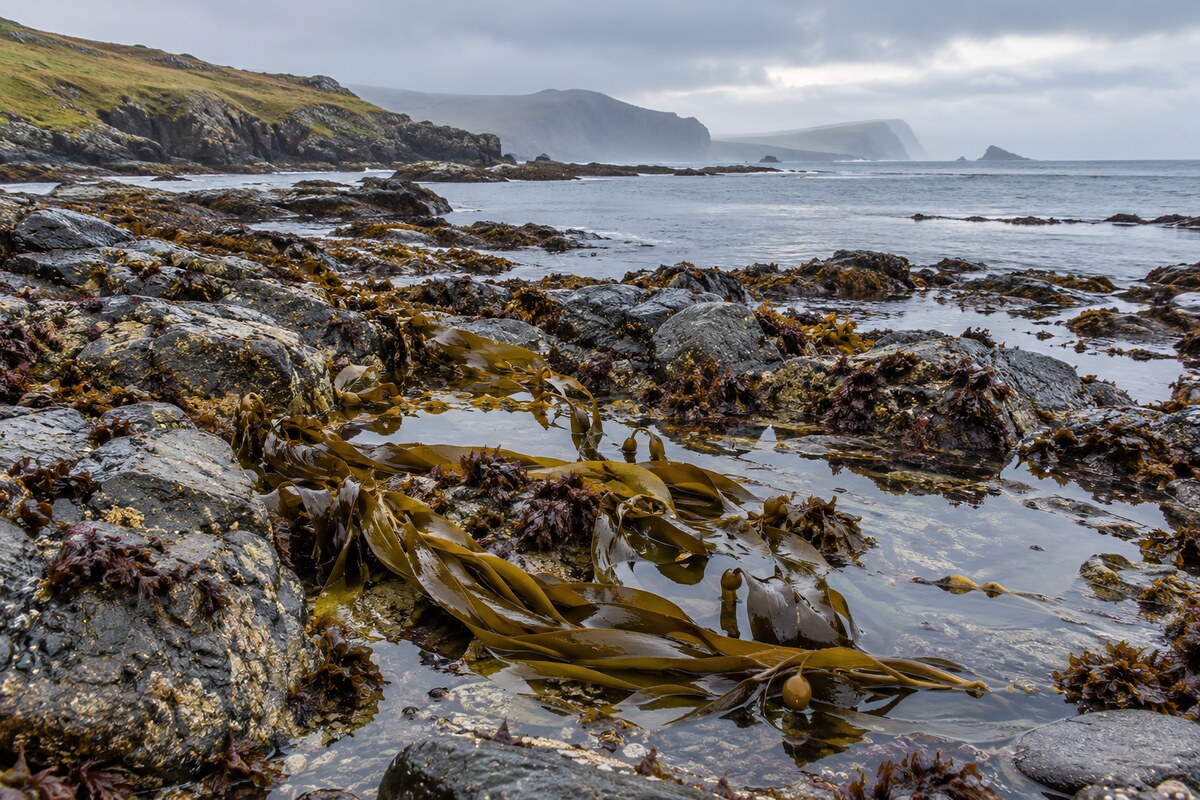
Seaweed packaging moves into foodservice
Notpla makes seaweed-based packaging for a market extending from takeaway counters to large sporting venues. By 07.06.2025, the company said its products had replaced more than 21 million single-use plastic items. Its ambition was to reach one billion replacements by 2030. Those figures describe different stages: a company-reported cumulative result and a future target. The business was also changing how it reached customers. Chief revenue officer Lise Honsinger wanted Notpla’s coatings to enter the packaging supply chain through board manufacturers, extending beyond the direct sale of finished food boxes.
Honsinger, Notpla’s first employee in 2017, described a move from seven folded-carton designs to more than 50. The company’s foodservice customers included major venues in the United Kingdom and the Johan Cruijff Arena in the Netherlands. IKEA’s new Oxford Street restaurant was another outlet. In her Euronews interview, Honsinger also described the material trade-off behind the products: barriers that protect food must be balanced against the intended breakdown of the packaging after use.
From liquid capsules to coated cardboard
Founders Pierre Paslier and Rodrigo Garcia Gonzalez met while studying Innovation Design Engineering at Imperial College London and the Royal College of Art. Their early product, Ooho, was an edible capsule capable of holding water or other liquids. Notpla developed a manufacturing process for the capsules and sought patent protection. The Ooho brand received a trademark in 2017. At the 2019 London Marathon, a partnership with Lucozade put 36,000 capsules into use in place of disposable plastic cups and bottles. Food containers became another application, using a seaweed coating in place of a conventional plastic lining.

The company subsequently worked with Just Eat Takeaway.com on lined food boxes. Intellectual property also formed part of its relationships with technology partners. Paslier described granted rights as a way to establish boundaries between interacting technologies and clarify each partner’s responsibilities. He considered patents relevant to investor due diligence and the value attributed to technology development. Notpla secured its first venture-capital funding from Sky Ocean Ventures in 2018.
Design and engineering grew together
The founders’ university work combined design, invention and engineering. In their Royal College of Art interview, originally published on 23.10.2023, they traced the company to 2014 and the Notpla brand to 2019. Their early capsules used seaweed extract to form a membrane around liquid. A SustainRCA award, support through the Climate-KIC incubator and European grant funding belonged to that early development period. The team later brought together designers, chemists and engineers to develop materials, manufacturing techniques and packaging formats.
The founders linked their design background to understanding how people use packaging, and engineering to the longer task of building manufacturing systems. They also investigated uses for residue left after extracting seaweed gel. One experimental material combined leftover fibres with a natural binder to form sheets that could be moulded while wet and became rigid after drying. Potential applications included interiors, furniture and rigid packaging. Those were areas under investigation, rather than established sales categories. The interview also identified the community-owned Welsh farm Câr-Y-Môr among Notpla’s seaweed partners, alongside a broader network of suppliers.

Manufacturing partners convert the coated board
Conpax became a conversion partner for Notpla’s expansion into Benelux in July 2023. Its role covered more than distributing a finished box. Director Roy Suiskens said Conpax would design, manufacture and supply folding-carton products from its facilities in the Netherlands, using board coated with Notpla’s material. Notpla supplied the coating technology; Conpax supplied conversion expertise and facilities serving foodservice customers. The partnership opened a regional route for businesses seeking samples and products made from that board, with Conpax acting as the customer contact.
Notpla presented the collaboration as a way to increase the availability of its coated board and develop further products with an experienced converter. The company claimed that its coating could deliver the strength, grease resistance and durability required for foodservice packaging. Those were supplier performance claims attached to the material and partnership announcement. The manufacturing arrangement itself allocated identifiable tasks: developing the coating, turning coated sheets into usable cartons, and supplying those cartons to customers.
Large venues bring specific service requirements
Payne & Gunter and Levy UK selected Notpla’s coated packaging for food kiosks at the 2023 BRIT Awards at The O2. The application involved thousands of meals and vendors serving different types of food. Notpla described the boxes and trays as stackable, microwave-compatible and suitable for hot and cold contents. Different sizes and shapes were available for the vendors’ menus. Those characteristics were part of the company’s explanation of how the packaging fitted an existing catering operation. The announcement concerned food containers used at that event, rather than edible capsules.

Payne & Gunter operations manager Lucy Fulford connected the selection to both environmental objectives and the quality expected from food packaging. The caterer also welcomed what it described as simpler waste management and recyclability. These were the customer’s and supplier’s accounts of the arrangement. They do not establish that every local collection service accepts every Notpla product. A coated food box, a transparent film and an edible liquid capsule are separate formats; the properties and disposal claims attached to one should not automatically be applied to the others.
A three-year agreement with Levy
Levy UK + Ireland, part of Compass Group, entered a three-year partnership expected to introduce around 75 million Notpla packaging items across more than 50 sporting and event venues. The agreement was announced on 08.03.2024. Its stated volume covered the partnership period; it was neither an annual figure nor a completed replacement total at the announcement date. The venues associated with the partnership included The Kia Oval, Principality Stadium, Twickenham, Tottenham Hotspur Stadium, The O2 and Wimbledon. The announcement described the contract as worth several million pounds without disclosing an exact value.
The partnership expanded an existing relationship between a materials developer and a caterer operating at many venues. The Earthshot Prize supported introductions and collaborations with the company. Other relationships included Just Eat Takeaway.com and international paper distributor G. F. Smith. The Levy agreement concerned bringing foodservice packaging into venue operations over time. The planned 75 million items therefore belong alongside the contract’s duration and venue coverage whenever the figure is used, rather than being added to a historical count of items already replaced.
Testing the shape of a drinks carrier
Allianz Stadium offered another operational setting. Its catering infrastructure served an 80,000-seat venue through more than 40 food units and 75 bars. A Notpla drinks-carrier pilot took place during the England XV versus France XV match in June 2025. The carrier was developed around rugby service requirements and given a rugby-ball shape. Notpla’s account, published on 18.07.2025, anticipated that about 400,000 carriers could be used during a season. That was a forecast for the carrier format, distinct from the company’s estimates for packaging already replaced at the stadium.
The stadium’s work with Notpla had also included a chip-fork trial during the 2024 Six Nations and a subsequent expansion into food trays and cutlery. Notpla claimed more than 100,000 plastic items had been replaced, with estimated savings of 86 kilograms of plastic and 974 kilograms of carbon-dioxide equivalent. These were the supplier’s stated environmental estimates, rather than independently verified lifecycle results presented here. Catering director Gary Cargill and executive chef Shaun Lawson were among the venue personnel involved in the work. The carrier forecast, item count, material-weight estimate and emissions estimate measure different things.
Box development starts with the food
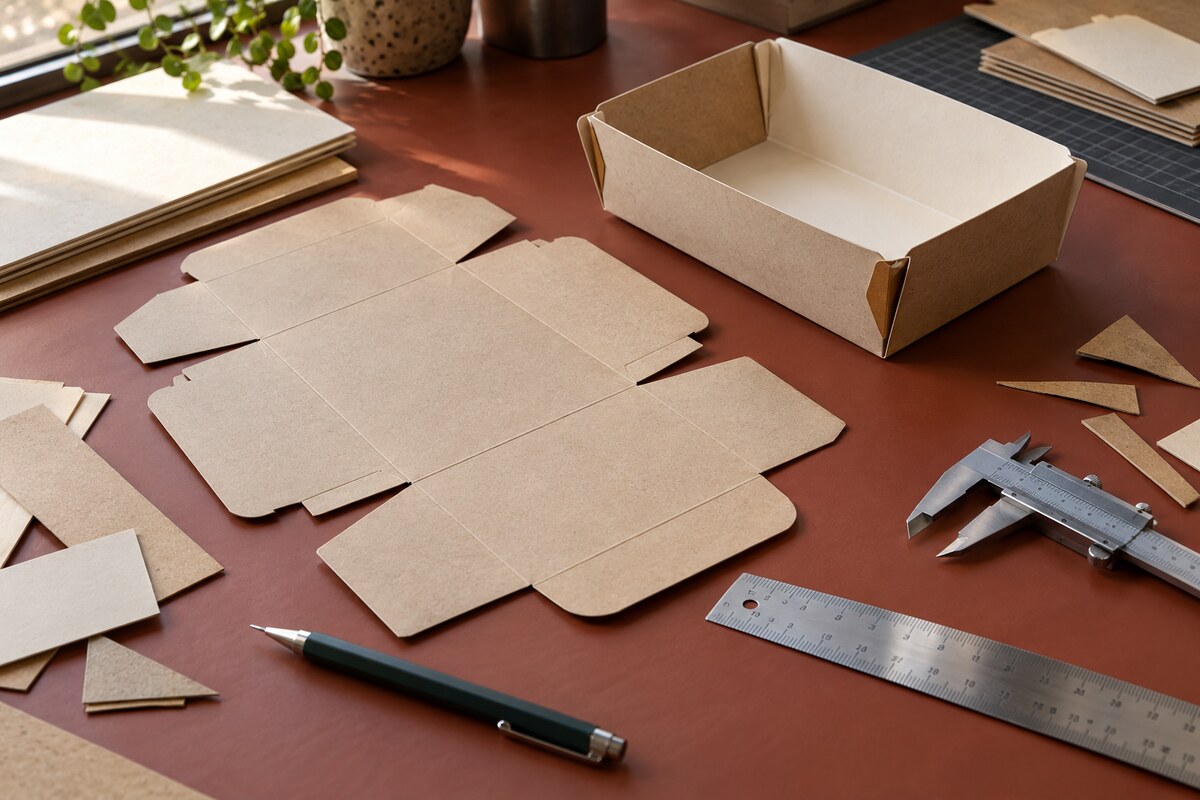
Designer August Ford’s description of Notpla’s design laboratory begins with the client brief. Some customers request an existing shape; others leave the format open. The design team considers whether the food is wet or dry and what the pack must hold. Virtual modelling sits alongside physical trials. Dimensions, durability and weight are checked through hands-on work rather than settled by appearance alone. Hot or heavy contents introduce strength requirements that have to be addressed in the structure of the finished container and its material use.

Sheet layout also influences the product. Designers arrange shapes on board to improve the number of packs obtained from a sheet and reduce unused material. Ford described cases in which that yield requirement affected the shape itself. Right-sizing was another part of the work: an unnecessarily large container consumes more material than the food requires. The design process therefore involves related choices rather than a single substitution of one coating for another:
- Identify the food and its handling requirements.
- Model a suitable shape, then test physical samples.
- Check strength, dimensions and material weight.
- Arrange the layout for efficient use of board.
A window for sandwiches and salads
SeaView extended the seaweed application to a transparent window in deli packaging. Bunzl Catering Supplies included the range in its summer innovation brochure on 11.06.2025. The window allowed customers to see sandwiches, wraps and salads while the surrounding pack used a seaweed-based coating. The distributor highlighted secure closures and the fit around food. Its brochure placement provided a purchasing channel for catering customers, beyond an early prototype demonstration. Bunzl’s recyclability description remained a product claim; the listing did not provide an independent test of every disposal route.
By 08.05.2026, Notpla was describing SeaView’s use at Arup’s London workplace canteen, operated by The Good Eating Company. That later application brought the range into workplace catering as well as food-to-go retail. Notpla listed sandwich wedges, wrap boxes, bloomer boxes, clip-and-close salad containers and other deli formats. The design combined a seaweed-based transparent window with the company’s coated board. The supplier emphasised grease and moisture resistance, shelf presentation, closures and the need to maintain service during a busy lunch period. Those were the practical requirements around which it presented the range.
The Arup application retained the familiar presentation of visible food inside a carton. Notpla’s account focused on changing the window and lining while keeping the handling experience recognisable for catering staff and customers. It also described the material combination as simplifying the pack’s end-of-life structure by removing conventional plastic window film and coating. The account did not quantify the canteen’s plastic reduction.
Equity funding supported expansion and materials work
Notpla closed a £20 million Series A+ equity round on 24.09.2024. UB Forest Industry Green Growth Fund led the round, with participation from new and existing investors. Catalytic Capital for Climate & Health, known as C3H and backed by Temasek Trust, was among them. The funding was equity investment, rather than sales income or a research grant. The company planned to use it for market expansion, including North America, and further development of seaweed-based packaging materials.
At the funding announcement, Notpla claimed it had replaced 16 million single-use plastic items to date and wanted its technology to enable more than 100 million replacements annually within two years. The existing cumulative count and the future annual objective have different bases. Co-founders Rodrigo Garcia Gonzalez and Pierre Paslier linked the funding to commercial growth and continued innovation. C3H director Ryan Tan cited customer traction and product development as reasons for its interest, while UB Forest Industry Green Growth Fund senior partner David Walker highlighted the material approach. These were investor assessments of the opportunity.

Later coffee-cup research has a separate timetable
In January 2026, Notpla secured €4 million in Horizon Europe funding for coffee-cup research. The three-year programme involved 14 partners across Europe and Africa. Its work covered materials research, coating development, manufacturing, performance testing and end-of-life assessment. The intended outcome was a market-ready cup with a natural, home-compostable coating capable of operating in foodservice without a plastic lining. Those characteristics were project objectives. The European Commission Maritime Forum’s update was published on 20.03.2026, after the main 2025 interview.
Earlier trials included a first-generation espresso cup at the Earthshot Prize in Rio. The project built on learning from specific formats while addressing remaining technical challenges and widening the intended applications. Paslier described the grant as an opportunity to tackle the cup’s underlying design. The €4 million award belonged to a defined research programme, separate from the £20 million equity round announced in 2024. It did not represent a completed commercial rollout. Manufacturing processes and end-of-life performance remained subjects of the funded development work, alongside the coating itself.
The Rio trial took place during Earthshot Prize Week in October 2025, with Klabin and Macaw Coffee among the partners. Notpla chose espresso because the small serving was generally consumed quickly, providing a controlled starting point for testing heat and liquid contact. The seaweed coating covered the inside surface touching the drink. The first-generation cup still used a small amount of conventional adhesive at its base and seam. Notpla therefore distinguished the pilot from a fully natural finished product, and from a commercial launch. By 24.03.2026, a second generation using a natural adhesive was in development. The planned work included better coating performance, natural sealing solutions, compatibility with industrial paperboard production and larger coffee formats. The pilot with Klabin had also explored integration with existing manufacturing infrastructure. These were development tasks and trial findings attached to particular cups. They differed from SeaView’s listing through a distributor and its use in an identified workplace canteen: each format had its own manufacturing requirements, stage of development and evidence of use.





Leave a comment