
A smaller American manufacturing plan
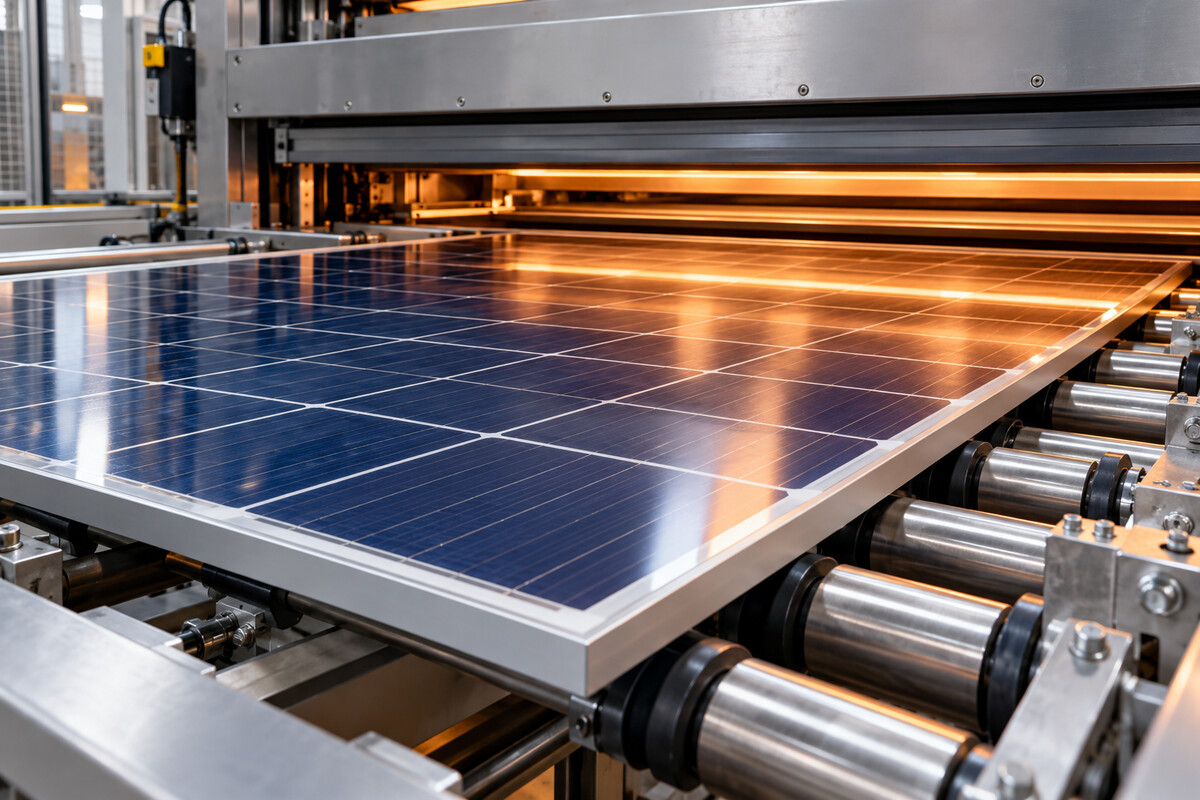
Meyer Burger dropped its proposed solar-cell factory in Colorado Springs on August 26, 2024, calling the project financially unviable. The company redirected its manufacturing plans in the United States toward its largely installed module plant in Goodyear, Arizona. An additional 0.7 gigawatts of module capacity was suspended, while planned borrowing against future 45X tax credits would continue on a smaller scale.
The board expected lower funding requirements and a smaller financing gap after April's capital increase, alongside a lower medium-term EBITDA target and debt ratio. It commissioned a restructuring programme; board member Mark Kerekes stepped down. Thalheim, in Germany, would remain operational as the cell supplier. Publication of half-year results moved from September 16 to September 30 or later. The August decision discontinued a proposed factory rather than closing an operating Colorado production line.

What Colorado Springs had been promised
The Colorado project had been presented publicly in July 2023 as a new manufacturing operation near Centennial and Garden of the Gods Road. Meyer Burger proposed around 350 jobs, bringing technology and equipment from Switzerland. The anticipated positions included project managers, production operators, facility managers and maintenance personnel. Production was expected during the second half of 2024; construction had no officially announced start date in the local account published that July.
Average annual pay for the proposed jobs was put at about $77,842, or 129.4% of the El Paso County average. State and city incentives were described by KRDO as approximately $90 million, conditional on the company fulfilling its job-creation commitments. Those figures described a proposed workforce and support package, rather than people already employed or incentives already retained. Colorado officials also placed the announcement alongside the state's commitment to renewable electricity by 2040 and the 37% renewable share of its electricity generation in 2022.

European closure proposal
On January 17, 2024, Meyer Burger had outlined a different factory retrenchment: it was prepared to close module manufacturing in Freiberg without measures to improve European market conditions. Closure could begin in early April and affect approximately 500 people, with a final decision due in the second half of February. The proposal retained German cell production to support the American module ramp-up. Equipment manufacturing and research sites in Germany and Switzerland were outside the proposed closure measures.
The company's preliminary, unaudited expectations for 2023 included sales of about CHF 135 million and an EBITDA loss of at least CHF 126 million. It warned that further impairment charges could change the final loss. Approximately 650 megawatts of modules had been produced, while inventory had risen to around 360 megawatts as sales weakened. Meyer Burger was considering partnerships, technology licensing, export-backed borrowing and equity funding. Its January plan therefore combined possible factory closure with several financing routes; it did not announce that all those routes had secured funds.

April's completed rights issue
A capital increase subsequently raised CHF 206.75 million in gross proceeds. Meyer Burger announced its completion on April 3, 2024, after placing 496,302,442 shares that existing shareholders had not subscribed for with institutional investors. The placement price was CHF 0.0207 per share, matching the previous day's closing price on the SIX Swiss Exchange. Existing shareholders had exercised rights covering another 19,648,121,444 new shares.
The combined issue comprised 20,144,423,886 registered shares. The company expected delivery against payment and the start of trading on April 5. It also projected an immediately subsequent share capital of CHF 237,416,424.37, divided into 23,741,642,437 shares with a nominal value of CHF 0.01. These were the transaction's stated share counts and timetable. The gross proceeds were a capital-raising measure, distinct from a later cash balance after operating costs and investment. They were not a statement of the amount still available when the Colorado cancellation was announced.
Technology programmes behind the factory network
Meyer Burger's 2023 management report, published in March 2024, described several development programmes alongside its factory expansion. Its interdigitated back-contact cell work used the company's heterojunction platform, with prototype machinery operating in Hohenstein-Ernstthal and Hauterive. The planned process would reduce silver use by 80% while continuing to avoid indium. That reduction was a development objective, rather than a measured result for every module sold by the company.
The research line in Hohenstein-Ernstthal and the production line in Bitterfeld-Wolfen had been upgraded to handle M10 wafers as well as M6. The company also had a perovskite development team and was preparing a demonstration line after evaluating materials, cell designs and production approaches with research partners. Separately, its glass-glass module platform, introduced at Intersolar Europe in 2023, placed glass on both the front and rear of the module. Prototype equipment, a planned demonstration line and a commercial product platform represented different stages of development within that technology portfolio.

A separate processing partnership for space cells
On August 5, 2024, Meyer Burger and Solestial announced a manufacturing partnership for ultra-thin silicon cells intended for space applications. Solestial would provide wafers developed for radiation resistance. Meyer Burger would apply its silicon heterojunction process, after which the wafers would return to Solestial's facility in Tempe, Arizona. Solestial would carry out metallization, finishing and integration into flexible modules. The companies assigned those manufacturing steps to different facilities rather than describing one complete production process inside the Goodyear module factory.
The partnership was scheduled to begin processing by September 1, 2024. Its planned wafer volume was intended to support modules for hundreds of spacecraft annually by mid-2025. Those dates and scale remained the partners' expectations. Solestial chief executive Stan Herasimenka linked the agreement to scaling production for customers, while Meyer Burger chief executive Gunter Erfurt presented it as an application of the company's manufacturing know-how beyond its established markets. The announcement did not establish that the proposed annual spacecraft volume had already been supplied.

September's management changes
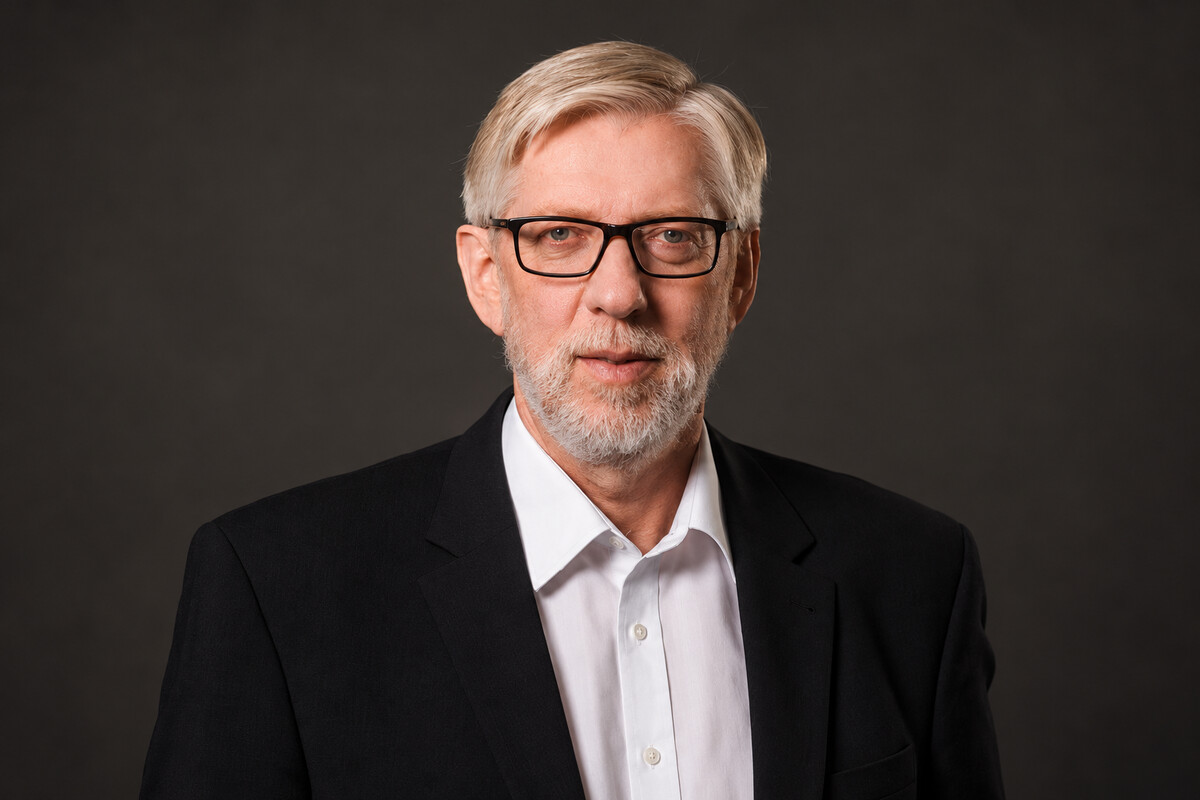
On September 18, 2024, Meyer Burger announced a management handover. Gunter Erfurt stepped down as chief executive and would advise the board during a transition. Chairman Franz Richter immediately became executive chairman and assumed the chief executive's responsibilities. Richter had held operational mandates at Süss MicroTec and Dr. Hönle; at the time of the handover, he chaired Dr. Hönle's supervisory board. He credited Erfurt with overseeing the company's change from an equipment supplier to a producer of cells and modules.
Chief financial officer Markus Nikles was due to leave at September's end. Finance and controlling would be handled by Ralf Hermkens in the United States and Frank Zimmermann in Europe, reporting directly to Richter. Both were already executive vice presidents. The management board was reduced to three members, with additional responsibilities assigned as follows:
- Chief operating officer Daniel Menzel took responsibility for sales alongside his existing duties.
- Chief sustainability officer Katja Tavernaro concentrated on the restructuring's legal and personnel work.
- Richter led the reduced management structure and its effort to restore profitability.
Half-year results and the cash position
The results published on October 31, 2024 put first-half sales at CHF 48.7 million, against CHF 96.9 million a year earlier. The half-year EBITDA loss was CHF 123.5 million; the EBIT loss was CHF 321.7 million. A net loss of CHF 317.3 million was a separate bottom-line measure.
Property, plant and equipment depreciation reached CHF 197.4 million, including changes in useful lives, value adjustments linked to closure and impairments of American equipment. Investment cash outflow was CHF 123.4 million. Cash and equivalents stood at CHF 158.6 million on June 30 and CHF 83.4 million on September 30. Meyer Burger warned that continuing as a going concern depended on completing restructuring and financing promptly and implementing its business plan. The required agreements and funding were not assured.

The disputed DESRI termination notice
On November 15, 2024, Meyer Burger disclosed a letter from DESRI, its largest customer, purporting to terminate their master agreement immediately. The company was examining the letter and the situation. Its announcement did not establish a court-approved determination of the contract's status.
Meyer Burger expected an adverse effect on its advanced financial restructuring efforts regardless of the termination's validity. It warned that failure of the restructuring might leave it unable to maintain operations as a going concern. The warning was conditional; the announcement did not describe a completed insolvency process.

December's conditional bridge financing
On December 6, 2024, Meyer Burger signed a secured bridge facility for up to $39.48 million with existing bondholders. An initial $19.7 million tranche was expected immediately, with further drawings dependent on milestones. The facility's maturity date was January 17, 2025; terms also included an exit fee and other conditions and covenants.
The facility was intended to fund negotiations on a sustainable capital structure, rather than itself constitute the completed long-term restructuring. Meyer Burger was discussing revised offtake terms with DESRI and targeted an agreement during December. Additional drawings were linked to a successful DESRI agreement. Alvarez & Marsal was appointed restructuring adviser for the operational transformation and efficiency work. Both the facility's headline amount and the proposed offtake arrangement had qualifications: the full cash amount depended on further conditions, and the revised customer agreement was still being negotiated.
Pasan leaves the group
Meyer Burger sold its wholly owned subsidiary Pasan, based in Neuchâtel, Switzerland, effective January 27, 2025. The announcement followed on January 28. The buyer and further transaction details were not disclosed. Meyer Burger identified the sale as part of its restructuring.
Pasan manufactured precision measurement equipment for solar-cell and module production. It employed around 30 people in Switzerland and a small service team in Shanghai. Its operating history extended more than four decades by the time of the sale. The transaction transferred this measurement-technology business out of the Meyer Burger group.
Material shortages affect the retained cell plant
On April 23, 2025, Meyer Burger announced short-time work at Thalheim from May 1. Management and the works council had agreed the measure the previous day. Approximately 300 employees were affected at the site, which had previously made high-performance cells around the clock. The company attributed the change to temporary material bottlenecks and intended it to reduce costs in the short term.
Material shortages had also changed work at Goodyear, where cells from Thalheim were assembled into modules. Technical work and module production were alternating daily during the continuing ramp-up. Meyer Burger was preparing further workforce adjustments to reduce costs. These were the operating arrangements announced in April, before the American shutdown disclosed the following month. The short-time-work decision applied to the German cell operation; the alternating daily schedule concerned the Arizona module factory.
The Goodyear shutdown in May 2025
Goodyear's operating position changed again in 2025. On May 29, Meyer Burger stopped production at the Arizona factory because of financial difficulties and cut all 282 employees. The company was still discussing restructuring with a group of bondholders, and the site's future was uncertain. Two former employees told Reuters that the doors were shut that morning and that a sign at the facility said it was closed.
The factory shutdown occurred less than a year after the Colorado project had been canceled. The two events concerned different facilities and different operating statuses: Colorado was an abandoned construction plan, whereas Goodyear was an American module operation that had been ramping up. The May closure followed continuing financial difficulties and negotiations over the company's restructuring.
The wider solar manufacturing supply glut
The IEA's Renewables 2024 analysis placed company investment changes within a larger manufacturing expansion. It expected global solar manufacturing capacity to exceed 1,100 gigawatts by the end of 2024, more than twice projected photovoltaic demand. Module prices had more than halved since early 2023. The agency identified negative net margins for integrated photovoltaic manufacturers during 2024 and approximately $25 billion of canceled projects: about 300 gigawatts of polysilicon capacity and 200 gigawatts of wafer capacity.
Those canceled projects were upstream manufacturing investments, distinct from installations of finished panels. Looking toward 2030, the IEA expected China to retain more than 80% of capacity across photovoltaic manufacturing segments, while cell and module capacity in the United States and India would almost triple. At the time of the analysis, it put module manufacturing costs in the latter two countries at two to three times Chinese costs. These were sector-level observations and projections, not measurements of Meyer Burger's own factories. The agency also expected manufacturing capacity to remain substantially above installations in 2030.
Europe's charter for a manufacturing response
The European Solar Charter, signed in Brussels on April 15, 2024, set out voluntary responses to the manufacturing industry's difficulties. Its starting conditions included 56 gigawatts of European Union photovoltaic installations in 2023, roughly two-thirds on rooftops. Panel prices had fallen from approximately €0.20 per watt to below €0.12 during 2023. The statement linked import concentration and falling prices to pressure on European manufacturing.
Signatories committed to promoting resilient, sustainable supply through procurement, auctions, innovation and financing opportunities. The Commission intended to facilitate access to existing funding, work with the European Investment Bank and support manufacturing skills. The European Solar PV Industry Alliance's ambition was 30 gigawatts of manufacturing capacity along the value chain by 2030. A separate Net-Zero Industry Act benchmark sought manufacturing capacity approaching or reaching at least 40% of annual deployment needs by 2030 across strategic net-zero technologies. That benchmark concerned those technologies collectively, rather than solar-module production alone.
Leave a comment