
Ships and the fuel available to them
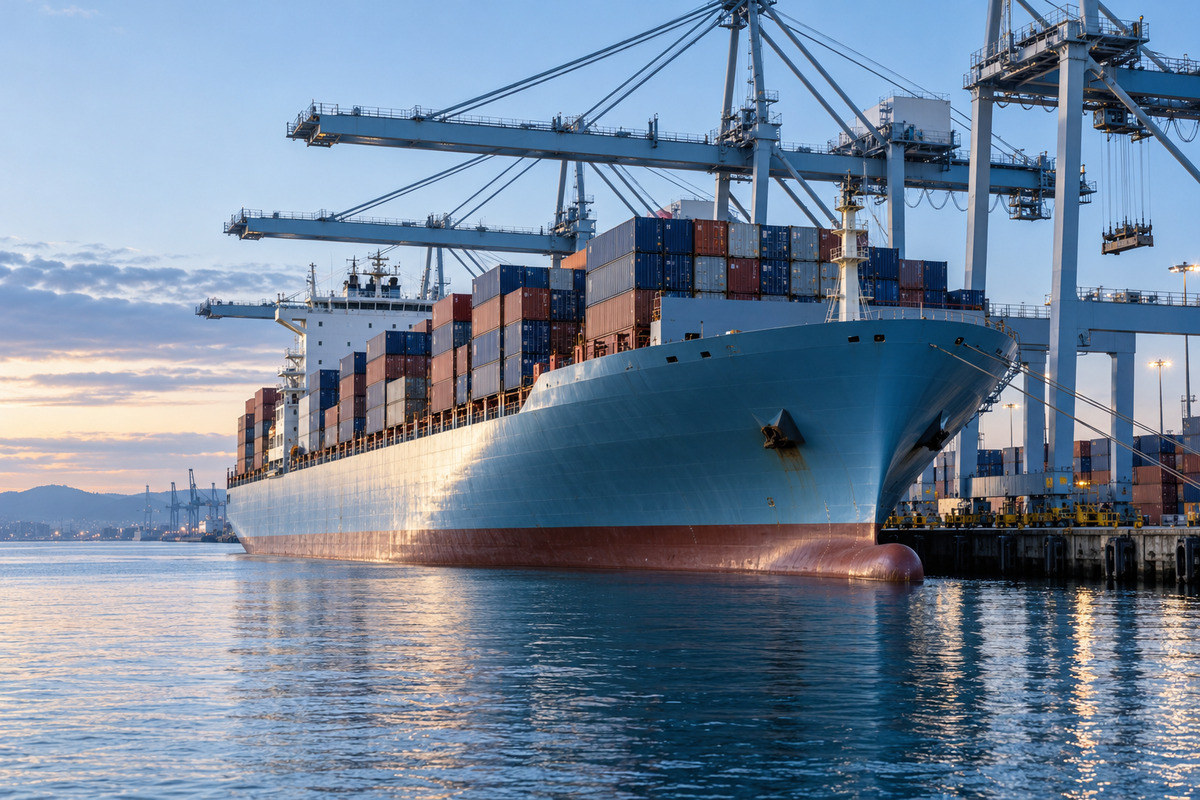
Alette Maersk crossed the Pacific on low-carbon methanol in August 2024, but its arrival in Los Angeles exposed a gap in the fuel network. The 350-metre vessel had sailed from China; Maersk representatives said there was nowhere in the United States to obtain more green methanol for the return passage, which consequently relied heavily on petroleum-based maritime fuel. At that point, the company had five methanol ships operating and another 20 ordered, within an owned and chartered fleet of roughly 700 vessels. Representatives put the green-fuel price at two to three times the fossil-fuel alternative. Maersk sought government incentives and an international pricing framework to narrow that gap. Its new vessels could use either methanol or conventional fuel. August 2024 reporting
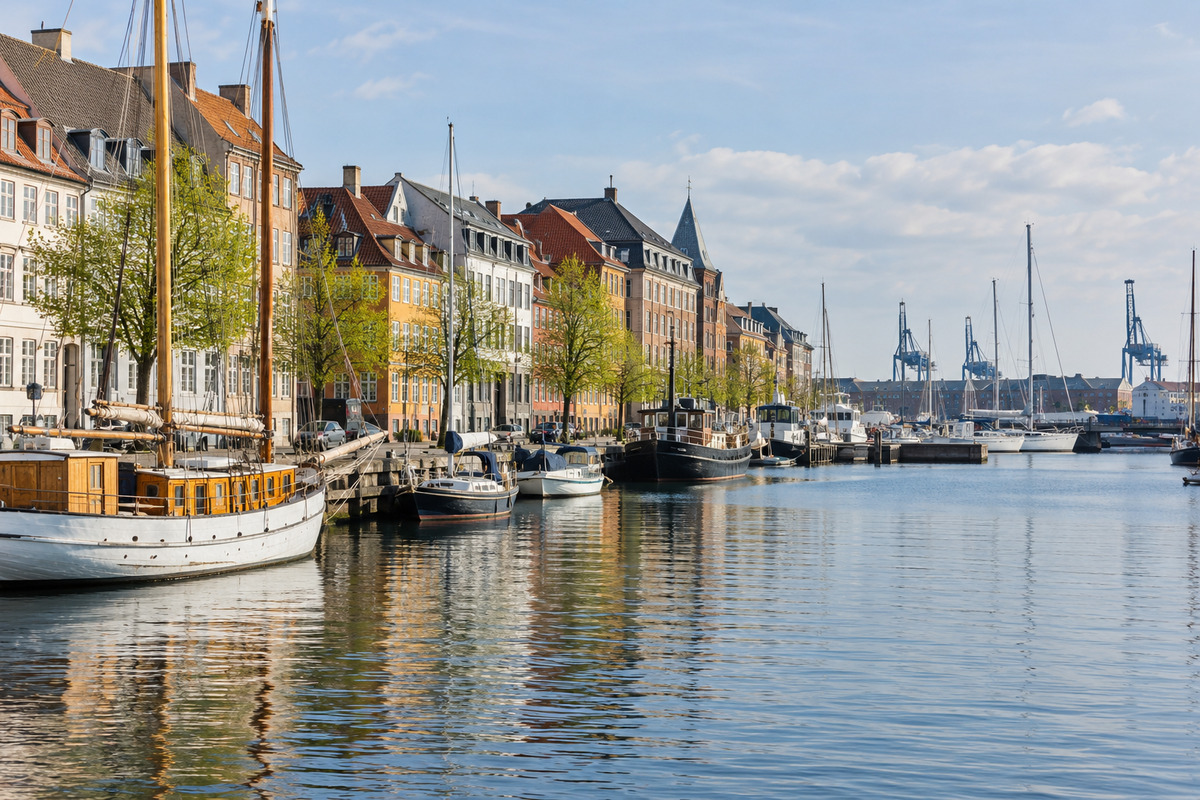
The initial feeder voyage had required its own supply arrangement. In June 2023, Maersk contracted with OCI Global for bio-methanol for a 21,500-kilometre journey from Ulsan, South Korea, to Copenhagen in Denmark. OCI produced the fuel at a US facility using biogas captured from decomposing organic waste in landfills. The gas was upgraded to biomethane and injected into the gas grid; methanol production then used a mass-balance approach through existing infrastructure. OCI's fuel carried International Sustainability & Carbon Certification under the EU Renewable Energy Directive. Maersk intended the passage to give seafarers practical experience with the engines and fuel before larger methanol-enabled ships arrived. The agreement covered the maiden journey, a defined early step in establishing supply for the emerging fleet.

The feeder, early bunkering and ship orders
Singapore supplied an early example of the infrastructure needed along that route. On 27th July 2023, Maersk and Hong Lam Marine completed a ship-to-containership methanol bunkering operation at Raffles Reserved Anchorage. Approximately 300 tonnes of bio-methanol reached the new feeder through the Singapore-registered tanker Agility, which had loaded the fuel at Vopak Terminals. The Maritime and Port Authority of Singapore worked with more than 28 agencies, partners and institutes on preparatory exercises and risk assessments. Researchers developed plume models and used detector-equipped drones during the operation. The authority also began developing a technical reference covering delivery, training and operational requirements. Its preparations involved port agencies, research institutes and commercial partners before the vessel continued its maiden passage to Copenhagen.
Equinor provided the next supply agreement, announced on 8th September 2023. It covered the feeder's initial operations from that month into the first half of 2024, with bunkering in Rotterdam and deployment between Northern Europe and the Baltic Sea. This biomethanol followed a different feedstock route: biogas from manure was upgraded to biomethane and introduced into the existing gas grid. Methanol was produced on a mass-balance basis, while European biogas certificates traced the renewable attributes and guarded against double claims. The fuel was ISCC EU certified. Equinor already operated a methanol plant at Tjeldbergodden. Maersk also expected the vessel eventually to receive e-methanol from European Energy's planned southern Denmark facility, whose opening timetable at that stage pointed to the first half of 2024.
The feeder was named Laura Mærsk in Copenhagen on 14th September 2023. Its 2,100-TEU capacity distinguished it from the much larger ocean-going ships that would follow. The name recalled the steamship Laura purchased in 1886. That earlier vessel also carried the white seven-pointed star on a light-blue background that became the company's symbol. At the 2023 naming, Maersk had 24 additional methanol vessels ordered for delivery between 2024 and 2027. The company had adopted a policy of ordering new owned vessels with a green-fuel option and aimed to transport at least a quarter of its Ocean cargo using green fuels by 2030. Its company-wide net-zero greenhouse-gas target remained 2040.
A separate June 2023 order broadened the size range of the future fleet. Yangzijiang Shipbuilding secured a contract to construct six 9,000-TEU methanol dual-fuel container vessels for Maersk, with deliveries planned for 2026 and 2027. The ships were to be constructed in-house and represented the builder's first order for this vessel type. Yangzijiang said the vessels would replace existing capacity in Maersk's fleet. The shipbuilder, established in 1956 and listed on Singapore's main exchange since 2007, operated four yards along the Yangtze River in Jiangsu Province. Its commercial vessel range included container ships, bulk carriers, oil tankers and liquefied natural gas carriers. The new contract added methanol dual-fuel container ships to that manufacturing programme.

Larger ships and ports on the trade routes
Ane Mærsk introduced the large-vessel series in January 2024. The ship was named at HD Hyundai Heavy Industries' yard in Ulsan on 26th January and was the first of 18 large methanol-enabled vessels then scheduled for delivery during 2024 and 2025. Maersk planned to put it on the AE7 service between Asia and Europe in early February. The series placed the bridge and accommodation at the front of the ship, a design the company associated with fuel-efficient operations. Ane's maiden voyage was to use green methanol while Maersk continued arranging fuel and bunkering for the wider series. In its terminology, green fuels meant lower lifecycle greenhouse-gas emissions, with the degree of reduction depending on the production pathway.
Astrid Mærsk followed with a naming ceremony at Yokohama's Daikoku Pier Cruise Terminal on 4th April 2024. It was the second large methanol-enabled vessel in that 18-ship programme. Members of the public could register to visit the vessel, while the company's work with the City of Yokohama also covered development of methanol bunkering infrastructure. Maersk linked its transition plans to customers and suppliers as well as ships. Its April announcement called for International Maritime Organization rules to address the price difference between fossil and green fuels.

Shanghai added another bunkering location on 10th April 2024. Astrid Mærsk called at Yangshan port for green-methanol bunkering alongside cargo operations, working with Shanghai International Port Group. The vessel had sailed from Yokohama after its naming earlier that month. Maersk described this as China's first green-methanol bunkering operation conducted simultaneously with cargo work for a large ocean-going vessel. The event coincided with the company's centenary of serving Chinese trade: its first Shanghai call had been made by Sally Mærsk in 1924.
Singapore's next simultaneous-operation milestone involved another operator, X-Press Feeders. On 27th May 2024, Global Energy Trading supplied close to 300 tonnes of OCI bio-methanol at Tuas Port while the container vessel handled cargo. The tanker Kara delivered the fuel, which had been lifted at Vopak Penjuru Terminal. PSA used double-trolley quay cranes and automated guided vehicles for cargo movements; the combined operation took four hours. Methanol mass-flow metering and digital bunkering were trialled together. The port authority updated its plume model for simultaneous activities and used an emergency operations centre to monitor the work. It also reported 50 submissions from more than 60 companies to an expression of interest on methanol supply, alongside plans for commercial licensing.

Contracts and production projects for future fuel
Goldwind's agreement addressed a larger future fuel requirement. Signed in November 2023, the long-term contract covered annual volumes of 500,000 tonnes of green methanol, with first supplies expected in 2026 and deliveries extending into the following decade. Maersk associated those volumes with low-carbon operations for its first 12 large methanol-enabled ships. The production plan combined bio-methanol and e-methanol at a new facility in Hinggan League, northeast China, using wind energy. Goldwind expected to confirm its final investment decision by the end of 2023 and begin production in 2026. At announcement, the volumes were sufficient for more than half the methanol-enabled capacity Maersk had ordered. These were contracted future supplies and a planned production start, alongside the ships already entering service.
Maersk also participated as a minority owner in C2X, with A.P. Moller Holding holding the majority interest. In October 2023, C2X signed a framework agreement with Egyptian partners to advance a green-methanol project near the Suez Canal. The partners included the Suez Canal Economic Zone authority, the New and Renewable Energy Authority, the Egyptian Electricity Transmission Company and the Sovereign Fund of Egypt. The work included plans for wind and solar generation supporting the production project. A memorandum signed in March 2022 had initiated the cooperation; the 2023 framework provided for deeper technical and commercial feasibility studies. Final investment agreements were to follow those studies. C2X's intended role was to develop, own and operate production assets serving shipping and chemical customers.
A further sourcing agreement arrived in October 2024 with LONGi Green Energy Technology. This covered bio-methanol from Xu Chang in Henan province, using residues including straw and fruit-tree cuttings. Initial volumes were expected in 2026, with full production planned by the end of the decade and a contract extending into the next decade. Maersk said its combined methanol offtake agreements then covered more than half the expected demand of its dual-fuel methanol fleet in 2027. Seven vessels were operating when the deal was announced. The proposed fuel was required to achieve at least a 65% lifecycle greenhouse-gas reduction against a fossil comparator of 94 grams of carbon-dioxide equivalent per megajoule.
European Energy's Kassø plant reached inauguration in May 2025, later than the timetable anticipated in the earlier Equinor announcement. Located in Aabenraa, it was developed with Mitsui & Co. and had annual production capacity of 42,000 tonnes of e-methanol. European Energy held 51% and Mitsui 49% through the ownership structure. The facility combined biogenic carbon dioxide with green hydrogen produced on-site and stood beside the 304-megawatt Kassø solar park. European Energy announced that it was supplying offtakers including Maersk, the LEGO Group and Novo Nordisk. Maersk would use the fuel for Laura Mærsk; the other customers would replace fossil methanol in selected industrial applications. The developer claimed a carbon footprint reduction of up to 97% compared with fossil-based products. Kassø inauguration
Conversions and a fleet with several fuel options
Maersk Halifax demonstrated the conversion route for existing tonnage. The retrofit at Zhoushan Xinya Shipyard took 88 days and finished at the end of October 2024. MAN Energy Solutions converted the engine, while the yard added tanks, a fuel-preparation room and a fuel-supply system. The hull was lengthened by 15 metres to 368 metres to accommodate the tanks, and container capacity rose from roughly 15,000 to 15,690 TEU. Following sea trials, the vessel returned to the trans-Pacific trade; it left the yard's anchorage on 4th November. Halifax belonged to the 11-vessel Hong Kong class. Maersk planned to use experience from this first large-vessel conversion to assess retrofits alongside newbuilds in its transition towards lower-emissions fuels.

The August 2024 fleet-renewal programme encompassed more than methanol. Maersk planned orders and time-charter contracts totalling 800,000 TEU, with deliveries supporting renewal during 2026–2030 at around 160,000 TEU annually. About 300,000 TEU would be owned and 500,000 TEU chartered, across 50–60 vessels. The propulsion mix included methanol and liquefied-gas dual-fuel systems, with the exact balance influenced by regulation and fuel supply. Maersk intended the arrivals to replace ships reaching the end of their working lives, maintaining overall capacity around 4.3 million TEU. It expected about a quarter of the fleet to have dual-fuel engines once the vessels were delivered and had begun securing liquefied biomethane supply for the gas-capable vessels.
By December 2024, Maersk had signed the owned-vessel portion with three shipyards. All 20 ships in these newbuilding contracts were to use liquefied-gas dual-fuel propulsion, with deliveries scheduled from 2028 through 2030. Their combined capacity was 300,000 TEU. The orders comprised:
- Two 9,000-TEU vessels at Yangzijiang Shipbuilding.
- Twelve 15,000-TEU vessels, divided equally between Hanwha Ocean and New Times Shipbuilding.
- Six 17,000-TEU vessels at Yangzijiang.
Maersk had also finalised the planned charter contracts covering 500,000 TEU across methanol and liquefied-gas propulsion. Both the owned and chartered arrivals were intended to replace existing capacity as they entered the fleet. The December gas-vessel contracts were therefore a separate element from the earlier methanol newbuild series.

Ports move from trials towards commercial supply
Singapore opened applications for methanol bunkering licences in March 2025 after finalising its framework and standards. The planned licensing period ran from January 2026 through December 2030. The framework covered end-to-end fuel supply, quality assurance, storage, handling and emergency preparedness, with suppliers and bunker-craft operators required to have relevant expertise. Applicants also needed to own and operate at least one IMO Type 2 chemical tanker. The authority specified lifecycle carbon-intensity requirements and a transparent chain of custody from source to delivery. It expected operators to adopt mass-flow metering and digital bunkering. The technical reference TR129 and separate standards for port-limit methanol bunker tankers had been launched earlier that year, covering custody transfer, operational requirements and training.
In November 2025, the port authority announced the three intended licensees: Global Energy Trading, Golden Island and PetroChina International (Singapore). They were selected from 13 applicants following assessment of supply-chain reliability, operating readiness, safety systems and sustainability certification. The licences were to begin on 1st January 2026 and remain valid through 31st December 2030, subject to the successful applicants meeting the relevant conditions. The authority said the five-year period would provide scope to develop capabilities, supply chains and initial investments. It also planned to review the framework as operating experience, technology and international standards evolved. This commercial-supply stage followed the port's earlier methanol trials and the application process conducted during 2025. Licensing announcement
Leave a comment