
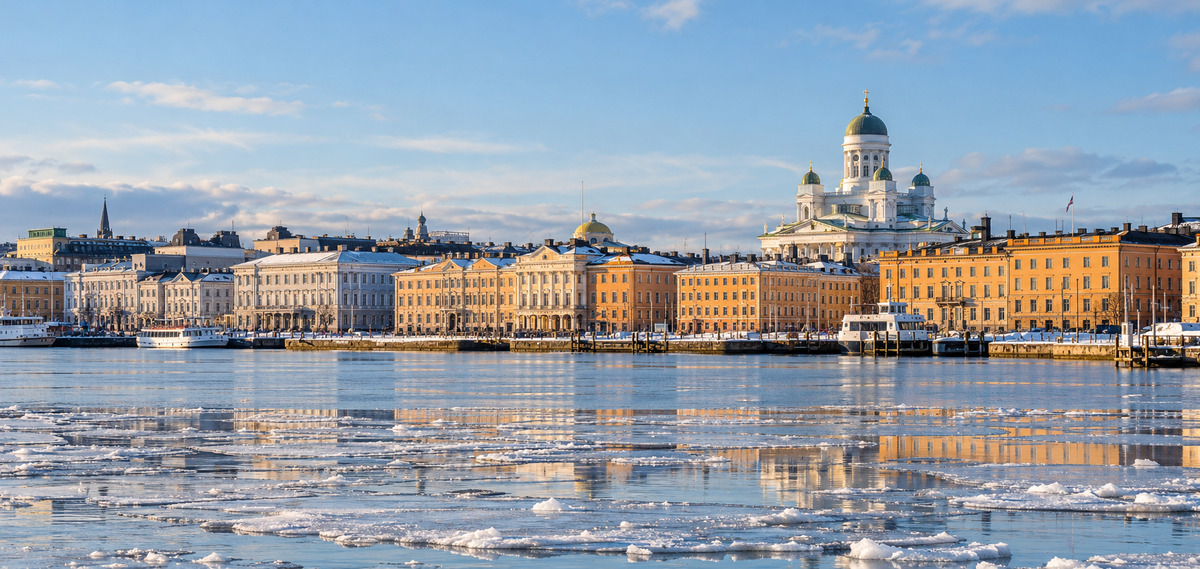
Outdoor air joins Helsinki’s heating network
Helsinki’s Patola project brings an industrial air-to-water heat pump into a district heating system serving homes and businesses in the capital of Finland. Helen Oy commissioned the installation from German manufacturer MAN Energy Solutions. Electricity from renewable sources is intended to power equipment designed to recover heat from outdoor air even when temperatures fall to −20°C. The announcement in August 2024 placed the expected start towards the end of 2026. Juhani Aaltonen, Helen’s vice president responsible for green investments, linked the project to Helsinki’s 2030 carbon-neutrality ambition and anticipated more stable customer prices through adjustable production. MAN chief executive Uwe Lauber also advocated urban district heating as a market for the technology. Those statements describe company expectations for a proposed installation, rather than measured results from an operating plant. The project attracted an energy subsidy from the Finnish Ministry of Economic Affairs and Employment. Euronews covered the announcement on August 29, 2024.
Two production systems, separate emissions estimates
Patola’s investment contains a heat pump and two electric boilers. Helen’s June 19, 2024 project specification gives the pump a heating output varying between 20 and 33 megawatts as outdoor air temperatures change. Its annual heat production was projected at more than 200 gigawatt-hours. The boilers have a combined capacity of 100 megawatts, with annual production estimated at approximately 300 gigawatt-hours. Carbon dioxide serves as refrigerant inside the pump’s closed circuit. Helen distinguished the pump’s anticipated annual emissions reduction of 26,000 tonnes from the boilers’ separate 30,000-tonne reduction. The corresponding whole-complex estimate is 56,000 tonnes a year. Adding that complete-site figure to either component would count the same expected benefit twice. The June schedule anticipated construction starting at the end of 2024 and production during the 2026–2027 heating season. These are design outputs and anticipated savings published before commissioning, with the pump’s power explicitly dependent on ambient conditions. They should not be read as an annual performance record. Helen’s project specification separates the equipment and forecasts.

- Heat pump: 20–33 MW, depending on air temperature.
- Electric boilers: two units of 50 MW each.
- Planned production start: the 2026–2027 heating season.
The compressor and the temperature lift
MAN’s August 28, 2024 technical announcement identifies an oil-free HOFIM motor-compressor at the centre of the Patola system. Manufacturing and testing were assigned to Zurich, Switzerland. A high-speed motor and active magnetic bearings allow the compression unit to work without the oil system and dry gas seals that the manufacturer says would otherwise be required. The hermetically sealed machinery operates within a heat-pump process that uses electricity to raise low-temperature heat to a temperature suitable for the heating network. MAN specifies water temperatures reaching 90°C and describes the carbon-dioxide refrigerant as circulating throughout the system cycle. The supplier’s annual delivery estimate is around 200 gigawatt-hours, associated with approximately 30,000 Helsinki households. Its reference to that household count belongs to the pump’s expected heat contribution. The manufacturer also describes rapid adjustment of electricity demand to support balancing when wind and solar output varies. Neither an operating efficiency curve nor a guaranteed retail heating tariff accompanies those headline specifications, so the temperature and household figures should retain their stated engineering and forecast meanings.
The investment sits inside a wider financial transition
Helen’s first-half figures for 2024 put the Patola decision within a substantial investment programme. Gross capital expenditure reached €249 million, compared with €200 million a year earlier. Group net sales were €903 million, down from €1.052 billion, while operating profit was €80 million against €79 million. Heat sales rose to 3,740 gigawatt-hours from 3,439 gigawatt-hours. Chief executive Olli Sirkka described district heating as returning to profitability after several loss-making years and associated an average price reduction of more than 5 per cent in the second quarter with investments replacing fossil production. The company also recorded €18 million of accelerated depreciation connected to ending coal-based production at Salmisaari and an €11 million write-down concerning the Kellosaari reserve plant. Those costs and the group’s electricity businesses belong to the wider accounts; they are not a disclosed Patola construction budget. Helen expected its clean-energy investments to exceed €600 million during 2024 and described an objective to end combustion by 2040, conditional in part on progress with small-scale nuclear regulation.

Salmisaari’s smaller air-source project
A separate air-to-water installation at Salmisaari preceded the Patola announcement. Helen’s March 2, 2023 investment decision assigned it a value of €13.5 million and almost €2.6 million in energy investment aid from the same Finnish ministry. Its planned heating output was 14 megawatts, alongside eight megawatts of cooling output. Annual production estimates were approximately 61 gigawatt-hours of heat and ten gigawatt-hours of district cooling. Unlike Patola’s stated −20°C operating limit, Salmisaari’s specification referred to producing district heat from air at −8°C. In summer, the equipment was intended to contribute to cooling as well as heating. The company originally scheduled production for early 2025. Juhani Aaltonen, then identified as head of sustainable energy solutions, associated diversified production with energy self-sufficiency and anticipated heating cost savings. The investment therefore had its own budget, subsidy, temperature limit and delivery timetable. Its figures cannot be substituted for the larger Patola unit simply because both projects use outdoor air as their heat source.
The final coal winter was planned around replacement capacity
By October 14, 2024, Helen was preparing to start the Salmisaari coal-fired station for its final heating season. The autumn operating plan combined continued use of that existing station with commissioning work on replacement equipment. More than 400 megawatts of new production were expected to enter service by the following summer. The programme named electric boilers at Hanasaari and Salmisaari, an air-to-water heat pump, and conversion of an old Salmisaari coal boiler to pellets. Timo Aaltonen, responsible for heating and cooling, explained that pellet-boiler trials beginning in October could temporarily produce unusually dark smoke. His stated priorities included maintaining heat delivery in severe sub-zero weather and limiting exposure to changing energy prices through a diverse production mix. At that stage, April 1, 2025 remained the scheduled retirement date for the coal-fired power plant. The winter plan was a commissioning programme, with several types of equipment moving towards operation; it did not identify Patola as already supplying the city or treat its later construction schedule as complete.
Replacement boilers and pellets entered service separately
Helen’s March 10, 2025 operating update distinguished completed trials from equipment still undergoing tests at Salmisaari. The new pellet plant had finished trial runs and entered commercial use. Its heating output was 153 megawatts. Two electric boilers, with a combined output of 100 megawatts, were then producing heat during test runs, with commercial use expected during that heating season. The coal station’s announced retirement date remained April 1. Timo Aaltonen associated the replacement programme with a projected reduction in company emissions exceeding 80 per cent against the 1990 baseline. Helen also pointed to two district-heating price reductions announced since May 2024 and described products that adjust consumption to reduce energy use and costs. These statements concern the city’s broader transition programme, including a combustion-based pellet facility. They do not mean that every replacement source is a heat pump, or that the end of coal immediately removes every form of fuel combustion from the network. Patola’s air-source equipment forms a later, separate investment within that changing production portfolio.
April 2025 marked the coal station’s closure
Helen closed its last coal-fired power plant at Salmisaari on April 1, 2025. Coal had accounted for 64 per cent of its district-heating production in 2022. At closure, the utility estimated that its annual carbon-dioxide emissions would fall by half against 2024 and Helsinki’s emissions by approximately 30 per cent. The estimated national effect was a reduction of nearly 2 per cent. Those percentages refer to different reporting boundaries and were projections attached to the closure announcement. They are not additional Patola savings. Helen identified heat pumps using environmental and waste heat, electric boilers, storage and bioenergy among the replacement sources. Olli Sirkka thanked employees and partners involved in the transition. The announcement also qualified the national coal-exit language: reserve capacity could remain available for security of supply, and some operators could still use small quantities for peak or reserve purposes. Finnish legislation sets May 1, 2029 as the date after which coal cannot be used in energy production. The company closure therefore should not be described as an immediate prohibition throughout Finland.

A later milestone for Salmisaari’s air-source equipment
On December 11, 2025, Helen announced that the Salmisaari industrial air-to-water heat pump had commenced operation. That milestone is later than the early-2025 production start envisaged when the investment was announced in 2023. The operating announcement retained approximately 14 megawatts of heating capacity and eight megawatts of cooling capacity. Expected annual heat production was then described as around 60 gigawatt-hours, with ten gigawatt-hours of cooling. The unit was designed to recover heat from outdoor air down to −8°C and to use electricity produced without emissions, as described by Helen. Aaltonen placed it within a district-heating network extending more than 1,400 kilometres. The utility described the 2025–2026 heating season as Helsinki’s first entirely without coal and identified additional work at Eiranranta, Patola and Hanasaari. The completed Salmisaari equipment and those other construction projects remained distinct. An operating announcement for one plant is evidence of that plant’s milestone, rather than confirmation that the entire network investment pipeline has entered service.
Hanasaari adds storage to electric heat production
At Hanasaari, Helen’s September 6, 2024 investment announcement combined a 200-megawatt electric boiler plant with a thermal battery. Four boilers, each rated at 50 megawatts, were planned beside two heat-storage units approximately 40 metres high. The storage specification gave a combined energy capacity of 1,000 megawatt-hours and charging and discharging power of 100 megawatts. Power and stored energy have different units: the boiler rating describes production capability, while the battery figure describes the amount of heat that can be held. The operating concept was to increase electricity use when spot prices were low, store the resulting heat and draw from storage during expensive periods. Aaltonen presented that flexibility as protection against electricity-market volatility. Helen planned earthworks for spring 2025, main construction for autumn 2025 and commissioning in the 2026–2027 heating season. The new equipment was assigned to the energy block in front of the former Hanasaari power-station building, following completion of zoning. This was a planned storage-and-boiler complex, separate from Patola’s air-source pump.

Installed boilers still required commissioning work
The Hanasaari project reached another documented stage on April 22, 2026, when the fourth and final boiler was installed. Helen identified the next work as piping, electrical installation and preparations for commissioning. Its target for entering service remained the 2026–2027 heating season. Equipment installation and commercial heat delivery were therefore separate milestones. Timo Aaltonen described electric boilers as capable of reaching full output within minutes when electricity is affordable and plentiful, allowing production to fall back when prices are high. The four-unit plant retained a combined rating of 200 megawatts and the adjacent two-unit thermal store a planned capacity of 1,000 megawatt-hours. Helen related the project to its objective of ending combustion-based production by 2040, alongside investment in waste-heat recovery and large heat pumps. The April update does not provide a completed-year generation figure or a measured reduction in customer bills. It establishes progress with the equipment and the remaining construction sequence, while preserving the distinction between installed capacity and commissioned output.
Wastewater supplies another source of network heat
Eiranranta uses a different thermal resource from Patola. The facility in Munkkisaari recovers heat from treated wastewater after that water has already passed through processes at the Katri Vala heat-pump plant. Excavation began in January 2023, and Helen’s project page identifies completion in August 2026. The wastewater can reach the next stage at around 5°C and still contain recoverable heat. Eiranranta’s specification gives approximately 90 megawatts of district-heating capacity, 60 megawatts of cooling capacity and annual heat production of around 300 gigawatt-hours. The project received NextGenerationEU funding through Finland’s Recovery and Resilience Plan. Helen anticipates an annual reduction of more than 80,000 tonnes of carbon dioxide against fossil-fuel heat production. It describes winter replacement of fossil production and summer cooling as the main functions. After the additional heat recovery, water returns to the discharge tunnel towards the Baltic Sea at a lower temperature. The plant illustrates the distinct use of an existing wastewater stream; its heat source, output and emissions estimate should remain separate from Patola’s ambient-air project.

Customer tariffs have their own timetable
Customers’ prices depend on a tariff structure as well as the production investments. Since the start of 2024, Helen’s district-heating bill has included an energy fee and a fixed fee. The fixed component uses annually reviewed usage power and remains unchanged for a year at a time. The energy component varies monthly with consumption and the relevant energy price. On December 3, 2024, Helen forecast an average reduction of 5.8 per cent in the total tax-exclusive heating price for 2025 against 2024; the second-half energy-price forecast still awaited confirmation. The company also announced Optimilämpö for apartment buildings, with heating optimisation intended to reduce excessive heating. Its energy price was set €1 per megawatt-hour below the Monthly Heating Property product. Helen estimated overall savings of 4–5 per cent and potential suitability for approximately 80 per cent of Helsinki apartment buildings, subject to compatible heat-distribution systems. Those product estimates and billing rules are separate from any guarantee that a particular new plant will deliver a fixed reduction to every household. Helen’s tariff announcement specifies the forecast and customer conditions.










Leave a comment