
Sales, margins and the product mix
Brompton’s turnover fell 5.3% to £122.6 million in the year ended 31st March 2024, from £129.4 million a year earlier. Pre-tax profit declined from £10.68 million to £4,602; an operating loss of £469,659 was offset by non-operating income. Bicycle sales fell 8.2%, from 91,875 to 84,899, while exports accounted for 80% of units, against 74% previously. Higher-priced T Line and P Line models increased revenue per bicycle and partly offset the volume decline. Direct-to-consumer unit sales rose 13% to 25,642. Brompton also acquired its Japanese distributor. Net assets reached £65.1 million, while net cash was £13.05 million: the two measures are separate. Brompton attributed higher average emissions per bicycle to a greater electric-bike sales share and increased product-development airfreight. These figures relate to the same financial year, before several subsequent product introductions and factory-development announcements. The financial results were covered by Bicycle Retailer & Industry News.
Brompton had brought in outside equity before that reporting period ended. In May 2023, BGF took a minority stake through a £19 million investment. Founder Andrew Ritchie and chief executive Will Butler-Adams remained part owners. Butler-Adams described the earlier expansion as growth of about 20% a year, financed by reinvesting profits. His stated ambition was to accelerate the business beyond that funding model. BGF investor Daina Spedding identified entry into additional markets, new technology and manufacturing capability as areas the investor intended to support. Those were investment objectives rather than a published schedule of completed projects. At the time of the transaction, Brompton exported about 80% of its bicycles to 46 countries and had recently passed its millionth bicycle, made in November 2022. BGF already had another investment in cycling: Rutland Cycling, a chain of bicycle shops. The investor’s existing industry portfolio included retail alongside its new manufacturing investment.

Ashford’s proposed headquarters and factory
Brompton’s proposed £100 million headquarters and factory in Ashford moved through an outline-planning decision on 15th January 2025. Ashford Borough Council’s planning committee voted to grant outline permission; the decision could still be called in by the then housing secretary, Angela Rayner. The proposal would eventually replace the Greenford factory in west London. Its site lies near Ashford International station and the McArthurGlen designer outlet, between London and Paris. Architect Guy Hollaway’s design placed the facility on stilts overlooking a proposed 60-acre rewilded wetland reserve, with a community cycle path and public trails. Around 4,000 local jobs, including the supply chain, formed part of the projected economic contribution; this was not a count of factory employees already hired. Brompton had also worked with East Kent College Group and Kent universities on developing local skills. The council’s announcement on 16th January concerned outline proposals, rather than an opened production plant or a completed relocation.
Brompton, ABB, East Kent Colleges Group and manufacturing specialist HSSMI subsequently completed a project exploring automation in bicycle production. HSSMI’s public update of 14th October 2025 identified robotic frame brazing and coating among the outcomes. The work included a testing environment for robotic solutions, three-dimensional factory scans and simulation models for future planning. An augmented-reality application supported operator training and maintenance, while EKC Group developed courses with a stronger digital focus and practical industrial problems. The partners addressed both production tasks and the availability of people trained to work with automation. HSSMI connected the work with preparations for the proposed Ashford factory. The project’s completion did not mean that the new factory had opened or that every hand-brazing task had entered automated serial production. No production-wide output increase or independently measured cost reduction was specified in that public update.
Steel frames and titanium fabrication
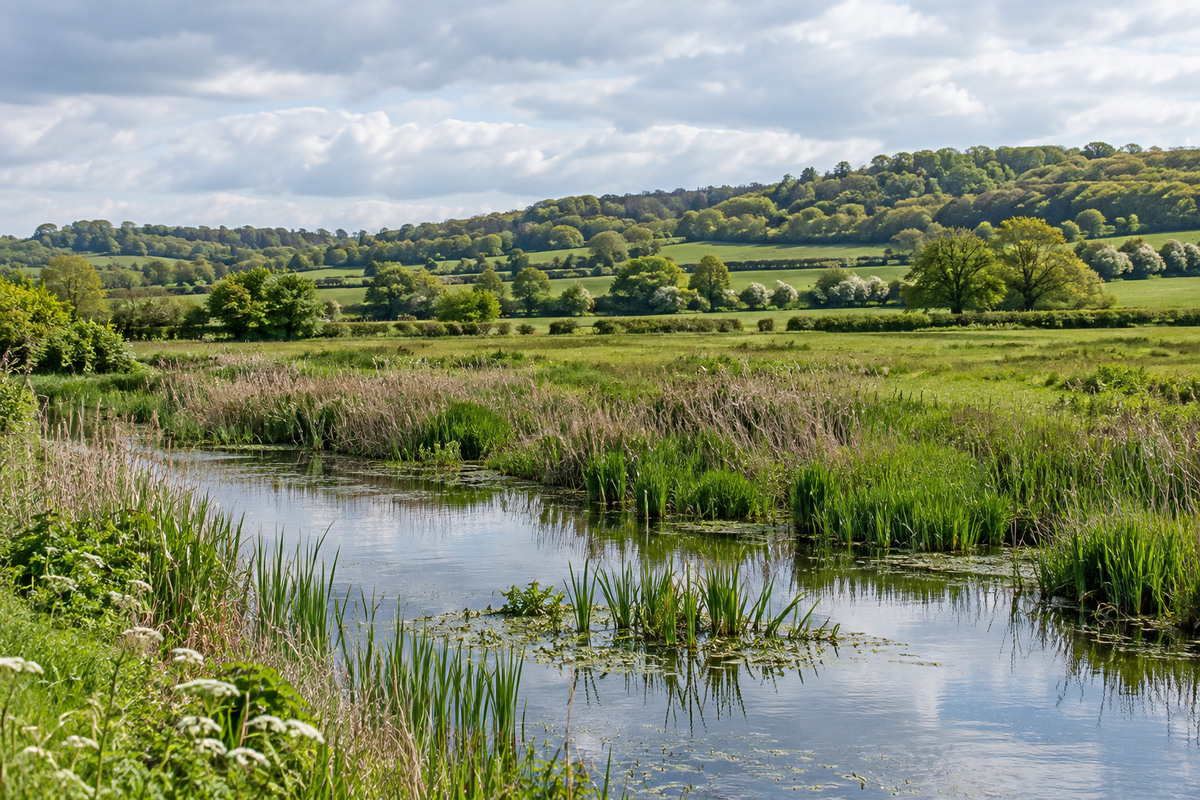
Brompton’s manufacturing descriptions available in October 2026 distinguish steel-frame brazing from titanium fabrication. Steel frames are assembled by hand, with brazers trained in-house for 18 months and a small maker’s signature beneath each frame. Titanium framesets begin as tubes at the specialist Sheffield factory, roughly 300 kilometres north of London. Tungsten inert gas welding joins these components, using an electric arc and a titanium filler rod. Argon surrounds the heated joint to prevent reactions with air that could weaken the weld. Tubes are cleaned with acetone before welding, removing contamination such as dust and fingerprints. Purpose-built jigs hold their sections at the required angles while allowing the operator to reach the joints. The tooling and manufacturing teams develop those fixtures together. Skilled welders coordinate the torch’s heat, the movement of their hands and the molten filler pool as they progress around each joint. Brompton built the Sheffield facility around the skills, machinery and processes required for titanium.
Brompton’s Roller Nut Machine addresses a more specific assembly operation: attaching the small wheels used when a folded bicycle is rolled. The company’s engineering explanation, available in October 2026, connects the machine to its Superlight Advance rear frame. Engineers used finite-element analysis to revise the frame and worked with adhesive specialist Henkel on a different way of installing the roller-wheel fixings. Earlier fixings screwed into welded threaded nuts inside curved tubes; the revised arrangement uses a larger-diameter tube. Inside the machine, the frame is held at a set angle, a nozzle meters adhesive into the tube ends, and threaded aluminium nuts travel along a three-dimensionally printed track. The nuts are pressed into position, after which the frame receives heat treatment. Factory staff assess the finished work through inspection and handling. Brompton attributes precision and reduced operator contact with adhesive to the enclosed process. This is a particular fastening operation, not a description of how every joint on every Brompton is assembled.

Gearing and the wider product range
Brompton introduced its twelve-speed system in January 2024 by combining a four-speed external derailleur with a three-speed internal hub. The resulting twelve ratios did not require a twelve-sprocket cassette beside a small rear wheel. The initial rollout covered T Line, P Line, Electric P Line and Electric C Line models. The pedal-powered C Line Explore and Urban, together with A Line, retained their existing drivetrains at that launch. Two sets of controls operated the combined system: one for the internal hub and another for the derailleur. Historical launch specifications also varied with the bicycle’s materials and electrical equipment. The twelve-speed Electric C Line was listed at £3,150 and 17.3 kilograms including its battery; the non-electric P Line at £2,450 and 10.5 kilograms. The T Line Explore was listed at £4,725 and 8.8 kilograms. Those were January 2024 specifications and prices, rather than present-day quotations. Will Jones covered the launch for Cyclingnews on 22nd January 2024, including the different model configurations.
The G Line introduced a different wheel size and geometry to Brompton’s range, with twenty-inch wheels replacing the traditional sixteen-inch format on that model. Its launch took place in autumn 2024. Brompton’s later engineering explanation attributes eight years of testing and iteration to the development programme. Laboratory work covered frame strength, braking, gears and electrical systems. The Brompton Attributes Team also tested how the bicycle rode, folded and fitted into journeys: its routes included wet London streets, sandy climbs in Spain and trips across northern Europe combining boats, trains and cycle lanes. Mechanical, electrical, software, systems and simulation specialists worked on the electric version together. Brompton developed its electronic hardware and software for the bicycle in-house, with subsequent software developments shared through its app. The battery detaches from the front of the bicycle, and its redesigned mechanical fitting was intended to secure it across different terrain. Test riders of different abilities and sizes also participated in development.
Brompton extended its electric range again in October 2025, announcing the Electric T Line and revised C Line and P Line electric bicycles. The T Line combined titanium and carbon components with the company’s e-Motiq rear-hub drive. Brompton claimed a starting weight of 14.1 kilograms including the removable battery, or 11.2 kilograms for the bicycle alone. Its announced entry price was £5,799. The revised C Line and P Line moved from their earlier front-hub motor arrangements to the rear-hub system. A shared 345 watt-hour removable battery accompanied the range. The smaller-wheel versions used a motor rated at 250 watts and 24 newton-metres, with assistance calibrated for those bicycles. The announcement scheduled pre-orders through Brompton and Junction stores from 21st October, followed by wider availability from 28th October. These were the announced launch arrangements, not evidence of how many orders were delivered. Paul Norman’s BikeRadar coverage on 14th October recorded the specifications and planned sales dates; the quoted weights remained manufacturer claims.
Company stores, dealers and refurbished bicycles
Brompton’s North American business combined company stores and online sales with an independent dealer network. In an interview published on 10th April 2025, North America president Juliet Scott-Croxford told BRAIN editor Steve Frothingham that the regional split was roughly half direct-to-consumer and half retailer business. The company had about 150 dealers in the United States, including around twenty key accounts. Its Washington, D.C., store had opened the previous spring, joining the Greenwich Village store in New York. Scott-Croxford emphasised the importance of dealers in cities beyond those served by company stores, including their experience with Brompton bicycles and local customers. Her expansion strategy therefore included existing independent retailers as well as additional direct selling. The geographical reach and channel split describe that interview period; they are not a current count of stores or a claim that every market uses the same sales mix.

Brompton launched its Renewed programme in North America in October 2024, offering refurbished and lightly used bicycles online and a smaller selection through New York and Washington stores. Its company announcement, dated 15th October and posted by BRAIN on 24th October, offered discounts of up to 20% and a seven-year frame warranty. The discount ceiling did not apply equally to every bicycle. Brompton’s separate Renewed page for the United Kingdom, available in October 2026, describes a 27-point safety inspection, servicing and the use of genuine parts before certification. Its current grading scheme distinguishes bicycles without marks on the main frame from those with limited marks or more visible cosmetic wear. Those British grades should not be read as the precise terms of the earlier North American launch. Both descriptions concern returning existing display, demonstration or lightly used bicycles to sale, rather than an additional category of newly manufactured frames. Brompton presents the programme as part of its effort to reduce waste and extend product use.
Brompton also describes changes inside production and its supply chain on its sustainability pages available in October 2026. Steel tubes need washing before brazing and painting; a recycling system recovers wash water for reuse, with specialists handling further recovery once the system is full. Powder coating allows paint to be reused between frames. Brompton states that its Greenford operation recycled 62% of waste in 2023 and reduced metal scrap. Returnable packaging with some suppliers formed another part of the programme. Its historical packaging text distinguishes plastic inserts introduced in 2023 from a bicycle-box redesign planned for 2024; a stated redesign intention alone does not establish its subsequent completion. Supplier requirements cover working conditions, training, workplace safety and environmental impacts. Brompton requires suppliers of different sizes to follow its code and describes audits as part of its ethical-trade programme. These are company policies and reported practices, rather than independent findings that every supplier has met every requirement on every occasion.

The anniversary edition and later trading results
Brompton’s 1975 Edition marked its fiftieth anniversary with a limited run of 1,975 bicycles announced in September 2025. The design referred to the people making the frames, including a lacquer finish inspired by the colours produced during brazing. Each bicycle carried a numbered serial plate and came with a brass coin bearing a brazer’s initials. At the launch, Brompton identified 52 expert brazers at its London factory. That was a contemporary workforce detail, rather than a permanent staffing level. The model also included accessories and component changes:
- A handlebar-mounted bottle holder used an adjustable bungee system and could remain attached during folding.
- A small zip case provided 1.5 litres of capacity, internal storage features and a detachable shoulder strap.
- The anniversary saddle combined a carbon base, chromoly rails and an integrated carrying handle.
- Online, company-store and selected accredited-retailer availability was announced for 17th September 2025.
Brompton’s subsequent results for the year ended 31st March 2025 included an after-tax loss of approximately £2.08 million. Its monthly subscription service grew 45%, while G Line accounted for about 9% of bicycle sales volume and 9.8% of turnover. Chief executive Will Butler-Adams retained an optimistic outlook, identifying additional markets and product investment as future opportunities. These later figures were covered by Cyclingnews on 9th January 2026; the outlook remained management’s assessment.
Leave a comment