
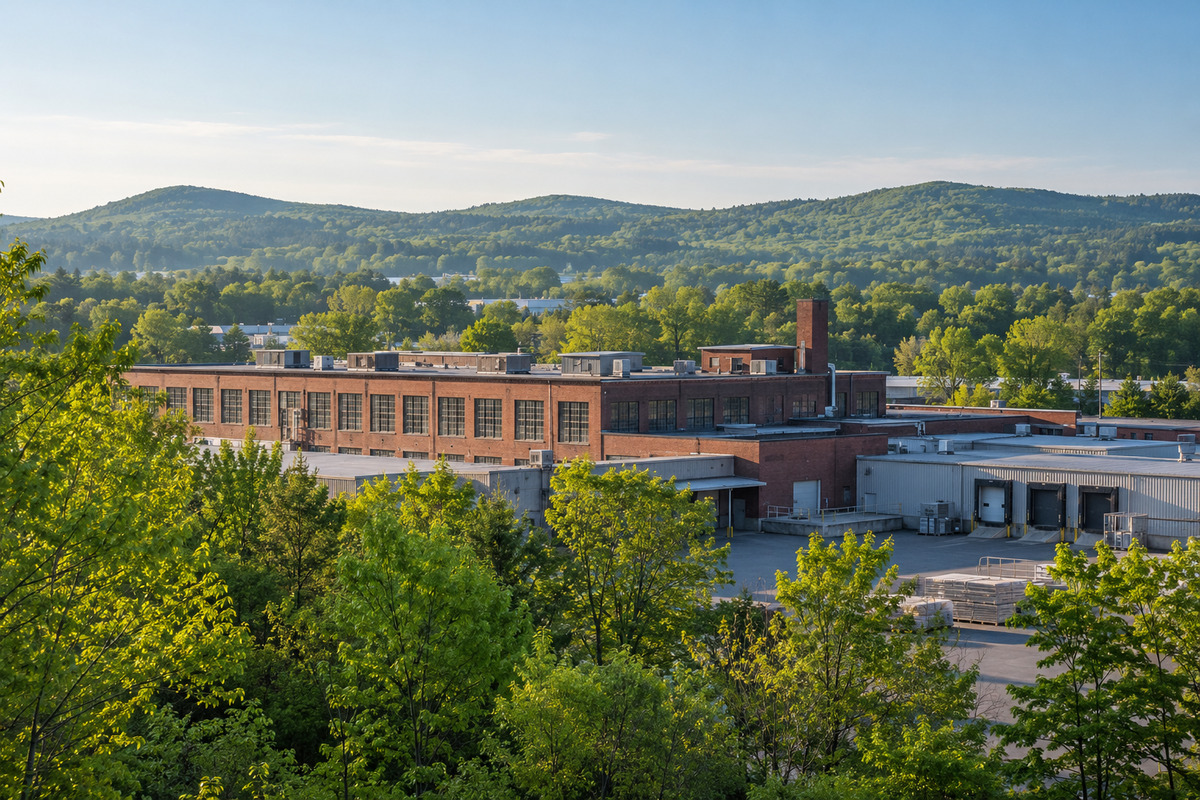
Boston Metal raised $75 million to expand its critical-metals business in the United States and internationally. The financing, reported on May 21, 2026, brought its cumulative funding above $500 million. Tata Steel participated alongside existing investors. The company intends to deploy its Molten Oxide Electrolysis platform, or MOE, for metals including niobium, tantalum, vanadium and nickel, using low-grade resources and industrial waste streams.
Rick Cutright, technology director at Climate Investment, described critical metals as an attractive first market because of immediate demand and the opportunity to recover material that conventional processing leaves behind. That assessment is an investor’s view of the commercial opportunity. Chief executive Tadeu Carneiro similarly advocated more adaptable methods of producing strategic metals. The financing announcement identifies an expansion programme; it does not specify achieved output or costs for each proposed metal.

The Brazilian critical-metals business
Boston Metal inaugurated its Brazilian subsidiary’s first MOE facility on March 7, 2024. The ceremony included the governor of Minas Gerais, local authorities and representatives of the company’s investors. Boston Metal described the installation as the first commercial deployment of its platform for recovering high-value metals from mining waste. Its wholly owned operation in Brazil formed a distinct business alongside the development of an ironmaking process in Massachusetts.
The Brazilian application uses electricity to extract selected valuable metals from complex materials with low concentrations of the target elements. Slag, a by-product of metallurgical processing, was among the material streams identified by the company. Boston Metal presented the process as a way for mine operators to obtain revenue from material otherwise requiring treatment or storage. Itamar Resende, president of Boston Metal do Brasil, led the local business. At the inauguration, the company reported a local team of 80 and planned to increase it above 250 over subsequent years.
Financing a second phase
A separate $51 million convertible-note investment followed on July 10, 2025. Existing investors included BHP Ventures, Breakthrough Energy Ventures, Piva Capital and SiteGround. Boston Metal planned to use the funding for the second phase of its Brazilian critical-metals plant and continued development of its steel technology. At that time, the second phase was scheduled to come online in mid-2026.

The July announcement identified niobium, tantalum and tin as examples of high-value materials associated with the Minas Gerais operation. It expected the critical-metals business to begin generating revenue later in 2025. The release also described the Woburn industrial cell as producing metal on a tonnage scale and supporting a future steel demonstration plant. These were different development programmes: expanding recovery of valuable materials in Brazil and scaling ironmaking equipment in Massachusetts. The convertible note was an earlier financing event than the May 2026 round. Its revenue and second-phase dates remain the expectations expressed in July 2025, rather than confirmation that either milestone was subsequently achieved.
Chromium supply and recycling trials
Outokumpu and Boston Metal signed a memorandum of understanding announced on September 9, 2025. Their proposed joint development linked a stainless-steel producer’s material streams with Boston Metal’s electrochemical platform. Outokumpu intended to supply chromium material originating from its Kemi mine in Finland, while Boston Metal would evaluate the use of MOE within the partner’s operations.
- Boston Metal would test its technology for recycling side streams and improving circularity within Outokumpu’s operations.
- Outokumpu would provide chromium and chrome-oxide feedstock to help develop and secure the supply chain for the inert anode used in MOE ironmaking.
Outokumpu chief technology officer Stefan Erdmann connected the collaboration with a proprietary technology presented at the company’s June 2025 Capital Markets Day. Boston Metal business-development executive Adam Rauwerdink described an opportunity to explore chromium-supply applications and recover value within Outokumpu’s operations. The memorandum established intended evaluations and partner responsibilities. It did not report completed recycling trials, contracted production volumes or measured improvements in recovery. The two workstreams also serve different purposes: treating industrial side streams and supplying material for an essential cell component.

Niobium’s established industrial market
Niobium already has substantial uses in steel and aerospace manufacturing. The U.S. Geological Survey’s January 2025 commodity summary estimated the distribution of domestic consumption at about 77% for steels and 21% for superalloys. Significant U.S. niobium mine production had not been reported since 1959. Domestic companies instead processed imported concentrates, oxides and ferroniobium into niobium-containing materials.
For 2024, USGS estimated apparent U.S. consumption at 8,400 metric tonnes of niobium content and net import reliance at 100% of apparent consumption. Reported consumption was a different series, covering ferroniobium and nickel niobium. Brazil accounted for approximately 92% of world mine production, followed by Canada at about 7%. Niobium returned to use when niobium-bearing steels and superalloys were recycled, but scrap recovery specifically for its niobium content was negligible. The quantity recycled was unavailable; USGS offered a qualified estimate that it might reach 20% of apparent consumption. These are dated market statistics and estimates, rather than evidence of how much niobium Boston Metal has recovered or sold.
From MIT research to an electrolysis cell
Boston Metal grew from research by MIT’s Donald Sadoway and Antoine Allanore, who founded the company with James Yurko. The underlying technology was patented at MIT and licensed through its Technology Licensing Office. Chief scientist Guillaume Lambotte joined after the group’s 2013 publication on MOE. By May 2024, the business had a prototype ironmaking reactor in Woburn and a separate high-value-metals application in Brazil.
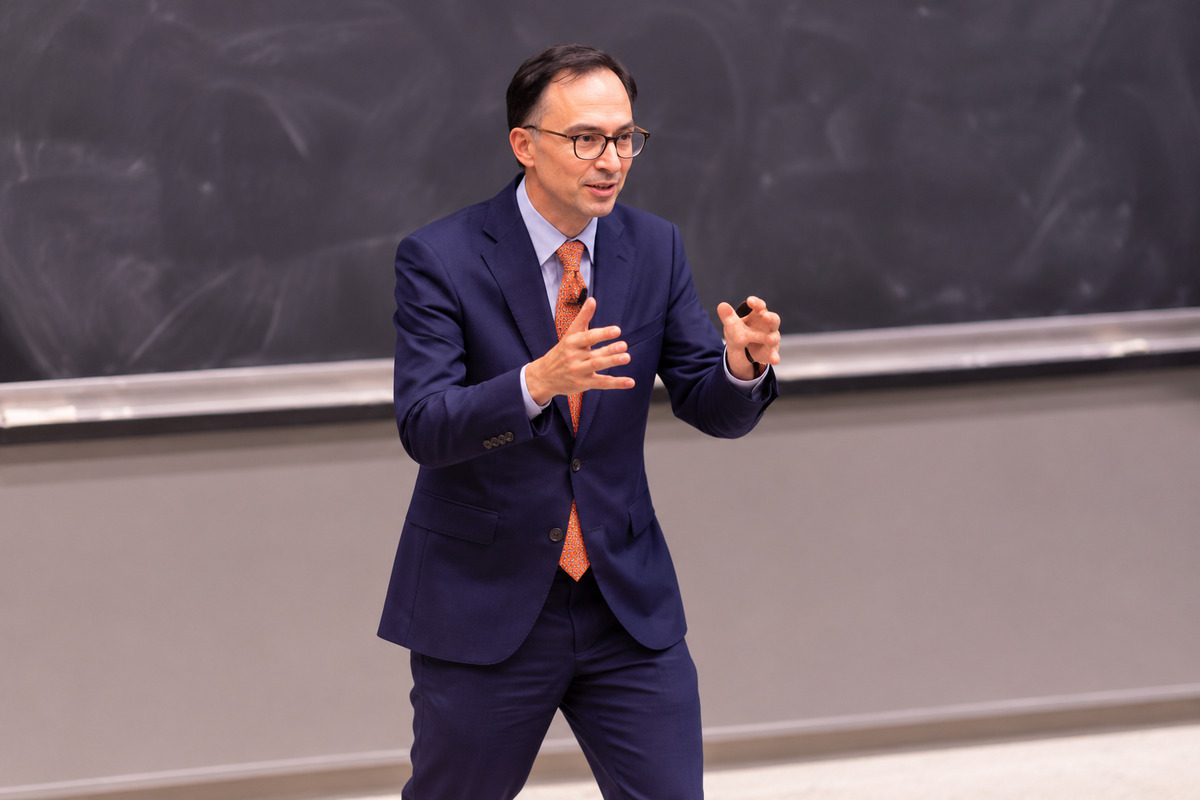
In the ironmaking configuration, ore enters a cell containing a liquid electrolyte, a cathode and an immersed anode. Electricity drives the separation of iron from oxygen at around 1,600°C. Liquid metal collects at the bottom for tapping, while oxygen forms at the anode. MIT’s account described modular cells approximately the size of a school bus. Lambotte estimated that a cell operating at about 600,000 amperes could produce up to 10 tonnes of metal daily. That figure was a prospective relationship between current and production, not a measured daily output for every installed cell. He also linked the prospect of fully low-carbon steel to access to clean electricity.
The anode’s protective surface
Allanore, Lan Yin and Sadoway’s 2013 Nature research addressed a material problem at the positive electrode. MOE had previously been demonstrated with consumable graphite anodes for some metals or with iridium for iron, which the researchers considered too expensive for terrestrial production. An alternative needed to sustain oxygen evolution while resisting consumption in a hot, corrosive oxide environment.
Iron production imposed several constraints. The operating temperature had to exceed iron’s melting point, about 1,538°C. Most metals corrode under the anodic conditions, while iron oxide can undergo spontaneous reduction when it contacts many refractory metals or carbon. The researchers investigated chromium-based alloys and found limited anode consumption during iron extraction and oxygen evolution. Their explanation involved an electrically conducting protective oxide: a solid solution of chromium(III) and aluminium oxides with the corundum structure. The finding provided a material basis for larger-scale evaluation of the process. It established a research result for the tested alloy system, rather than an unlimited service life for a commercial electrode.

Testing alloy behavior under current
A 2020 study by M. Esmaily and colleagues examined chromium–iron anodes through experiments, microscopy and theoretical calculations. The researchers used a calcium-oxide-based molten electrolyte and investigated the role of anodic polarization. Their experimental temperature range was 1,565–1,600°C. They compared the materials formed during electrolysis with those produced without an applied electrical current.
Under anodic polarization, the alloys developed an inner protective chromia–alumina solid solution covered by a magnesium-rich spinel layer. The electrical properties of these phases were important because protection from corrosion must coexist with electrical conduction. Without current, calcium-rich oxides dominated instead. An alloy containing 30% iron by weight developed a thicker, more defective oxide scale than the alloy containing 10% iron, with associated chromium depletion. Thermodynamic and electronic-structure calculations helped the researchers interpret the observed layers. These were laboratory alloy tests, rather than factory lifetime measurements. Electrolysis runs lasted up to six hours, constrained by the performance of the laboratory crucible. The study therefore documents both the electrode response and a separate limitation of the experimental apparatus.
Containing a corrosive oxide melt
Kathryn Ford and colleagues investigated laboratory crucible selection in research published in January 2024. Their work combined materials screening, thermodynamic predictions and physical cup tests. Two oxide systems were examined: titania–sodia at 1,100°C and neodymia–boria at 1,300°C. The purpose was to identify containers that could tolerate the experimental temperature while limiting reactions that alter the melt’s composition.
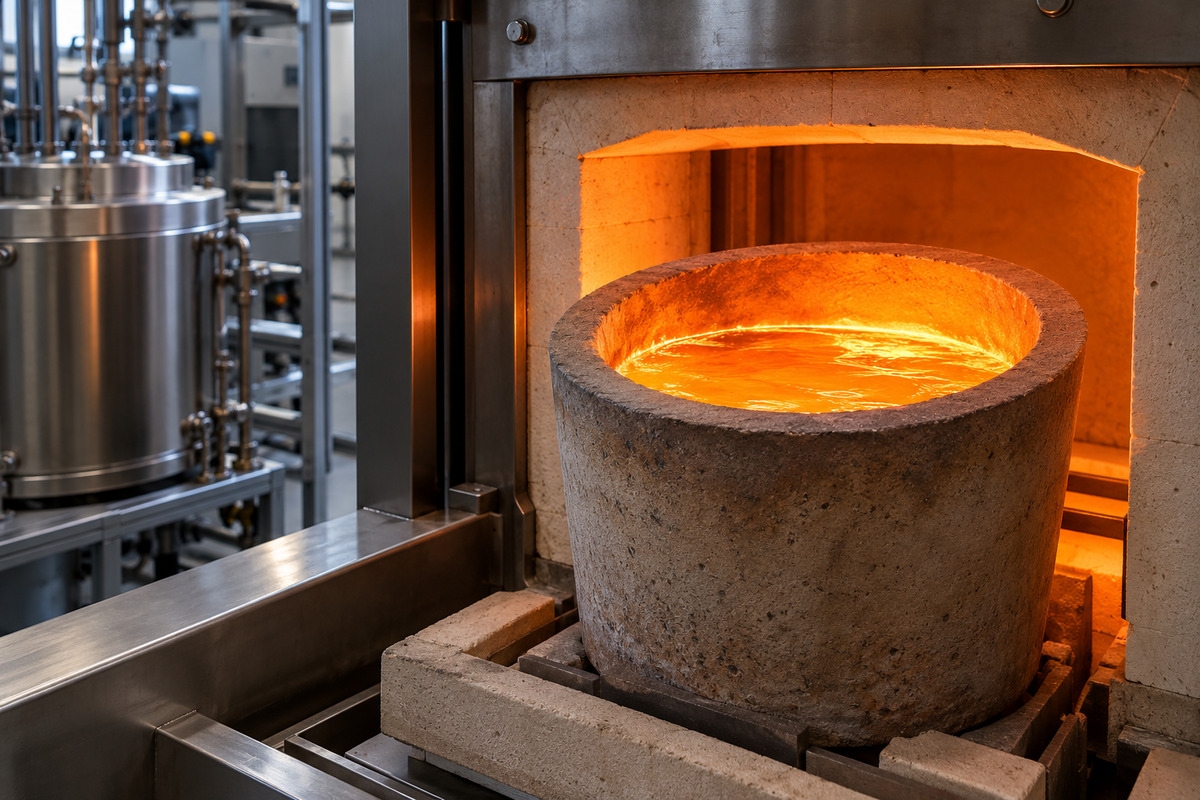
For the titania–sodia system, FactSage equilibrium calculations predicted magnesia as the best choice, but experiments favored alumina under the tested conditions. The oxide and carbonate charges infiltrated the grain-boundary networks of magnesia and yttria-stabilized zirconia. Alumina also contaminated the charges, requiring consideration of whether that contamination could be acceptable for the intended electrochemical experiment. A platinum crucible produced minimal contamination in the neodymia–boria test after four hours. The researchers emphasized the difference between equilibrium predictions and reaction rates observed during experiments. Industrial containment adds mechanical requirements and may involve freeze linings that separate the molten charge from the structural container. These results concern the studied laboratory mixtures; they do not identify the refractory design used in Boston Metal’s plants.
Electricity, heat and cell design
Allanore, Luis Ortiz and Sadoway examined the energy balance of iron-producing MOE cells in a 2011 analysis. They approached the same reactor from electrical and chemical perspectives: electricity supplies energy, while feedstock enters and hot metal and oxygen leave. Their thermodynamic treatment considered the heat needed to sustain production of a liquid product, alongside the electrical requirements of the reaction.
Two important parameters were Faradaic efficiency and the resistance-related voltage drop between the electrodes. Electronic conduction through the electrolyte can carry current without producing metal, reducing efficiency. Electrode separation, current density and electrolyte conductivity also affect the cell’s electrical behavior. Oxygen bubbles accumulating near the anode can increase resistance, making gas removal part of the design problem. The researchers evaluated alternative combinations of electrolyte conductivity and cell geometry, with explicit assumptions about heat losses and electricity’s carbon intensity. These were process-model scenarios, not measurements from a commercial Boston Metal installation. Their analysis tied prospective energy use to the electrolyte chemistry, useful current, thermal balance and equipment configuration, rather than assigning a single consumption figure to every MOE process.

Potential and oxygen pressure
A separate 2017 thermodynamic study examined iron and iron-oxide stability at different electric potentials and oxygen partial pressures. The researchers constructed potential–oxygen-pressure diagrams for two temperatures, 1,473 and 1,873 kelvin. These represented the frozen electrolyte sidewall and the molten electrolyte inside an ironmaking cell, respectively.
The calculations identified stability regions for solid and liquid oxides and explored how their composition changes with potential and oxygen pressure. The researchers presented the diagrams as a means of informing electrolyte design and improving current efficiency. The two modeled temperature regions were parts of a cell with different physical conditions. This work concerned thermodynamic stability and chemical composition, rather than a production trial reporting annual tonnage, recovery from a named waste stream or the cost of a commercial installation.
A separate milestone for ironmaking
Boston Metal announced commissioning of its multi-inert-anode industrial cell in Woburn on March 12, 2025. The company described metal flowing at tonnage scale and characterized the result as validation for further steel-process development. The announcement concerned an operational cell at the Massachusetts facility, while the first demonstration plant was still a planned subsequent step.

Boston Metal proposed licensing a modular manufacturing system to steel producers. Its stated process would bypass coke production, ore sintering and pelletizing, blast-furnace reduction and basic-oxygen-furnace refinement. The company envisaged installations sized for different production requirements, from thousands to millions of tonnes. Those figures described the proposed scope of a licensed solution, rather than demonstrated output at Woburn. In the March 2025 announcement, the demonstration plant was targeted for 2026. The critical-metals business and the steel programme consequently shared an electrochemical platform while retaining separate product markets, equipment-development milestones and commercialization schedules. Commissioning the industrial cell was a specific event within the steel programme, not confirmation that a complete commercial steelworks had started operating.
The materials challenge also featured in Allanore’s October 23, 2024 Wulff Lecture at MIT. He used a benchmark of 1.85 tonnes of carbon dioxide per tonne of steel to discuss the scale of conventional production’s emissions. His discussion emphasized electrodes that can withstand very high temperatures while performing the required electrochemical reactions. MIT’s November account of the lecture identified chromium-anode research as part of the technical basis for Boston Metal. The benchmark was part of that dated research presentation, rather than a measurement of Boston Metal’s plant or its products.











Leave a comment