
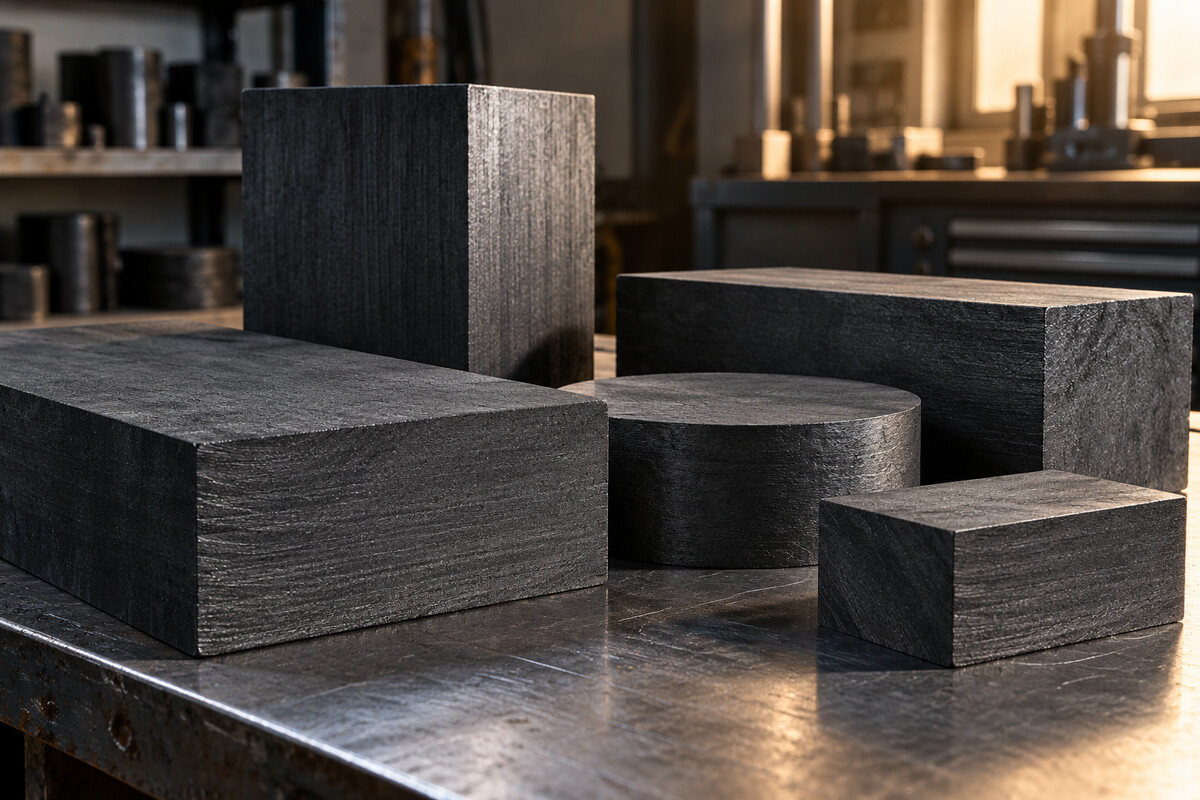
Antora Energy raised $550 million in a Series C co-led by Eclipse and G2 Venture Partners to expand thermal battery production and build a second factory in the United States. Its carbon batteries operate at 2,400°C, storing energy for industrial heat and potential electricity generation. Chief executive and co-founder Andrew Ponec regards cost competitiveness as essential and is pursuing data-center projects, without naming customers. Eclipse partner Joe Fath identifies electricity applications beyond industry as a reason for investing. New York University energy engineer Dharik Mallapragada considers inexpensive storage materials a potential advantage over daily or weekly periods. Thermal batteries nevertheless lose more energy in electricity conversion than lithium-ion systems. BloombergNEF analyst Kyle Disselkoen estimates that Antora’s South Dakota installation represents 89% of global thermal storage capacity; that figure is his market assessment. He also regards combining revenue streams as important to financing. Breakthrough Energy Ventures and Decarbonization Partners participated in the financing round.
Industrial steam at Big Stone
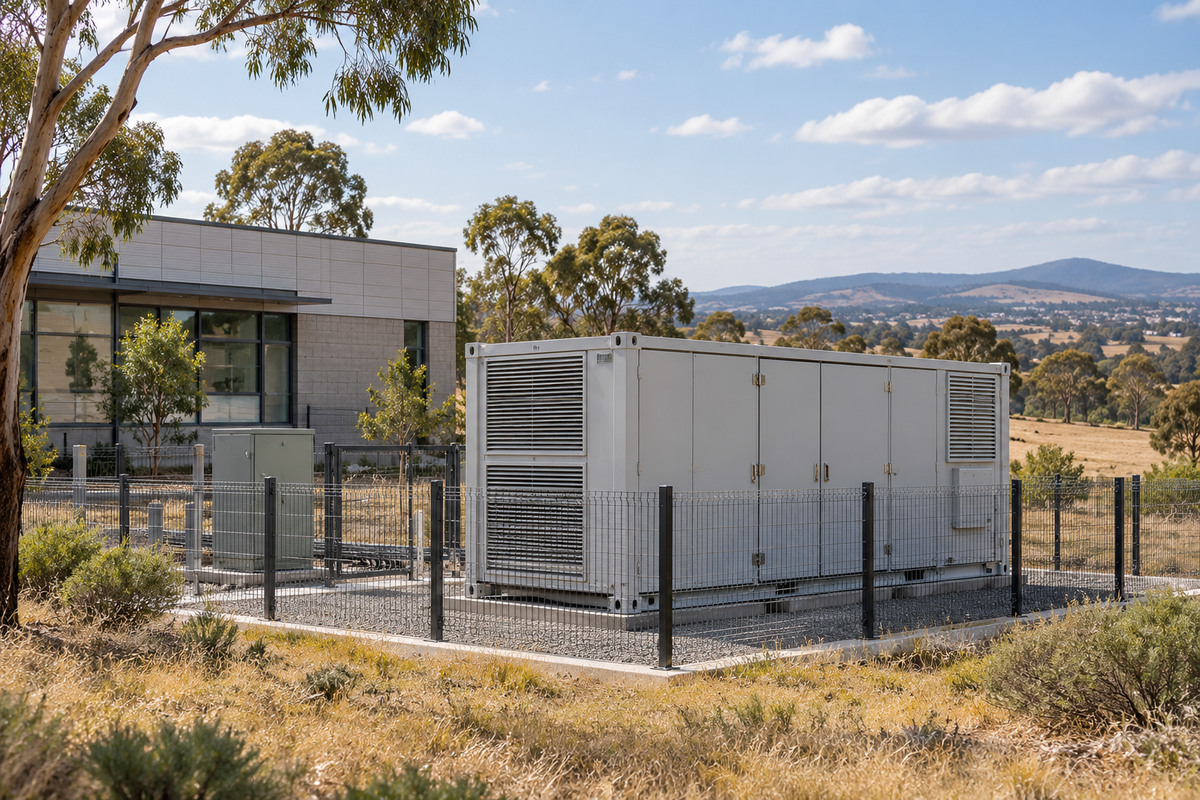
Antora and POET announced commissioning of a 5 gigawatt-hour thermal storage system at POET’s Big Stone City bioprocessing facility in South Dakota on 19th May 2026. More than 200 modules form the multi-day installation. The project delivered its first energy less than 12 months after construction began, while full operation remained scheduled for later in 2026. Antora supplies energy under a long-term heat offtake agreement, connecting the storage installation with an established bioethanol producer’s industrial energy requirements.

Grok Ventures arranged the project financing as the sole external investor at project level. Antora and POET attribute more than 300 supported manufacturing and construction jobs to the investment, spanning rural South Dakota and module production in San Jose. POET expects the energy arrangement to support increased bioethanol production and additional opportunities for farmers. Those economic benefits remain the companies’ expectations, rather than measured results from a completed year of operation.
Electricity service with a flexible load
The South Dakota Public Utilities Commission approved Otter Tail Power’s Thermal Market Energy Pricing rider on 15th July 2025, with effect from 1st August. The vote was 3–0. Eligibility generally requires a new thermal storage facility with at least 25 MW of demand and a load factor below 50%. Its non-firm load must be tied to output from specified wind or solar generation, and the facility must register as a MISO load modifying resource.
The associated Big Stone storage service agreement has a 20-year term and estimated partially controllable demand of 155,000 kW at full capacity. Firm demand uses the Large General Service tariff; non-firm demand uses the new rider. POET was working to qualify for the federal 45Z clean-fuel credit through the new steam service. The public proceedings do not establish that a credit had been awarded, and commercially confidential agreement terms remain undisclosed.

A larger San Jose manufacturing campus
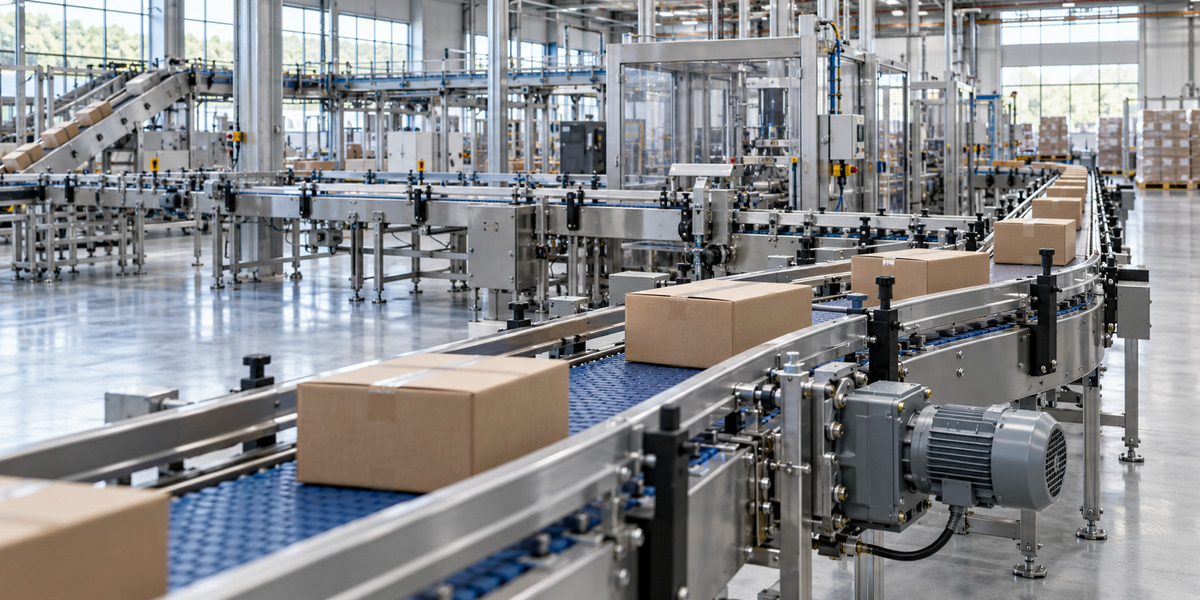
Antora completed a manufacturing expansion in San Jose and announced it on 2nd April 2026. Two newly operational facilities near the existing factory doubled the company’s manufacturing and operations footprint. The campus now comprises three buildings, with additional space for subcomponent production, research and development, and warehousing. The expansion also moved more manufacturing activities inside the company, extending the work undertaken at the campus beyond the final assembly of complete thermal battery modules for shipment to customers.
Chief commercial officer and co-founder David Bierman identified delivery speed as a frequent question from industrial and data-center operators. He said the company had already shipped gigawatt-hours of storage to the Midwest. Antora describes its production capacity as multi-gigawatt-hour, without giving an exact annual output figure in the expansion announcement. The company attributes dozens of new jobs to the added facilities and says hundreds of people work across the campus. Operations vice president Jerome Pereira identifies machinists, electricians and welders among its manufacturing workforce.
Building complete, transportable modules
The San Jose module factory was first announced on 24th October 2023 as a 50,000-square-foot facility. Antora planned to produce initial units there in 2024 for its first major commercial projects. The proposed manufacturing operation covered considerably more than purchasing and storing carbon blocks. Each finished module incorporates insulation, an enclosure, equipment for charging and discharging, and the surrounding components needed to integrate those functions into a transportable industrial energy system.

Completed modules were intended to leave the factory ready for road transport and installation at industrial premises. Antora also outlined plans for additional, larger manufacturing sites as demand increased. Ponec linked the choice of a domestic factory to the earlier support provided by federal energy programmes and California. Carbon had established supply chains across six continents when Antora announced the factory.
The earlier Fresno demonstration
Antora launched an operational commercial-scale demonstration at a Wellhead Electric Company facility near Fresno on 12th September 2023. The module had been manufactured in Bakersfield and transported to the installation site. Antora reported storing energy above 1,800°C in that demonstration. Its stated industrial heat delivery capability exceeded 1,500°C, a separate specification from the temperature inside the storage system. The company targeted processes ranging from lower-temperature heat below 200°C to applications above 1,000°C in cement, lime, glass, chemicals and steel.
The demonstration used renewable electricity to heat solid carbon inside an insulated module. Antora presented factory assembly, container-scale modules and road shipment as features supporting replication at other sites. Ponec considered that configuration ready for expansion across industrial facilities. The company also claimed advantages in charging flexibility, material cost and energy density. Those comparisons were the company’s commercial assessments at launch.

The preceding private financing round
Antora raised $150 million in Series B financing announced on 22nd February 2024. Decarbonization Partners, the investment partnership between BlackRock and Temasek, led the round. New participants included Emerson Collective, GS Futures, The Nature Conservancy and a subsidiary of NextEra Energy Resources. Existing investors taking part included Trust Ventures, Lowercarbon Capital, Breakthrough Energy Ventures, BHP Ventures, Overture VC and Grok Ventures. Antora placed its total funding above $230 million at that point in its development.
The company allocated the round to expanding production of factory-made thermal batteries and supplying industrial customers. Decarbonization Partners’ global head and chief investment officer, Meghan Sharp, framed the investment around industrial heat and the capital needed to expand commercial deployments. Her assessment of Antora’s market position was an investor’s view. The financing also followed support from ARPA-E, the Department of Energy’s industrial decarbonization office, the National Science Foundation and the California Energy Commission.
Software and project development
Antora acquired Medley Thermal in December 2022 after raising a $50 million Series A earlier that year. Medley developed renewable power-to-heat projects for large commercial and industrial users and supplied proprietary control software. Its business included a pipeline of potential projects alongside the tools for connecting inexpensive renewable electricity with thermal demand. Founder and chief executive Jordan Kearns joined Antora’s executive team as vice president of project development when the acquisition was announced.

Kearns identified business models, controls and electricity rate structures as additional parts of industrial heat electrification alongside the physical equipment. Medley had approached the problem through project development and software, while Antora had concentrated on storage hardware. Antora intended to combine those capabilities to accelerate delivery to industrial customers. The announcement did not disclose an acquisition price or quantify the number of projects in Medley’s pipeline.
A separate production line for TPV cells
Antora announced a dedicated thermophotovoltaic cell manufacturing line at its Sunnyvale headquarters on 24th January 2023. Initial capacity was specified as 2 MW of cells per year. This is cell production capacity, separate from complete batteries’ stored thermal energy. Antora also claimed demonstrated heat-to-electricity conversion above 40%. TPV cells convert radiation from a hot source directly into electricity, without the moving machinery of a conventional turbine.
Antora developed whole-wafer processing, batch fabrication and automated characterization through a California Energy Commission-supported manufacturing programme. The work addressed the transfer from prototypes to repeatable manufacturing, including a manufacturing readiness level of eight. Antora’s documented results concern production methods and process development, without independently certifying commercial battery performance.

Measured semiconductor performance
Eric Tervo and colleagues published a preprint on scalable gallium indium arsenide TPV devices in July 2022. The tested single-junction devices had an area of 0.8 square centimetres and a bandgap of 0.74 electronvolts in that version of the study. At an emitter temperature of 1,850°C, they achieved an efficiency of 38.8%, with an uncertainty of ±2.0 percentage points, and electrical power density of 3.78 watts per square centimetre. Those measurements specify the conversion device and its test conditions.
The researchers combined spectral management with an optimized cell structure, high material quality and low series resistance. They demonstrated repeatable fabrication of 12 high-performing cells on a two-inch wafer and described a route to commercial epitaxy on larger wafers. Early two-junction results supplied a possible path to further efficiency improvements. Tervo and his colleagues documented the measurements and fabrication methods. Cell conversion efficiency does not measure all losses through charging, storage and electricity discharge in a complete thermal battery installation.
Refining materials and manufacturing
Antora announced more than $4 million in additional grant funding from the California Energy Commission and ARPA-E on 15th November 2023. The support came through California’s Electric Program Investment Charge programme and the federal Duration Addition to electricitY Storage programme. Antora assigned the funding to expanding production of its heat-to-power technology. California research director Jonah Steinbuck described the technology as promising for difficult industrial emissions, while ARPA-E director Evelyn Wang welcomed the work on scaling production. Both assessments concerned its potential development.
An earlier July 2023 federal environmental determination covered continued small-scale research at existing Sunnyvale facilities. The work included introducing more efficient materials, testing and refining an updated design, and finalizing the design and manufacture of TPV systems. The stated goal was a consistent manufacturing process for efficient, cost-effective cells. These were research and development tasks with conditional outcomes.
Combined heat and power development
ARPA-E selected Antora to begin negotiations for up to $14.5 million under its SCALEUP programme in June 2024. The proposed support addressed the launch of a combined heat and power thermal battery product, including commercial-scale manufacturing of the heat-to-power technology. Antora distinguished this effort from the production ramp for its first industrial process-heat product. The award announcement described a development and commercialization programme, rather than a completed fleet of systems already supplying electricity to customers.
Con Edison, serving New York City and Westchester County, was identified as a partner in aligning the proposed product with utility and industrial requirements. Antora also signed a letter of intent with Shell to evaluate possible industrial applications, including chemicals production. A letter of intent to evaluate opportunities does not establish an operating Shell project. Ponec intended the funding to expand TPV manufacturing capacity, while Wang described the next stage as increasing production of solid-state heat engines. The published selection remained subject to award negotiations and the programme’s development work.
Waste heat research in steelmaking

A distinct Antora research project led by Brendan Kayes investigated recovery of radiant waste heat from iron and steelmaking. Its planned period ran from 1st August 2021 to 31st July 2024, with a total budget of $2,499,974. At the May 2023 federal peer review, the team demonstrated a densely packed TPV module producing more than 300 watts from a 1,400°C source. The project targeted a water-cooled module supplying at least one kilowatt at that emitter temperature.
The proposed system combined TPV conversion with a chemically stable barrier and emitter suited to the industrial environment. That approach uses radiant waste heat from a process, a different heat source from electrically charged carbon storage. Antora identified interest from Gerdau, EVRAZ, voestalpine and ArcelorMittal, without presenting that interest as purchase contracts. The team also identified remaining work on supply-chain scale, cost sensitivity and application-specific requirements such as chemical compatibility.
Connecting storage with industrial heat demand
Chemical plants use heat for reactions and separations. Distillation separates compounds through their different boiling points and commonly requires temperatures from 100°C to 300°C. Existing steam networks distribute heat to columns, reactors and dryers. Thermal batteries can replace or supplement gas boilers, with heat exchangers and control changes adapted to particular installations. RMI’s researchers identify the following stages for integrating thermal storage with existing industrial equipment, including the electrical connection and the plant’s continuing demand for process heat:
- Assess heat requirements and select suitable integration points.
- Adapt steam systems, furnaces or other heaters.
- Coordinate charging and discharge with electricity prices and heat demand.
- Establish monitoring and maintenance arrangements.
Local grid conditions, purchased electricity costs, capital expenditure and electrical infrastructure upgrades affect project development. Under heat-as-a-service arrangements, a supplier operates and maintains equipment and bills the industrial customer for energy under a long-term contract. RMI identifies those commercial structures as an option for companies facing capital constraints, with electricity consumption patterns and local utility arrangements informing the system’s size and configuration.


Leave a comment