
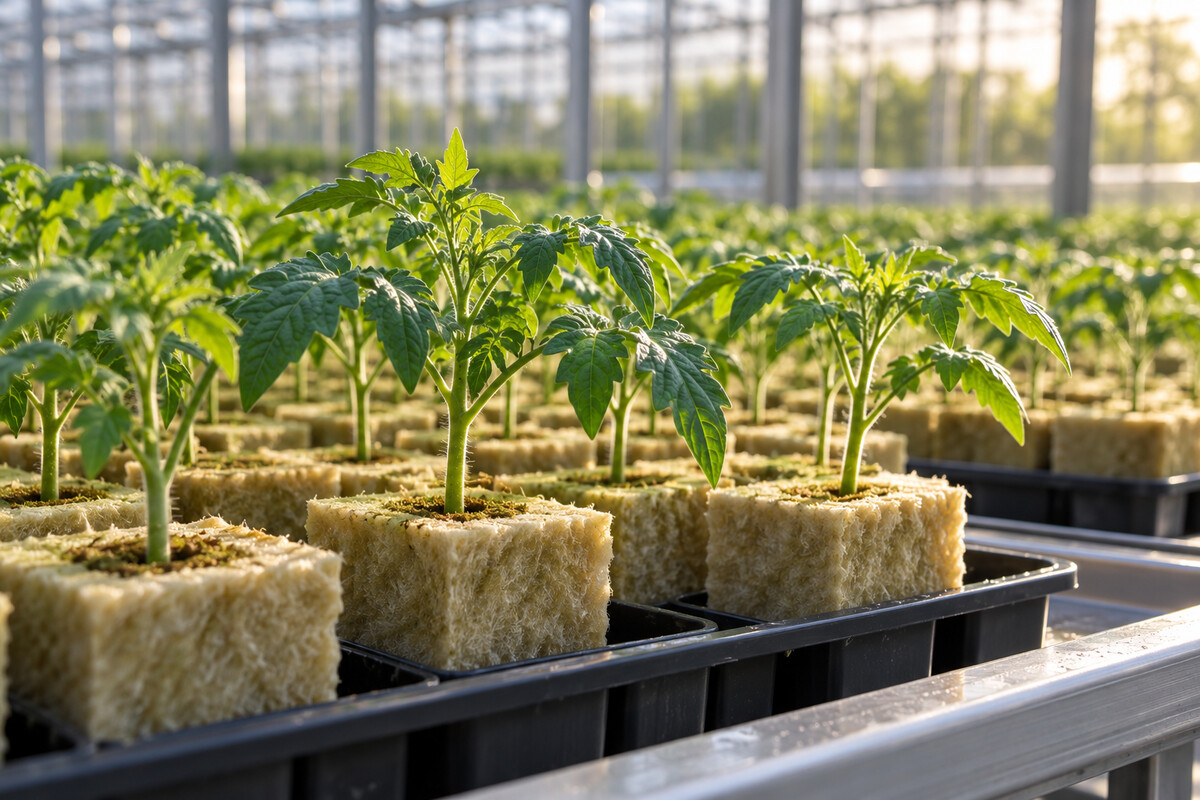
Tomato seedling cubes reach Saudi Arabia
Technonicol has started shipping greenhouse substrates from Krasny Sulin in Russia to Saudi Arabia. The first consignment contained mineral-wool cubes for germinating tomato seedlings. It sailed from Novorossiysk to Jeddah through the Bosporus and Suez Canal, according to the Rostov region’s Investment Development Agency, cited by Interfax on 21st January 2026.
Agency general director Igor Burakov said Technonicol planned to expand both the volume and range of exports from its Don plants to the Middle East. Greenhouse substrates were already reaching Iran. The Krasny Sulin substrate operation produces 160,000 cubic metres annually for low-volume hydroponic cultivation. Its domestic customers are in the Volga and Southern federal districts.

Technonicol operates a Rostov-region stone-wool facility for construction and technical insulation. That plant produces 1.7 million cubic metres annually.
The substrate factory opened on 26th October 2023 after construction began in 2022. Investment totalled 530 million roubles. Its designed annual capacity of 160,000 cubic metres was sufficient for an estimated 1,600 medium-sized greenhouse businesses, according to the company’s assessment at the opening.

Production history and greenhouse demand
The production range comprised three formats:
- Vegetation mats;
- Cubes for raising seedlings;
- Plugs for seed germination.
Technonicol already made similar products in the Ryazan region. Mineral-insulation division head Vasily Tkachev initially identified the North Caucasus, Southern and Central federal districts as markets for the new operation. He estimated the Russian greenhouse-substrate market in 2023 at approximately 455,000 cubic metres and 9 billion roubles. Stone-wool substrate consumption had grown 16.4% in 2022, according to the company’s figures published by Kommersant.

The existing Krasny Sulin production complex was also due for equipment and warehouse improvements in 2024. Vyacheslav Abakunov, director of Zavod Techno in Rostov, announced an allocation of 80 million roubles and an expected 6% increase in stone-wool output. He separately said mineral-wool seed-germination plugs would enter production at the substrate site during 2024. These were the plans announced in January that year, as covered by RBC Rostov.
At the 2023 opening, Tekhnologii Rosta research-company head Tamara Reshetnikova estimated that about half of Russian greenhouse businesses used stone wool. She associated its use with modern fourth- and fifth-generation vegetable greenhouses, while noting that growers often used peat for greens.





Leave a comment