
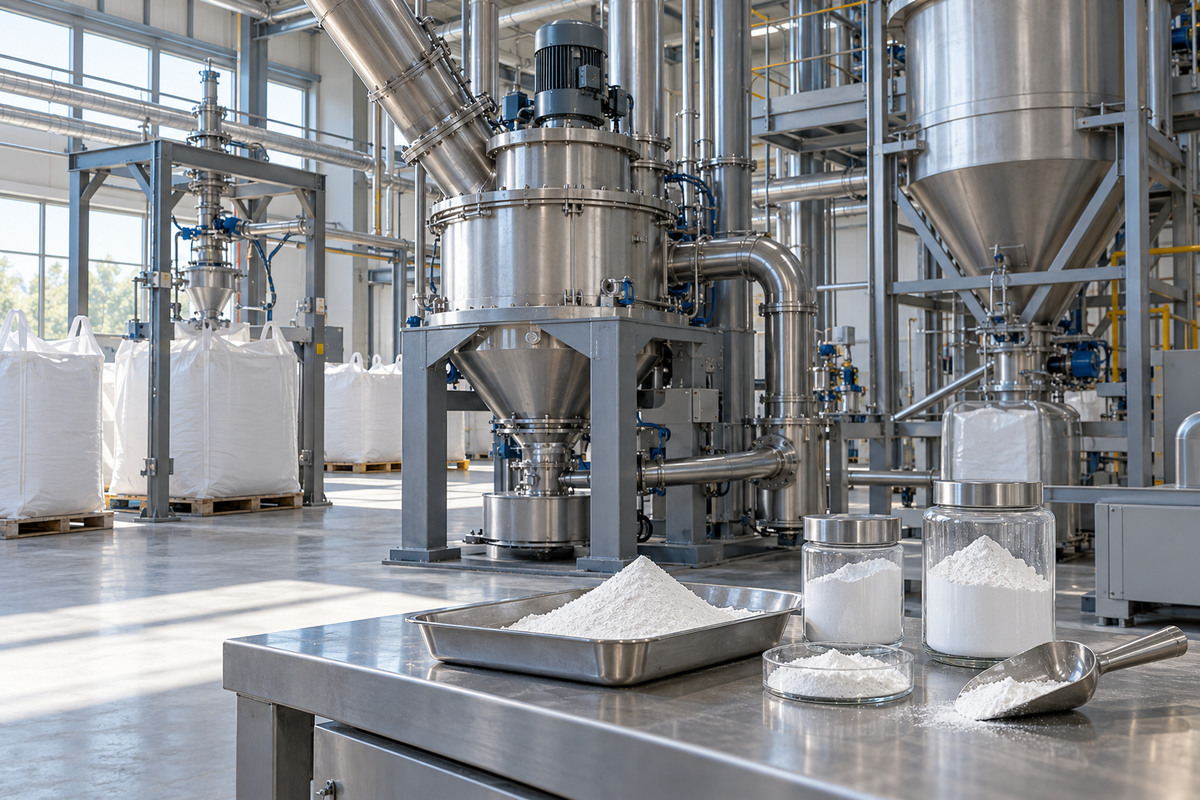
PCC GulfChem plans to invest at least $540 million in a chlor-alkali plant at Chemours’ DeLisle titanium dioxide site in Pass Christian, Mississippi. PCC GulfChem’s parent PCC SE is headquartered in Germany. The project is expected to create at least 84 jobs and up to 1,200 temporary construction jobs.
Chlorine supply and planned milestones
PCC and Chemours signed a chlorine supply agreement subject to customary conditions precedent. The planned annual nameplate capacity is up to 340,000 metric tons. PCC plans to sell the caustic-soda coproduct to strategic partners and the open market. Chemours chief executive Denise Dignam expects the partnership to lower manufacturing costs without an up-front financial commitment.
- Construction: expected in early 2026.
- Operations: anticipated in 2028.

Support in Harrison County
Mississippi Development Authority is supporting the project through the Mississippi Flexible Tax Incentive programme, known as MFLEX. Harrison County is also providing assistance. PCC’s wider industrial activities include chemical feedstocks and specialty chemicals, silicon and silicon derivatives, alongside container logistics. The DeLisle development is being undertaken by PCC GulfChem as a project company within the group.
Titanium dioxide and chlorine chemistry
Titanium dioxide provides whiteness and opacity in paints, coatings and plastics. Its commercial grades vary with particle size and crystal form. Manufacturers also adjust formulations for particular applications. Brightness and a high refractive index underpin its pigment properties, while finishing treatments modify how the material disperses in the products that contain it.
Chlorine supports the conversion and purification of titanium-bearing raw materials in the chloride manufacturing route. Much of it is recycled within the process rather than retained in the finished pigment. Titanium tetrachloride is purified before reacting with oxygen to produce titanium dioxide. Chlorine recovered from that reaction returns to the earlier production stage.
The pigment then passes through finishing operations, including milling and treatments with small quantities of materials such as silica or alumina. These treatments help tailor product performance and dispersibility. A June 2016 IHS Economics study commissioned by the American Chemistry Council also identifies a commercially established sulfate route, which uses sulfuric acid.

Chemours’ operating-cost programme
Chemours introduced its Pathway to Thrive strategy on Nov. 4, 2024. President and chief executive Denise Dignam set out four priorities: operational excellence, enabling growth, portfolio management and strengthening the long term. The company targeted more than $250 million in incremental annualised cost savings across its businesses over 2024–2027, measured on an adjusted EBITDA basis.
The targeted savings included another $100 million from the Titanium Technologies transformation plan and $150 million across other businesses and corporate costs. Chemours expected benefits to begin in early 2025 and half the planned run-rate savings by the end of 2025. These were company targets; the programme combined manufacturing improvements, a standardised operating model and continuous improvement.

Titanium Technologies generated $679 million in net sales in the third quarter of 2024, down 2% from a year earlier. Its adjusted EBITDA rose 23% to $85 million. Cost savings supported that increase, partly offset by lower pricing and $18 million in costs from weather-related downtime at the Altamira plant in Mexico, according to Chemours’ third-quarter results.



Leave a comment