
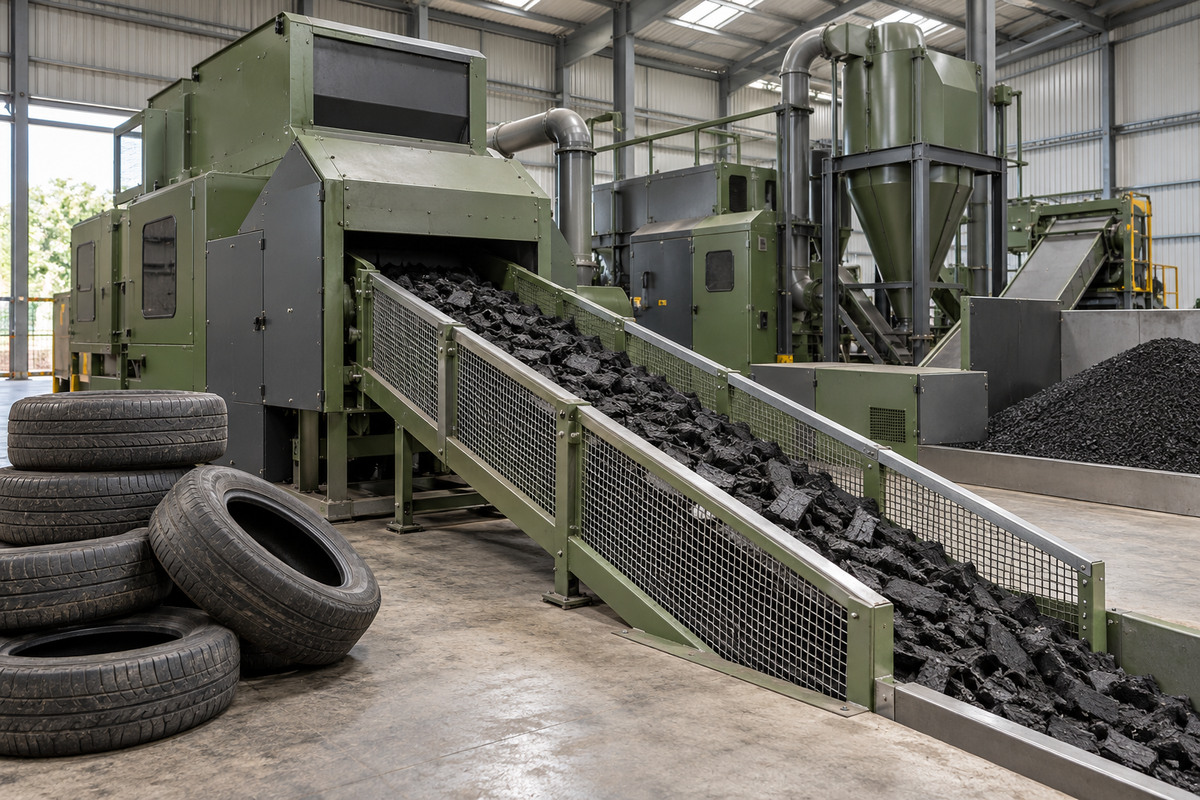
EcoStar Factory has opened a tyre-recycling complex in Primorye, Russia, with capacity to process 10,000 tonnes of discarded tyres annually. More than 350 million rubles was invested under an agreement with the Far East and Arctic Development Corporation, known as FEDC. The plant turns tyres into rubber crumb.
A new processing site near Vladivostok
The site is 20 kilometres from Vladivostok, near road, railway and maritime routes. Chief executive Gleb Yunitsyn identifies a regional tyre-recycling shortfall. Product uses include:
- Running tracks and recreational surfaces.
- Playground surfacing.
- Road construction, for which product use is planned.

Earlier plans for the project
EcoStar entered the list of pilot projects under the federal Circular Economy programme before the opening. In May 2023, FEDC identified it as the first resident of a Far Eastern advanced-development territory on that list. The company was then developing its plant in the Nadezhdinskaya territory and targeting a launch during the third quarter of 2023.
In May 2023, EcoStar planned 680 million rubles of investment under the project agreement and more than 80 jobs. Yunitsyn also described laboratory testing of a rubber-crumb modifier for asphalt concrete. He made plans for an associated production operation conditional on successful results from those tests.

FEDC supported the project with land, infrastructure assistance and implementation services. Yunitsyn also expected support through preferential small-business finance and regional guarantee funds. A road connection was in place; water, wastewater and permanent electricity connections were planned alongside the production launch.
From tyres to graded rubber
Mechanical recycling reduces whole tyres into smaller pieces before separating their components. In a typical ambient-temperature process, preliminary shredding produces chips that pass through further granulation. Magnets remove steel, while screens and air separation extract the fibre fraction. Additional grinding adjusts the rubber particles to the size required for their intended application.

Ambient processing works at or near ordinary temperatures without using cooling to make the rubber brittle. It differs from cryogenic recycling, which cools tyres or tyre chips before crushing and grinding them. The two approaches can also be combined when ambient-produced granulate needs further processing into fine powder for more specialised rubber applications.
Ambient tyre-recycling plants can accept passenger-car, van, truck and earth-moving tyres. The recovered steel can be remelted in steelworks. Successive grinding stages produce graded rubber granulate or powder.

Company and investment background
EcoStar Factory was registered in Volno-Nadezhdinskoye in 2015. Its earlier first-phase estimate was 426.6 million rubles, including 116.6 million in investor funds; the remainder was expected through Economic Development Ministry programmes.



Leave a comment